Today tour results exciting and maybe a major crossing and growth achievement for me.
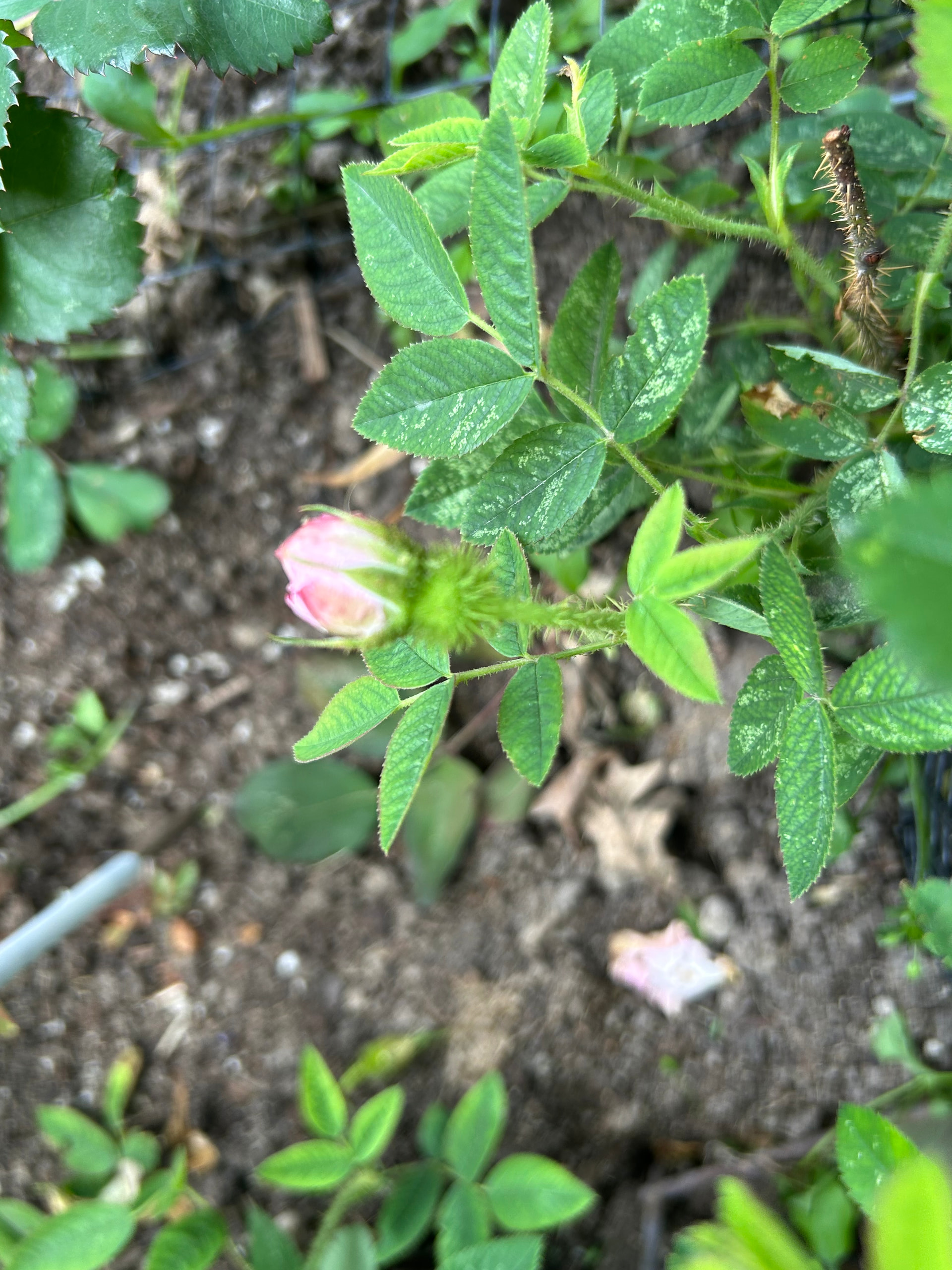
Physically appears l may have hybridized an early blooming moss from 2022-23 - maybe 2024 crossing seasons?
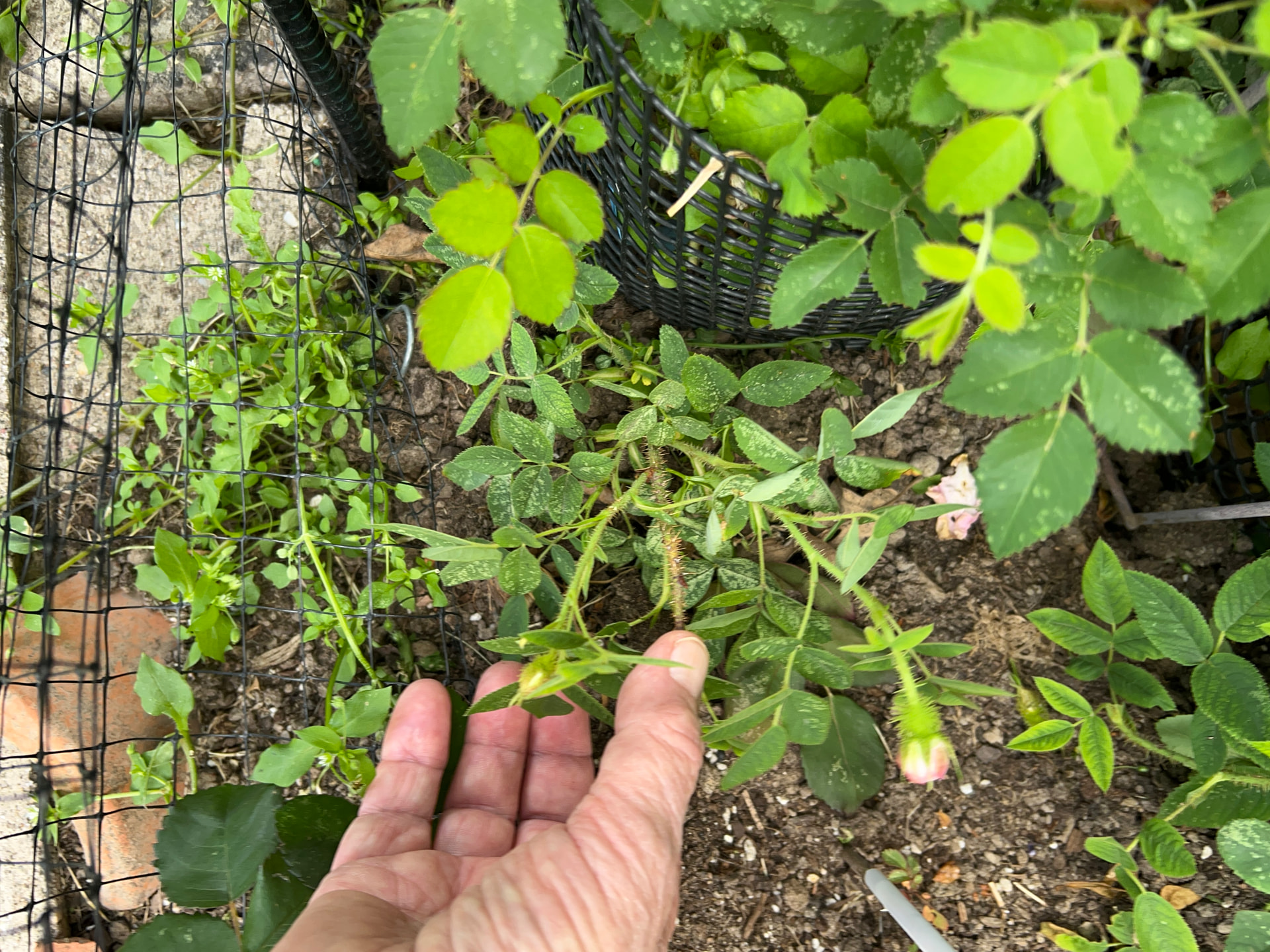
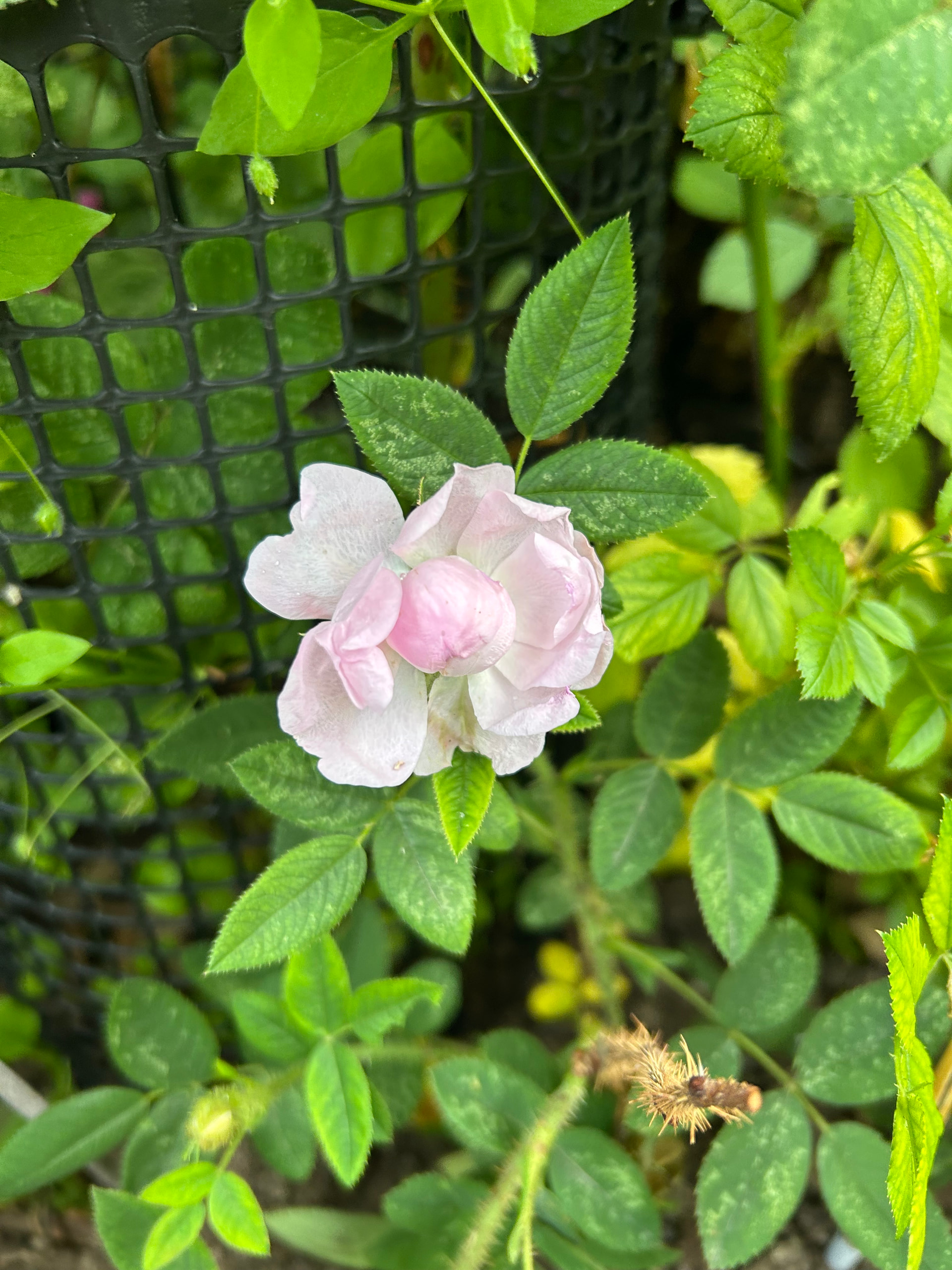
Small young seedling, spiked dominating descriptor of mossing. Best of all two separate pale blooms developing.
8 Likes
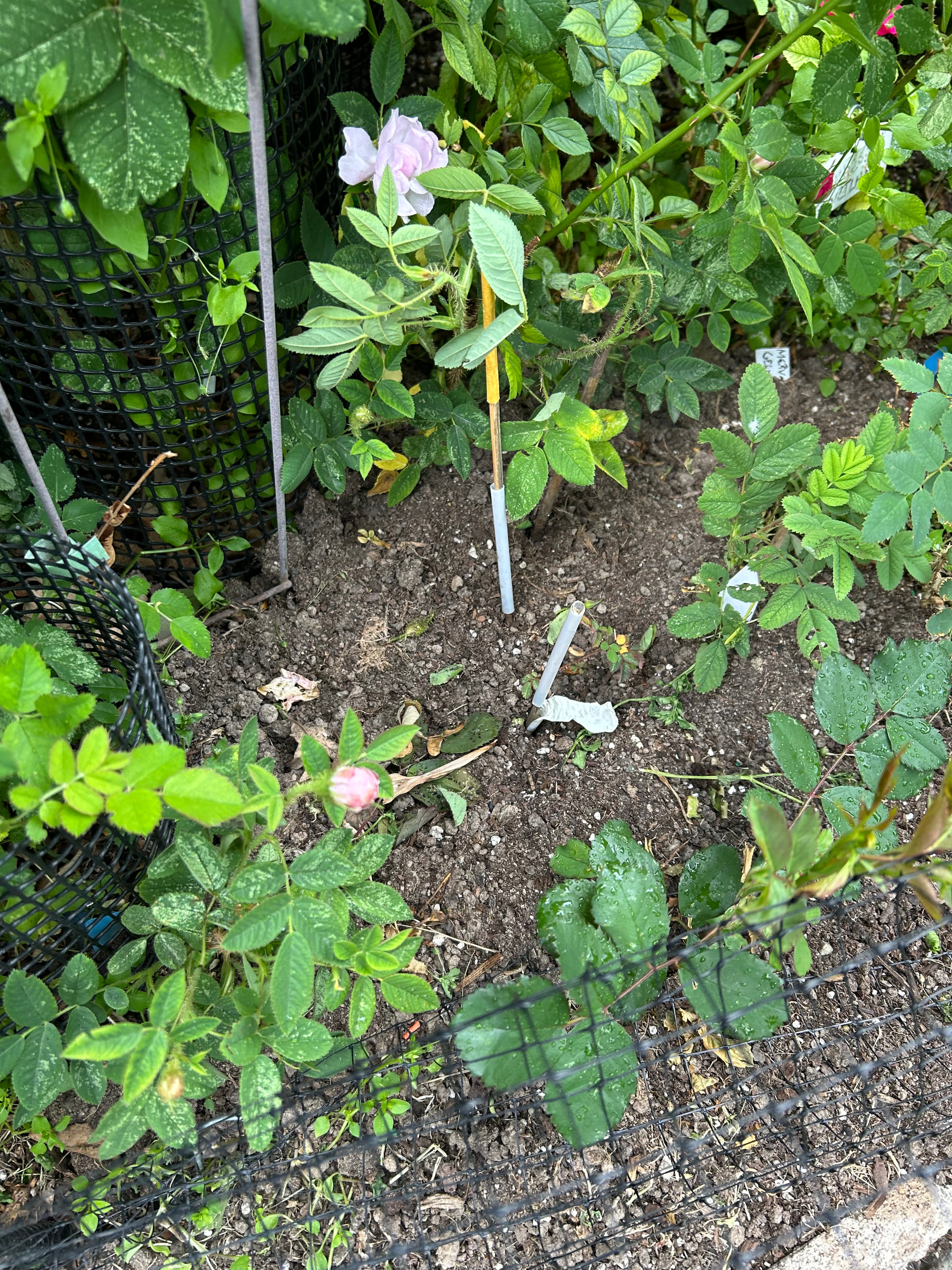
After today’s exploration, l find l have two separate seedlings from same cross. One in advanced bloom (also budded out multiple small white, slight blush blooms).
Look like same cross - but specifically can not ID parents because tags gone. But did document my crossings tried for 3 seasons.
Below are listed the candidates used.
Number after cross is number of hips generated. The list includes crosses done that were wiped out by the “hail Armageddon” and also survivors. As irony would have it, my new “mosses” have been Id as coming from hips that survived the hail storm.
….. Moss Crossings
Random crossing
Marechal Davoust x (R. laxa + fedtschenkoniana)
Mdm Roche Lambert (as seed parent)
Lambert x Grannies (whole cane6+)
Lambert x R. laxa tetra (5)
Lambert x Schoener’s/nut (1)
Lambert x R. fedtschenkonian (2 damaged)
Mdm Roche Lambert (Lambert as pollen parent )
Grannies x Lambert (2)
R. laxa (tetra) x Lambert (7)
Schoener’s x Lambert
Caroyal x (Lambert + grannies) (6+)
My bet is they are from the rugosa cross of Erskine’s Caroyal x (Mdm Roche Lambert + Grannie’s).
Grannie’s is a very old Canadian found rose and believed most likely to have damask in it. I offer no opinion.
I remember two seeds germinating from the Caroyal cross, and only one germinating from the R.laxa seed parent cross.
2 Likes
Congratulations on your very successful (and improbable, considering hail) hardy moss results! That’s pretty serious mossing, too–I wouldn’t mind seeing spikes like that on all of my rose buds, if only to ward off deer.
The tetraploid R. laxa that has been floating around the continent is probably the taxon that was recently (2022) given its own species name, R. tomurensis. That one was also mentioned in the recent By Any Other Name issue (page 22). I wonder how many Western roses thought to have been bred from R. laxa might actually turn out to be from R. tomurensis instead. Obviously that wouldn’t be the case for ‘Ross Rambler’ descendants, but it might be true for roses like ‘Suzanne’ and ‘Applejack’.
Stefan
Thanks Stefan (and others) for the congrats when finally hitting it after decades / years of tinkering.
It took awhile and few blown fuses, to get “my moss” but never lost sight of my long term objective since l first grew Nuits d Younge to bloom.
Feels great to achieve step 1. And with “early blooming” as a bonus instead of “years of wait”.
All sort of came together for this “hobbyist” on this cross … and extremely satisfying.
3 Likes