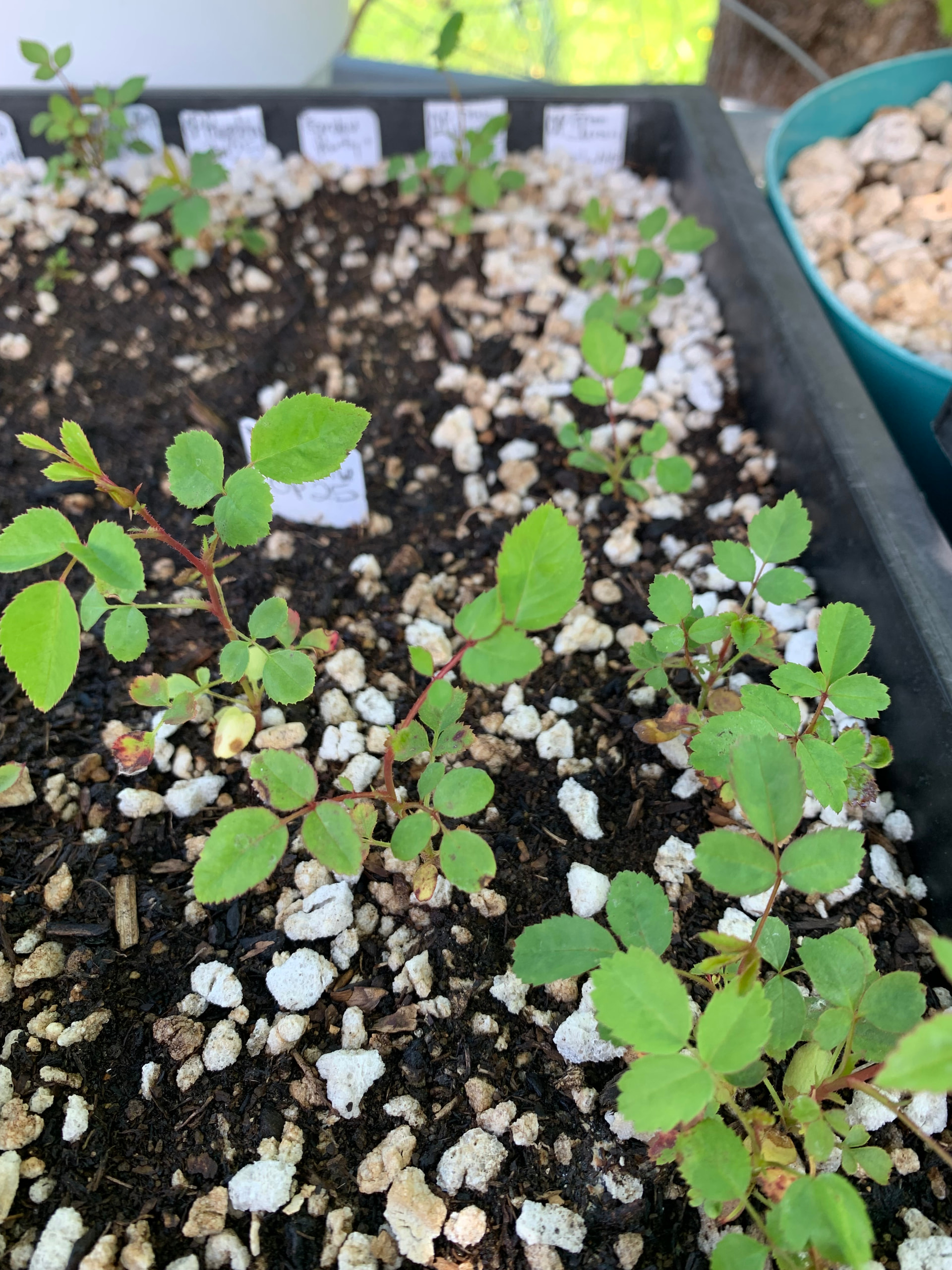
Regarding the “size of seed”-thing, there were precocious-blooming seedlings from BOTH SIZES, but none were kept this year…
The bar set by last-year’s seedlings was too high!
Regarding the “size of seed”-thing, there were precocious-blooming seedlings from BOTH SIZES, but none were kept this year…
The bar set by last-year’s seedlings was too high!
High hopes, easily dashed. Amiright?! lol
Very cool plant you get!
Maybe you can check its pollen under a microscope. If a large portion is distorted, its fertile might be limited.
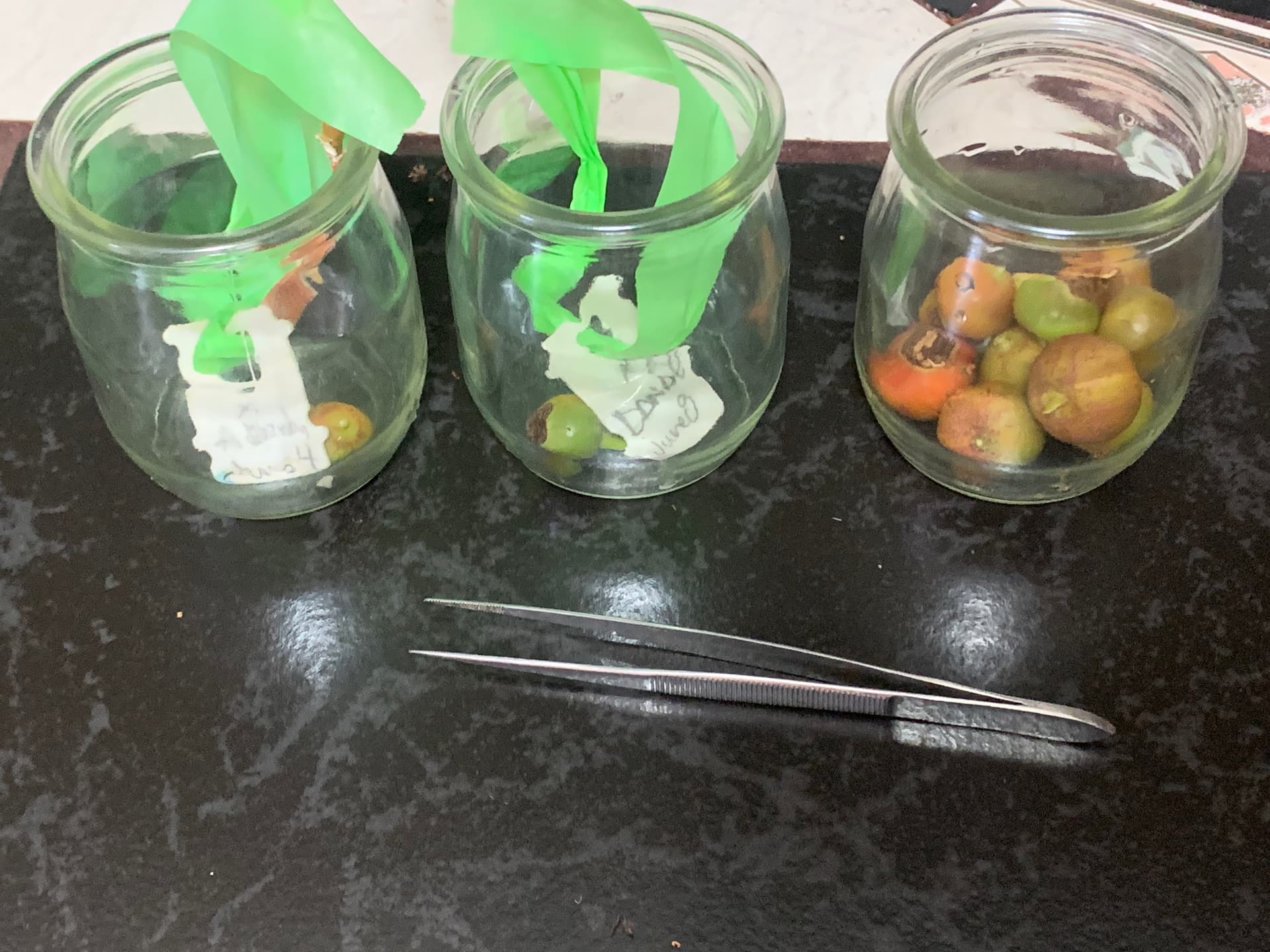
I’ve picked over my ‘François Juranville’ (with shockingly little loss of blood!) for the ripe hips of my last two deliberate crosses onto it and a fistful of OP hips. Juvenile-bloom is the looked for criterion #1, with healthy foliage a close #1.5, fragrance standing at #2, I suppose. I want more of my wichura/polyanthas please!
I used pollen of Pemberton’s ‘Danae’ (7 seeds, all sank) and Austin’s ‘Abraham Darby’ (25 seeds, all sank) to both bring scent and to hold onto the warmer colour palette, and to possibly see the difference between the offspring w an older diploid shrub and a modern tetraploid one.
Don’t worry, Francois will still demand his pound of flesh (or quart of blood)! It’s called “fertilizing”!
Ain’t THAT the truth! Pruning out old canes is where I do my most “fertilizing”. Literally, blood sweat and tears; not necessarily in that order.
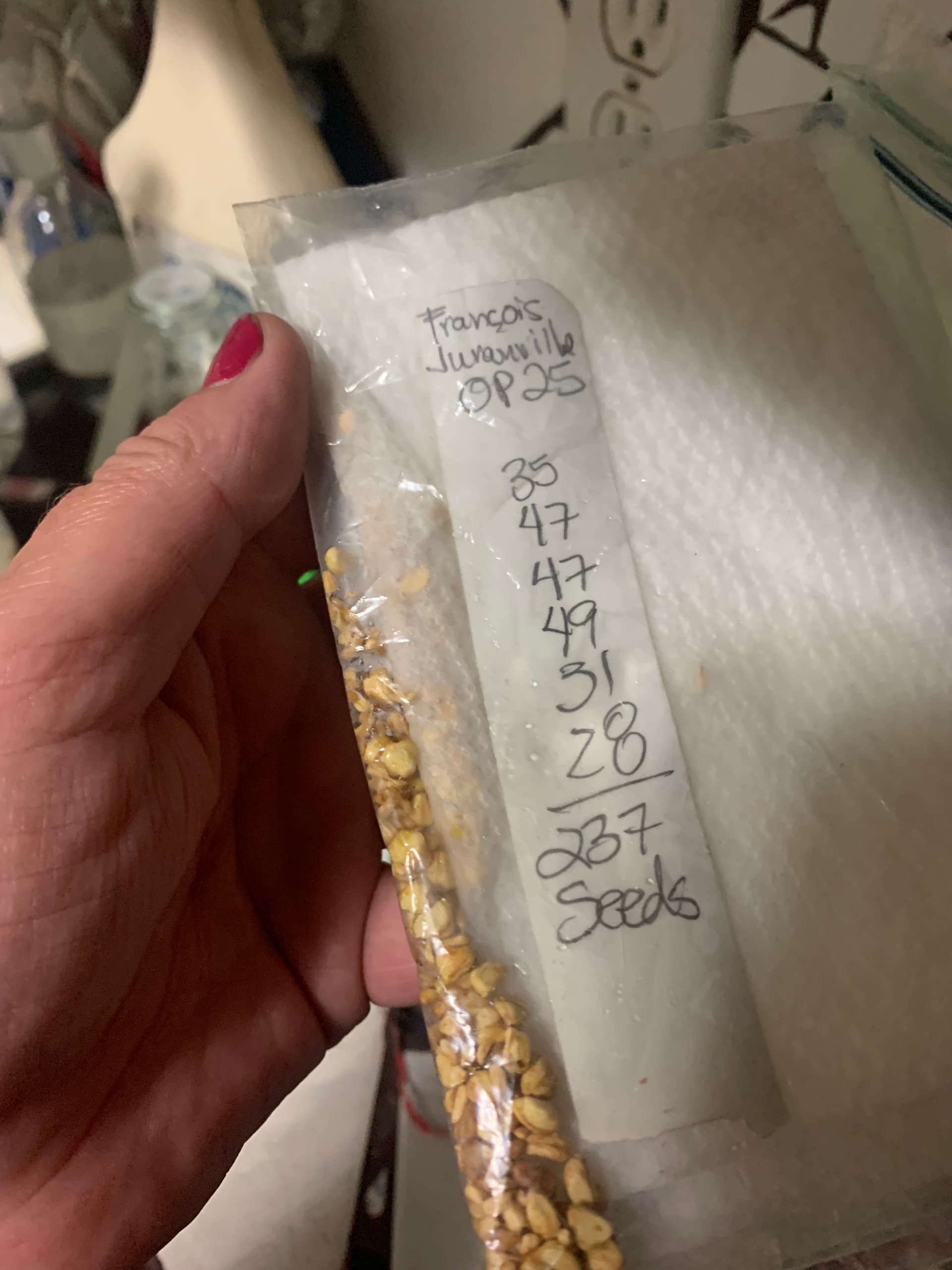
The first two (albeit large) OP hips I cracked held 35 & 47 seeds. The bees are better than me. lol
They simply “hit it” with a more viable combination of pollens than you thought of.
The first three were LARGE hips, the following three were medium-sized but very well-coloured and ripe. 237 seeds total, and I dont think I’ll need the six remaining hips at this point.
Furthermore, since precocious-blooming plants appeared in both small-seed and large-seed populations grown separately this season, I see no need to separate the sizes next year. But I DO think I’ll devote a whole box to just seed of ‘FJ’, with separate rows of my pollinations, and the OP ones.
Made use of ‘François Juranville’ POLLEN this year as well, onto repeating shrubs like ‘Danae’ (one hip w/ 38 seeds). Saved some pollen too, for use early next year.
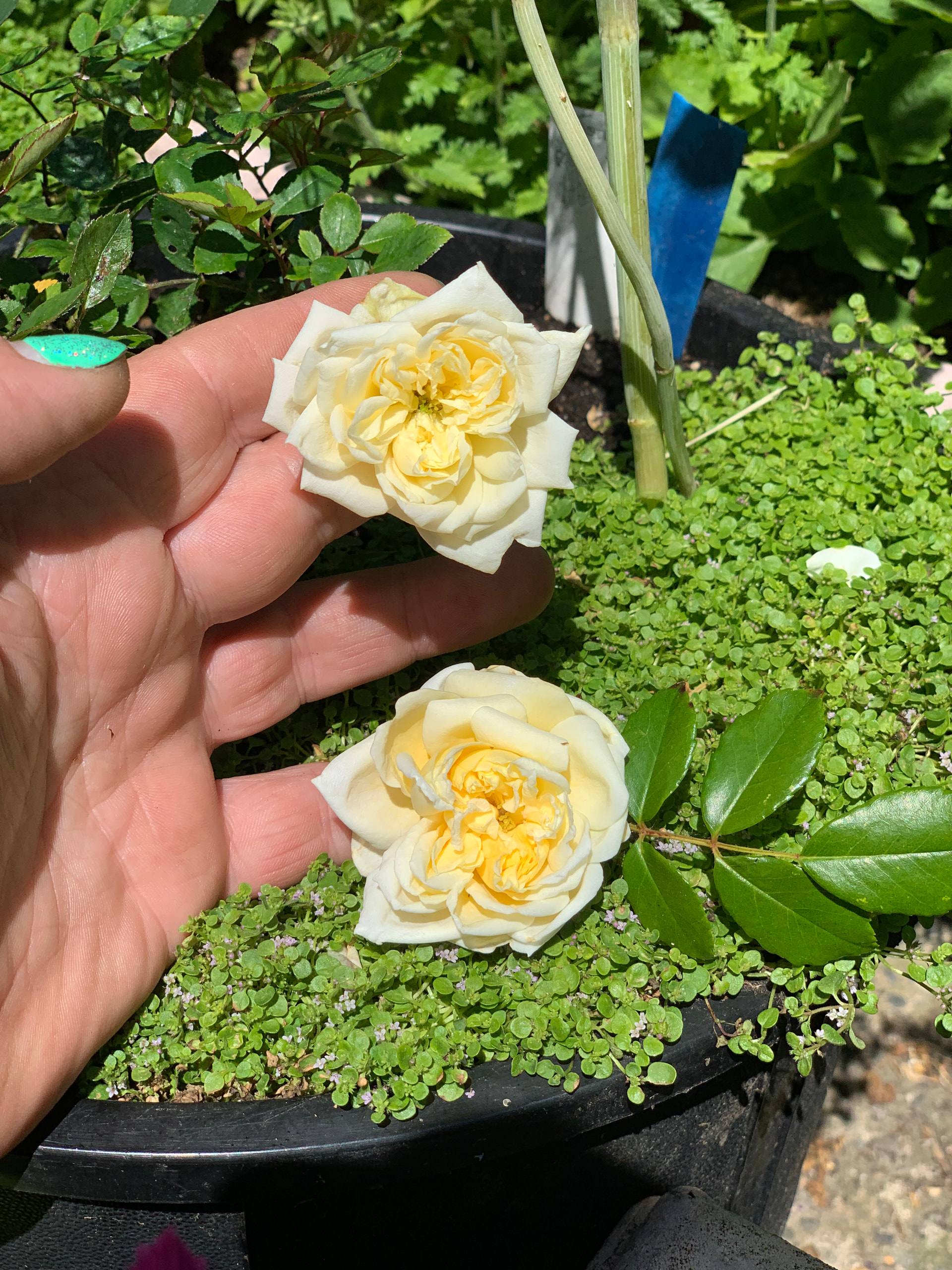
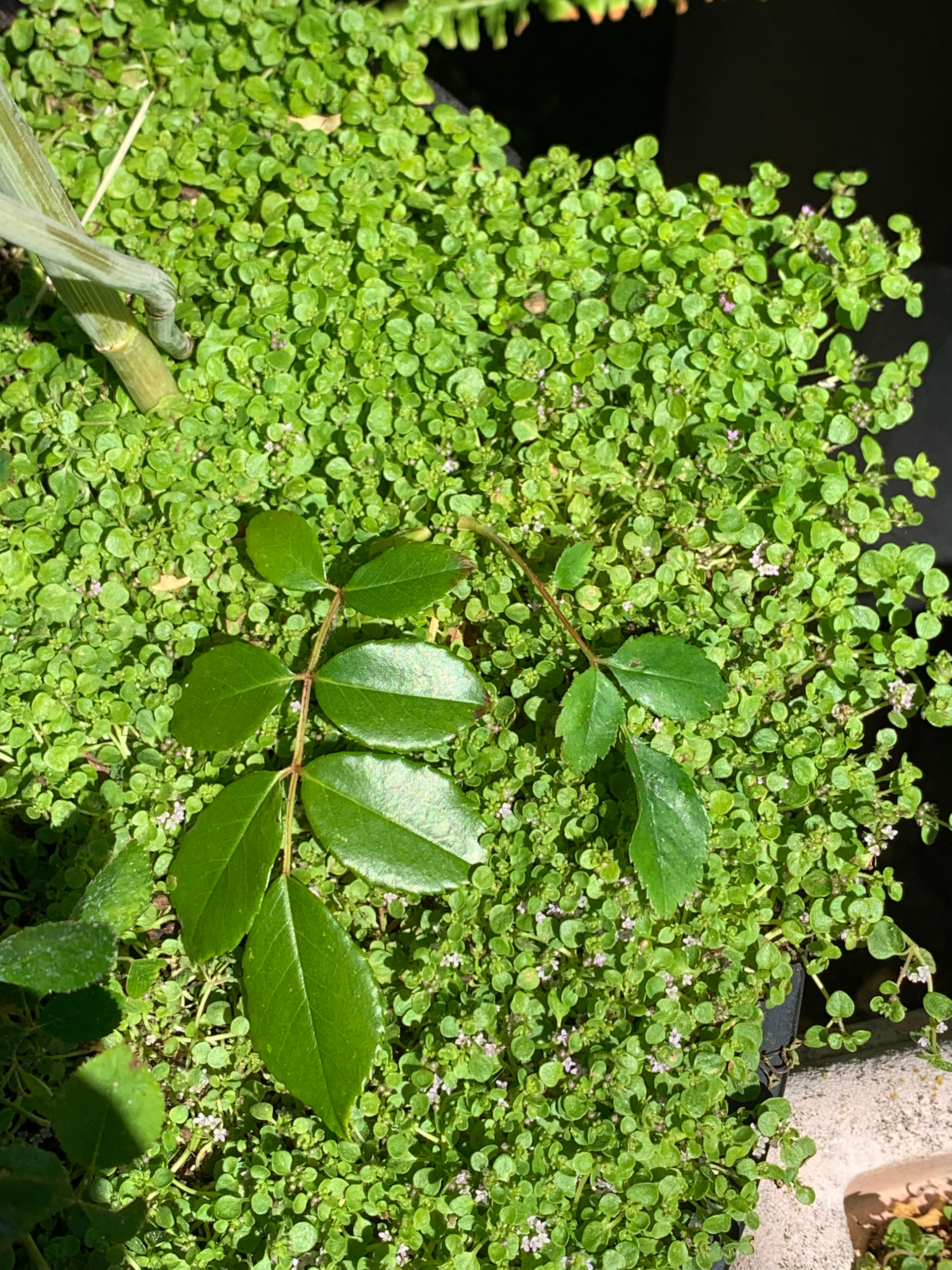
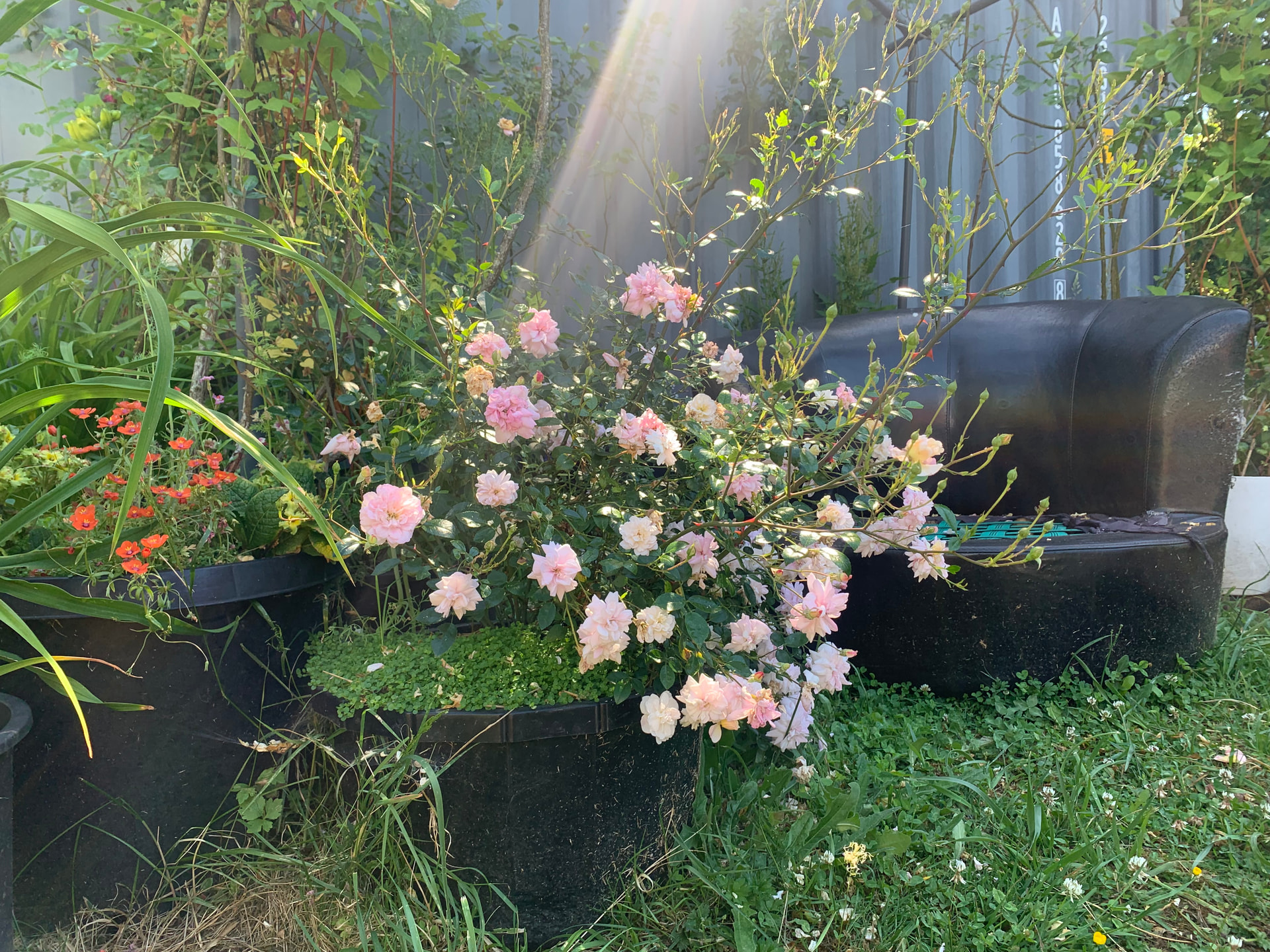
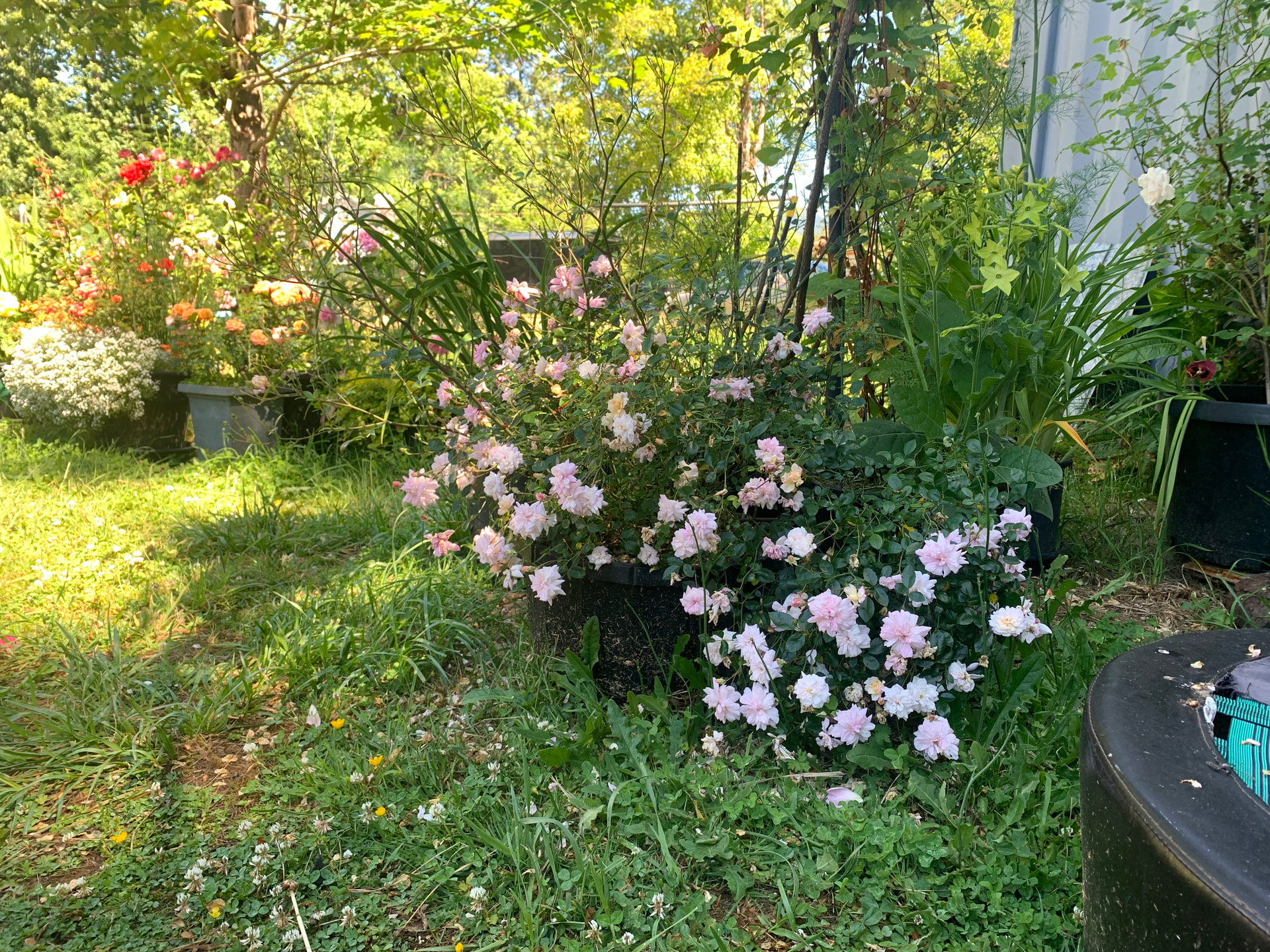
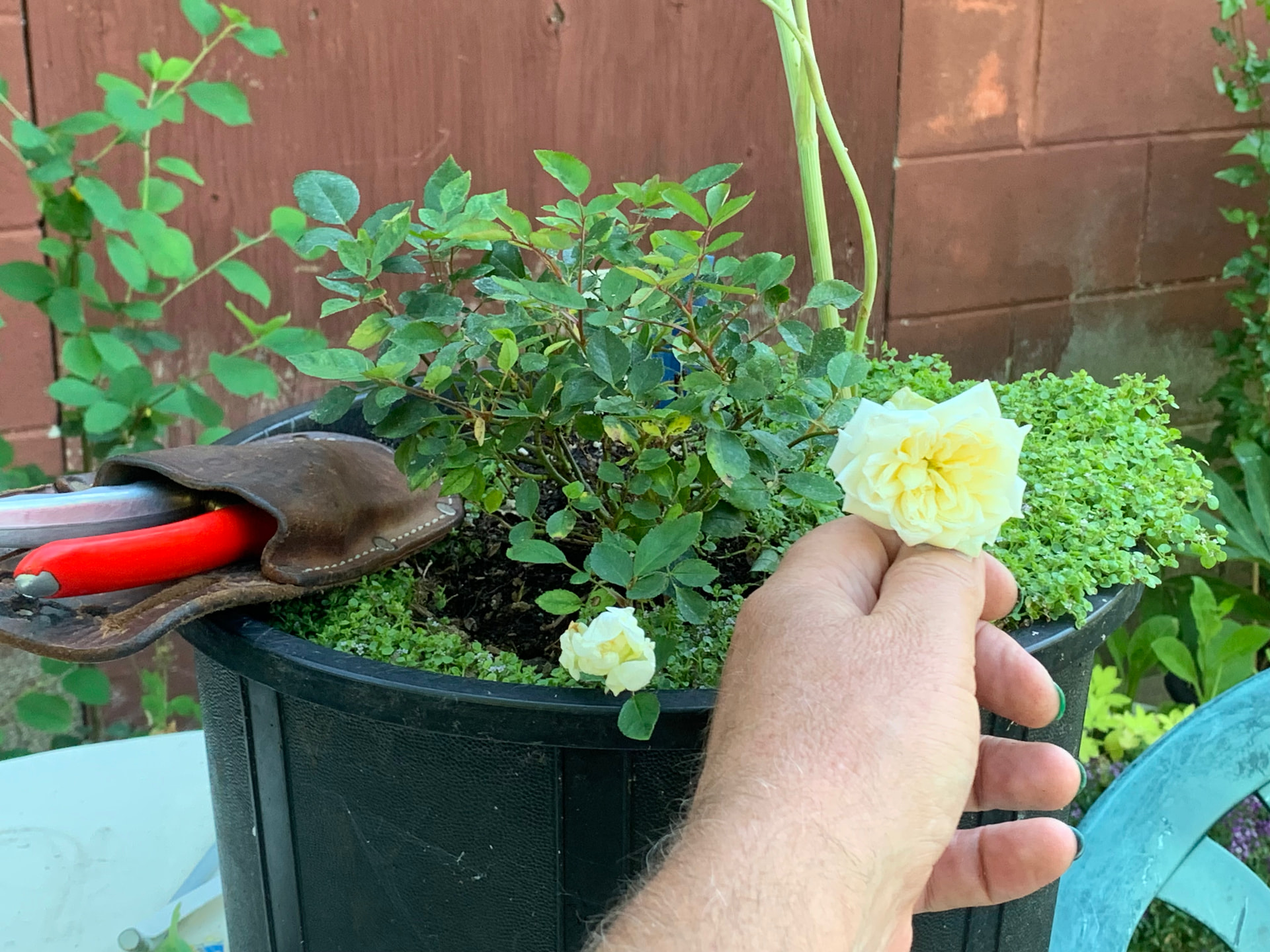
I raised this dwarf seedling from OP seed of ‘François Juranville’, and call it “Baby Alberic”. Cut flower of the REAL ‘Alberic Barbier’ included for comparison.
Leaf of ‘Alberic Barbier’ on the left, one from my plant on the right. In its third year, Baby A is less than 15x30cm/6”x1’. Very dwarf plant, but healthy.
There’s a BUD!! Always worth sowing OP seed of diploid ramblers with a Tea parent, I say. It has big shoes to fill, when the bar is set so high, but there’s always hope.
Right?
Wow love that! Have you had many dwarf plants come from the ramblers?
Ralph Moore discovered there were more sources of “minis” than simply Chinensis. Many of his minis were bred from 0-47-19, which was literally a more modern version of the Barbier rambler. Historically, dwarf forms have been raised from one or more of them. HMF can show you which. I’m limited to the phone currently and it’s easier to go back and forth on the computer. But, why not use any of them happy to be where you are to see what you can mine from them?
That juvenile-flowering gene always shows up in my experience sowing OP seed of FJ, so yeah. There are always a few small shrubs that appear. The two I’ve kept are shockingly disparate in size! One small monster and one teeny beastie! lol
Because of those two, I became a big fan of my Barbier rambler as a parent. And I’ll likely sow some OP seed of it every year, just to see what the bees are doing that I might explore too.
Dusty
That’s amazing that they do that. I have been using Filipes Kiftsgate in my breeding… Because I’m an idiot. I don’t have the space really
@James_D we’re related. But you can bring it under control. Robert Rippetoe has done quite a lot with “monsters”. This is a lovely thing from some real “cathedral eaters”. 'RIP26-74' Rose
I’ve played with Montecito 'Montecito' Rose , then 'Nessie' Rose I raised from it and had a lot of fun! Crossing Nessie X Tom Thumb resulted in a wide range of results, including a few polyantha types. It all depends upon what you mate it with.
My feelings are that I will do rose breeding in some capacity if the body is willing for my whole life. As I’m 32 I figure playing with species,ramblers and once flowering old roses to try find different quirks is worth it. However in the 4 years I have been doing this the yearning for juvenile rebloom is growing!
Sometimes that’s going to require some self or open pollinated seedlings. Though adding Tom Thumb to the [(R. Brununii X R. Gigantea) X Mlle Cecile Brunner] did make a number of dwarf, repeating bushes.
James, I try to off-load any robustly healthy selections that don’t flower in year one to friends with property. Maybe they’ll actually be a nice flower and grow into a repeater, maybe it’ll hardly be worth the space and near-indistinguishable from the wild roses nearly.
“Rip it out if you hate it. I shan’t be offended.”
I ain’t got the room either, but I make do. D.