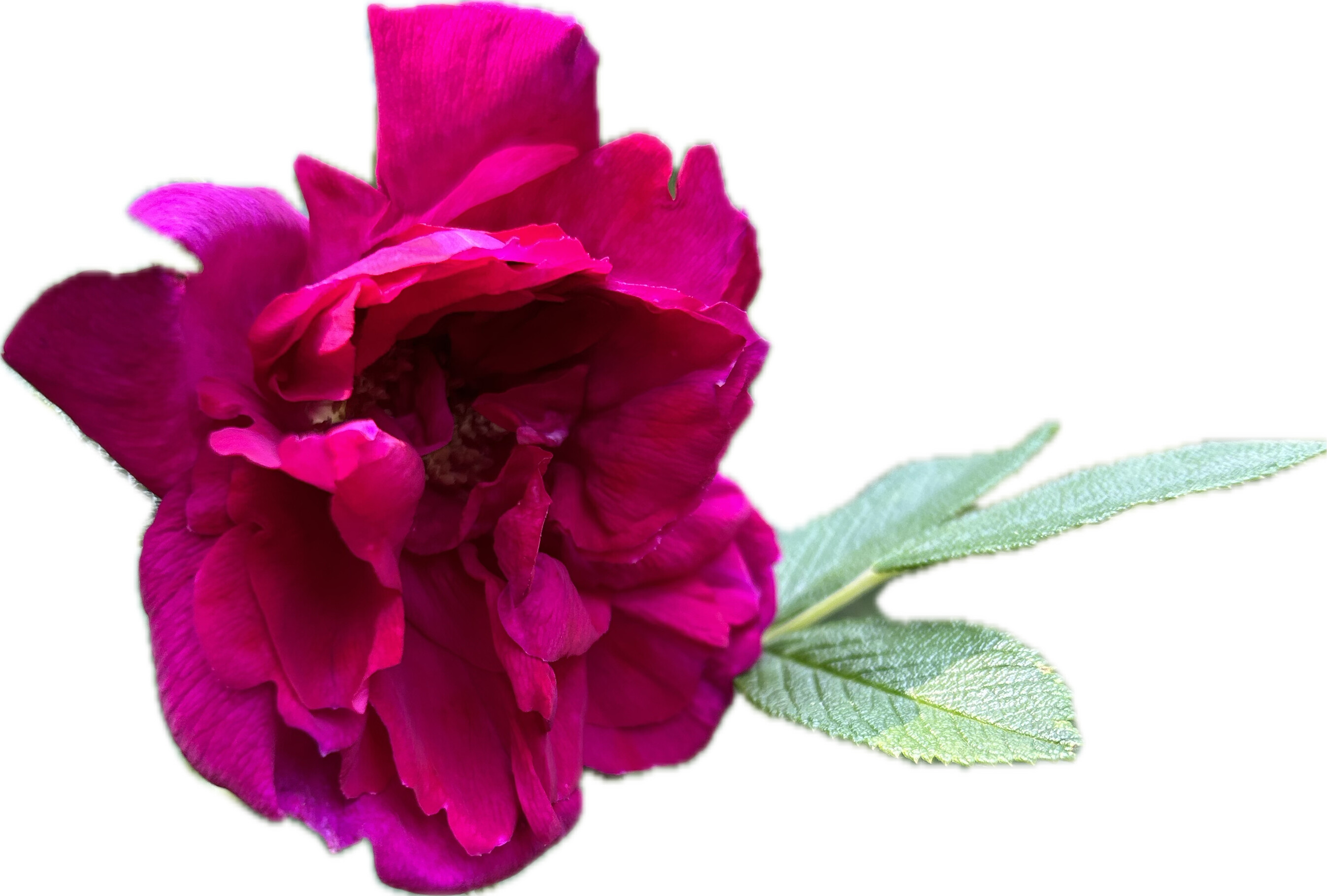
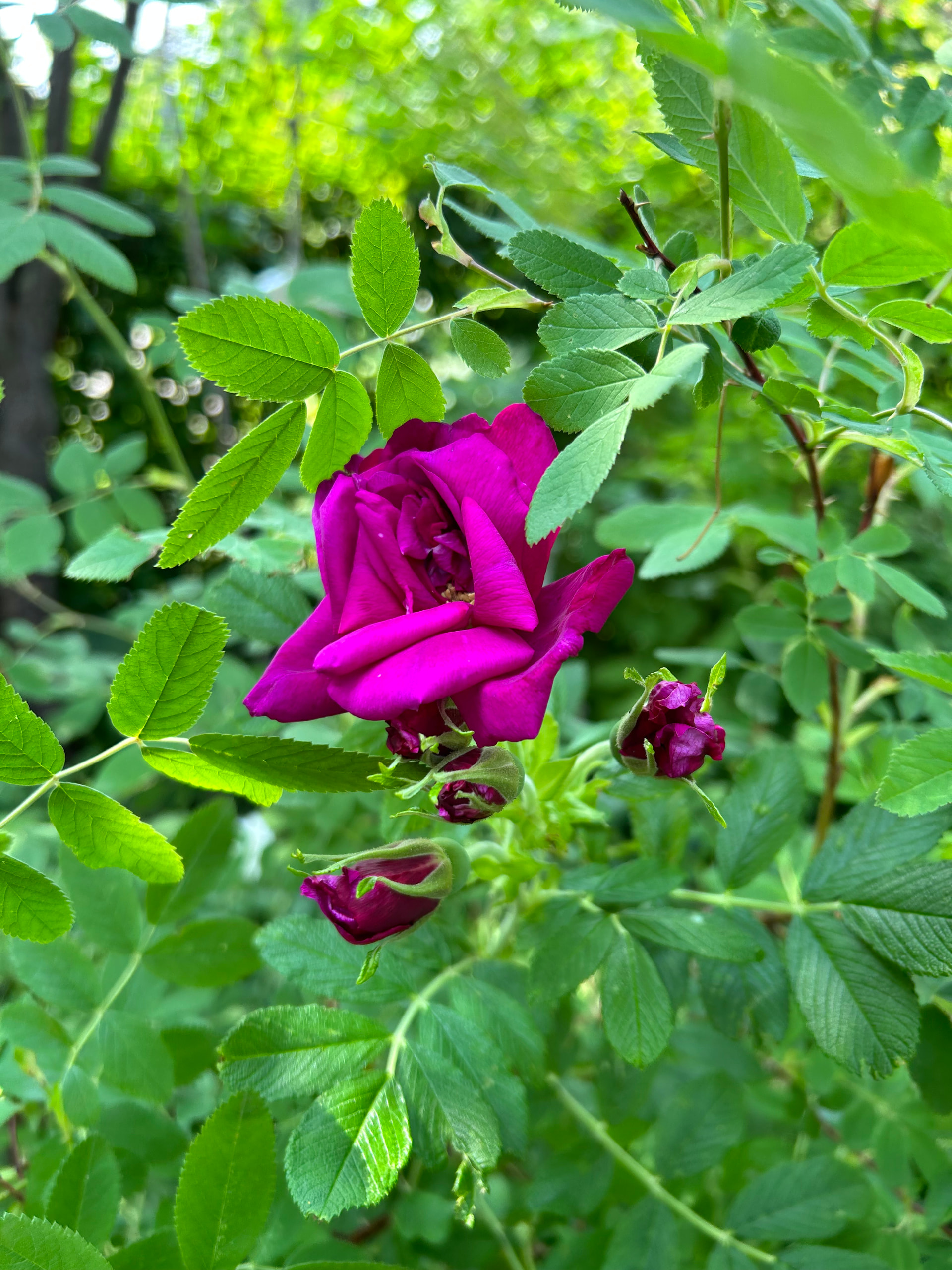
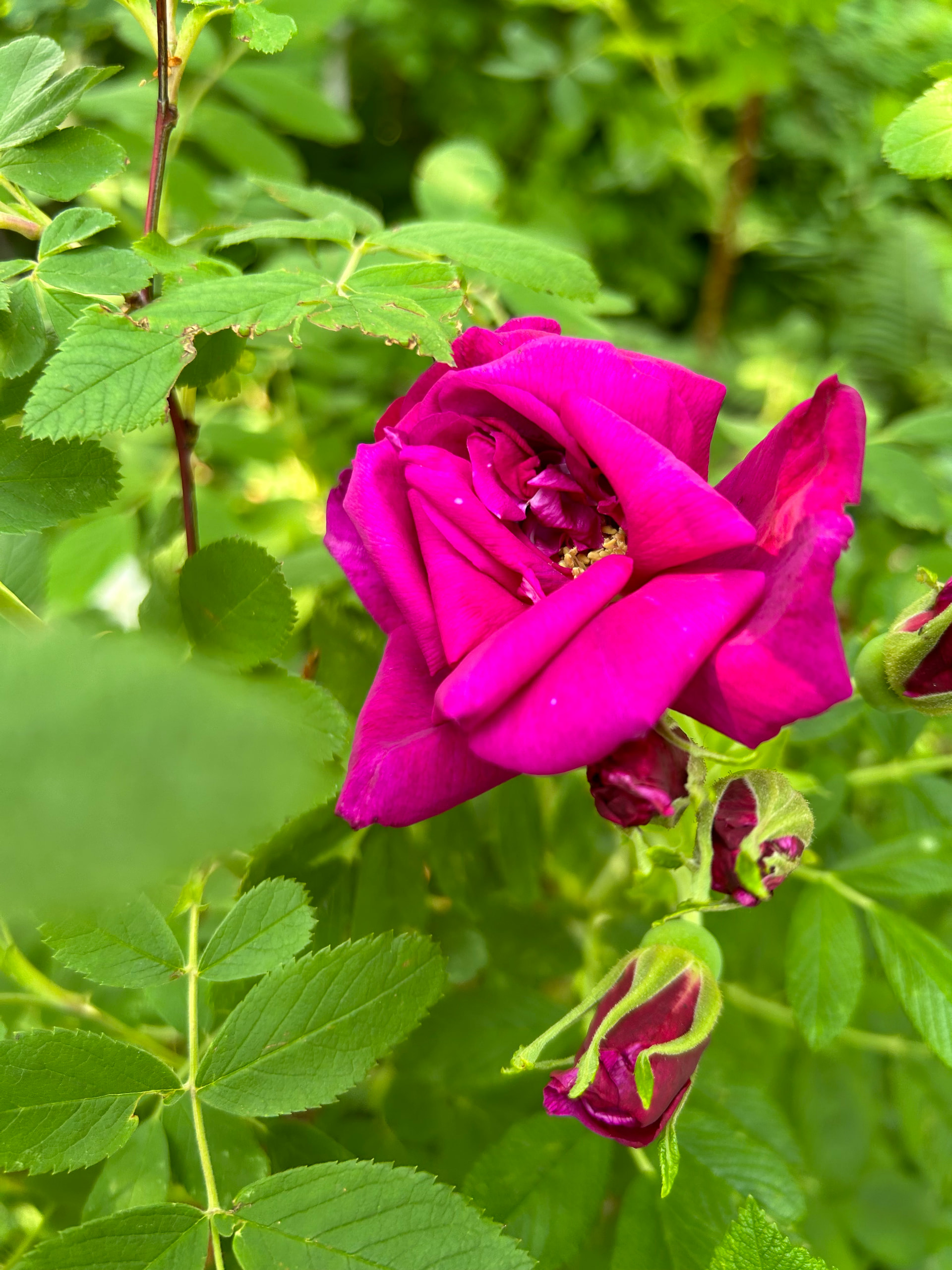
Just a question for some of you seasoned hybridizers. If you were going to attempt to breed rugosas with a little more substance to their petals, how would you proceed?
CM
Just a question for some of you seasoned hybridizers. If you were going to attempt to breed rugosas with a little more substance to their petals, how would you proceed?
CM
The simple way would be to breed your favoured rugosas with the Pavement series (or other hybrid rugosas) which already have better substance i.e. Foxi & Showy, bearing in mind that Showy has little if any scent, & Foxi while wonderfully scented with a spicey non rugosa scent, produces few hips & fewer seeds when left to its own devices. Otherwise use healthy floribundas & be prepared to discard many seedlings with poor health, fertility issues, or other undesirable traits, then breed the best back to your rugosas of choice to regain desirable rugosa characteristics. In the first generation many of the hybrid seedlings tend to lose the typical rugosa characteristics, of health & hardiness of the rugosa mother.
I don’t grow the two hybrid rugosas mentioned, but I’ve seen them in plantings in parking lots & they are lovely, but are obvious hybrids. They’re not just rugosas with better substance. If you do go this route you might just obtain pretty shrub roses which might not be identifiable as rugosas, but be beautiful roses in their own right.
I suppose not all of the Pavement series rugosas are created equal but the one I have "Purple Pavement’ is a real dog and most likely it will be shovel pruned next season.
I purchased it because of the Pavement series reputation and my other rugosas do very well here in Zone 5A but not this variety however.
It was a sparse bloomer to begin with and preferred to sucker aggressively rather than bloom. I had no flowers on the plant at all this year and it has been in this prime location for 4 years now.
I wonder if the Showy Pavement that Lydia is talking about is the same one I grow? I find that mine is wonderfully fragrant and it
Ya know… some of the more unusual hybrids arent that bad for species types. I know Therese Bugnet is as about as boring as it gets, the they hold up fairly nicely rain or shine. Topaz Jewel, despite its nasty plant habit, also holds up fairly well. Both Ann Endt and Basye’s Purple do well too.
Rosa rugosa alba did well as a seed parent with tetraploids – for me. I basically stripped the bloom of sepals, petals and anthers before they even popped open. It was all about timing the blooms right exactly when the first petal had a true white tone spying through the sepals. I got massive amounts of takes that way. Unfortunately I didnt have enough time/room for a bajillion delayed-blooming, crazy-thorned demons because of the move so I never got to see them bloom. They were crazy crosses – Baby Love, Livin Easy, Tatton, Kanegem…lol. They all looked like smaller plants of Robusta – dwarf, blood-sucking demons with super shiny foliage, lol. So…anyways… Rosa rugosa alba worked as a seed parent quite well. I actually switched from pollen to seed with it because the germination rate on rugosa species is insane. Maybe its cause Oregon is like Japan? Who knows…
I’ll have to give the parking lot rugosas a better sniff when they start blooming again. I did manage to get lots of seeds from the whole lot of them, except for Foxi. The entire planting produced 2 really large seeds & one small one. But the blooms were really gorgeous.
As for Therese Bugnet, it seems to accept pollen from triploids. I put pollen of John Davis on it & got seeds. Now to see how well they germinate.
Today I pollinated 6 Wasagaming flowers with Hansen’s Minisa rose pollen. Minisa is R. rugosa Thunb. x Prince Camille de Rohan (hybrid perpetual). Now we’re just waiting to see if the pollination was successful and if the rose produces seeds capable of germinating?
A related question to the original post: If you start with rugosas of inferior substance, can you breed substance back into the progeny easily? I’ll explain, I have a rugosa selection that I believe is very much worthwhile. One of the great things about it is that it has outstanding shapely blooms AND substance in the petals. I mention this because it seems that many of the rugosas with the more interesting blooms also are of generally lower quality (Martin Frobisher, Wasagaming, Marie Bugnet, etc). Would creating breeding lines crossing my selection with these listed rugosas likely result in most or all resulting progeny with low quality blooms? Would it be better to use something like Gallicas (I want to keep the old rose shape) to create triploids, and then patiently use these on my rose? Yes, this is perhaps unanswerable and probably is too theoretical. Maybe I’m going to have to try it and see. But what are some of the experiences others have had?
A dumb response, Christopher, but as a rule of thumb, I would say that when crossing any two good selections, odds are, the default will favor the deficits of both, methinks. I say that for the simple reason that most selections that make it to market are a one-in-a-thousand seedling (or for more modern roses, 1:20,000+ selection) having a very rare panaply of good attributes expressed in the phenotype. And while most of the deficiencies are not, they likely still present to a degree in the genotype, and the odds of any F1 rolling the same string of aces from both parents is very low.
Not to sound discouraging, but rather to suggest you take any discouraging feedback from others with a grain of salt. We are all aiming for the seedling that defies odds.
Maybe someone can suggest you have decent odds on that particular goal; I don’t bother with rugosas generally. They don’t like me.
Go for it. It is worth a shot and you might get that string of aces on one of your plays. The genotype might well have what you are aspiring to even if the expressed phenotype isn’t showing it.
I frequently wonder to what degree I should worry about a particular rose’s physical attributes, moving forward with it, if I know its pedigree has what I am after. The number of great roses that have arisen from remarkably “meh" plants astounds me.
Second go for it backed by ur garden observations.
Not a rugosa fan due to R. roulette with anemia of the leaves in my soil for some varieties.
Think pros call it chlorosis. Iron chelating soil drench helps in the my garden, as did iron infusion into my veins to get healthy heme molecules and energy levels (under med supervision) .
The most successful cross in five years for me was not a rugosa ( excluding ill looking moss rugosa and vice versa), was not from traditional modern stock parents but was from Nordic imported stock and hybrid, consisting of a gallica and a species.
Met all my targets except the key one - repeat is not a must criteria for me. Still waiting for one bloom of merit to confirm if it goes spring purple - low purple probability more likely will take magenta under tones, or white like pollen parent.
Hardy without being ugly and a thorny mess (pollen parent is), but off spring nice open shrub rose form close to hardy Gallica but not one, and with disease resistant like Nordic species Gallica/ turbinata - got a few in gardens (dare l say bullet proof in my garden? Sure no problem).
Except gallica seed parent is / was not hardy to -25 to -30C, and leaf has 7-9 leaflets and dark clean green (shaded 1/2 day) - need to start cuttings to give to a prairie friend who supported my growth and who might find it of breeding use (hardy disease resistant).
Any ways enough of my cross bush characteristics pride and joy - especially hardy, pleasant bush form and disease resistance. Not bad score but semi to double off purple is the full meal.
Ordered a number of common rugosa hybrids to supplement existing to see if can transfer a “la haie” purple ( magenta?) undertones like the one l use to have. Purple pavement (rotesmeer not strong enough).
Going to have to return to Dane mark for off shore sourcing soon.
Good luck, success and with your logic reasoning.
Not such a dumb response, phillp_la. It is all of course very true. Odds are what they are and it is indeed that one in a thousand (or 20,000) that we are all hoping for. May we all be so blessed!
I will gladly take your encouragement to try and persevere. In fact I am already trying a lower quality bloomed rugosa. Seedlings are looking great 3 months out of the fridge. But it will be a few years before I really get a glimpse of the overall bloom quality of any of them. Potentially, I can waste an awful lot of time pursuing an unachievable goal with low quality rugosas. It is a risk I am taking, and I know if I miss this aim, that I may hit my others, and there could be satisfaction in that.
It is my goal not to just create a few nice plants, or even some breeding lines. I am looking to do my small part in the development of what I consider to be and underdeveloped class of roses. So what is missing from rugosas that many gardeners would like to see? Broader color range? Better floral form (less shapeless)? More relaxed growth (less stiff and twiggy)? Shapely blooms that don’t ball or cling like dirty rags to the plant in wet weather or when the bloom is spent? Some of these aims I have already realized in the seedling I keep referring to. That is if they can be passed on to its progeny.
I think it was Paul Barden who posted something I read a while ago stating to the effect that rugosas with ANY china in them seem to suffer in bloom quality. It might be that what is said of chinas might also be said of synstylae or its derivatives. It is just an observation on my part but it seems that the rugosas with the most fragile or “clingy” blooms seem to have polyantha or noisette or hybrid musk in their lineage. Can this be overcome according to others experiences? My other thought is to forget these china/multiflora rugosas as possible studs and move to OGRs instead? How have other’s experiences with rugosa x gallica, or rugosa x alba, or rugosa x damask turned out?
I frequently wonder to what degree I should worry about a particular rose’s physical attributes, moving forward with it, if I know its pedigree has what I am after. The number of great roses that have arisen from remarkably “meh" plants astounds me.
Yes. It also makes one wonder about the culling process. “Is this seedling truly worthless or can I use it as a good “breeder”?”
RikuHelin, thanks for the encouragement! I do like to hear of the hybridizing journeys of others. There is a lot to be gleaned from not just the experiences but also the goals and strategies.
Is “la haie” short for Rosararie De l’Hay? I have that one and it is quite wonderful in my zone 3a. The fragrance is superb and the growth is a little more elegant than say Hansa. This next summer I intend to use RDLH in my efforts. The magent/purple will hopefully reinforce or deepen the color I already have.
Yes it is. Below is what l grew and what l am after - of course shade accentuate color in photos. First photo has bloom facing north ad was on other side of bush. Others facing SE.
Congratulations! Very charming.
If unusual rugosa coloring is what you are after, were I in a climate that was conducive ro rugosas, I would pursue the yellows. (And mauves. I’m a sucker for good deep mauves…)
Many years ago, Joan Monteith shared seed from Mr. Nash x Rugelda which had a surprisingly quick, decent germination rate. Several had really pretty bicolor blossoms. (Unfortunately the best of them were also very vigorous and died when I went out of town for not being planted in large enough pots to sustain them.)
The one survivor I had, which as a seedling I nicknamed “Dirty Kleenex in Barbed Wire,” matured to have rather attractive Austin-type butter yellow blooms. (Had a ton of other issues including an unpleasant odor though, so I did not save her.)
Namesake notwithstanding, Moore’s “Keith’s Delight" looks like another attractive rugosa, though I know nothing about it, nor how cold hardy it might be.
Cool thing is there is no official such color as magenta in the spectrum. No idea about mauve.
Apparently our brain makes it up from red and blue light hitting S and L receptors … according to a today’s BBC reel “ - how convenient the timing.
Apparently good for fruit hunting in the green forests for our ancestors.
Rosararie De l’Hay likely has some china ancestry some how, comes up as having a copy of that KSNcopia (ie modern/rebloom) gene. So potential benefit (or not, depending on view) may spread the gene in that population and if breeding the results together maybe modern reblooming and mostly rugosa appearance.
Therese Bugnet, another with a copy of KSNcopia, seems to accept it’s pollen (use to get very few hips from TB until I used RdlH and Sarah Van Fleet pollen on it then most flowers went to seed)…..sowing ~1000 seed in the next few weeks, so may be interesting results, may be duds.