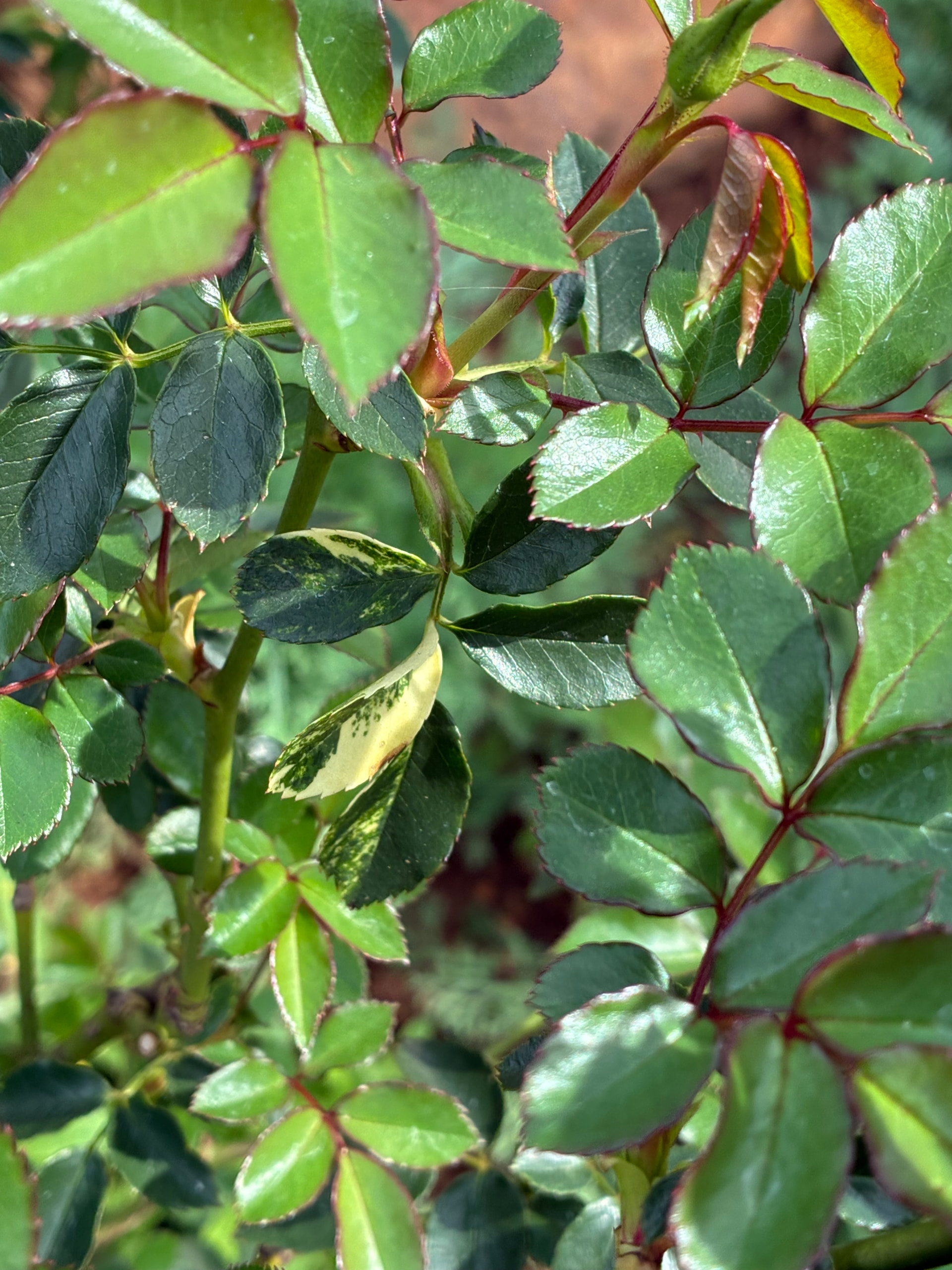
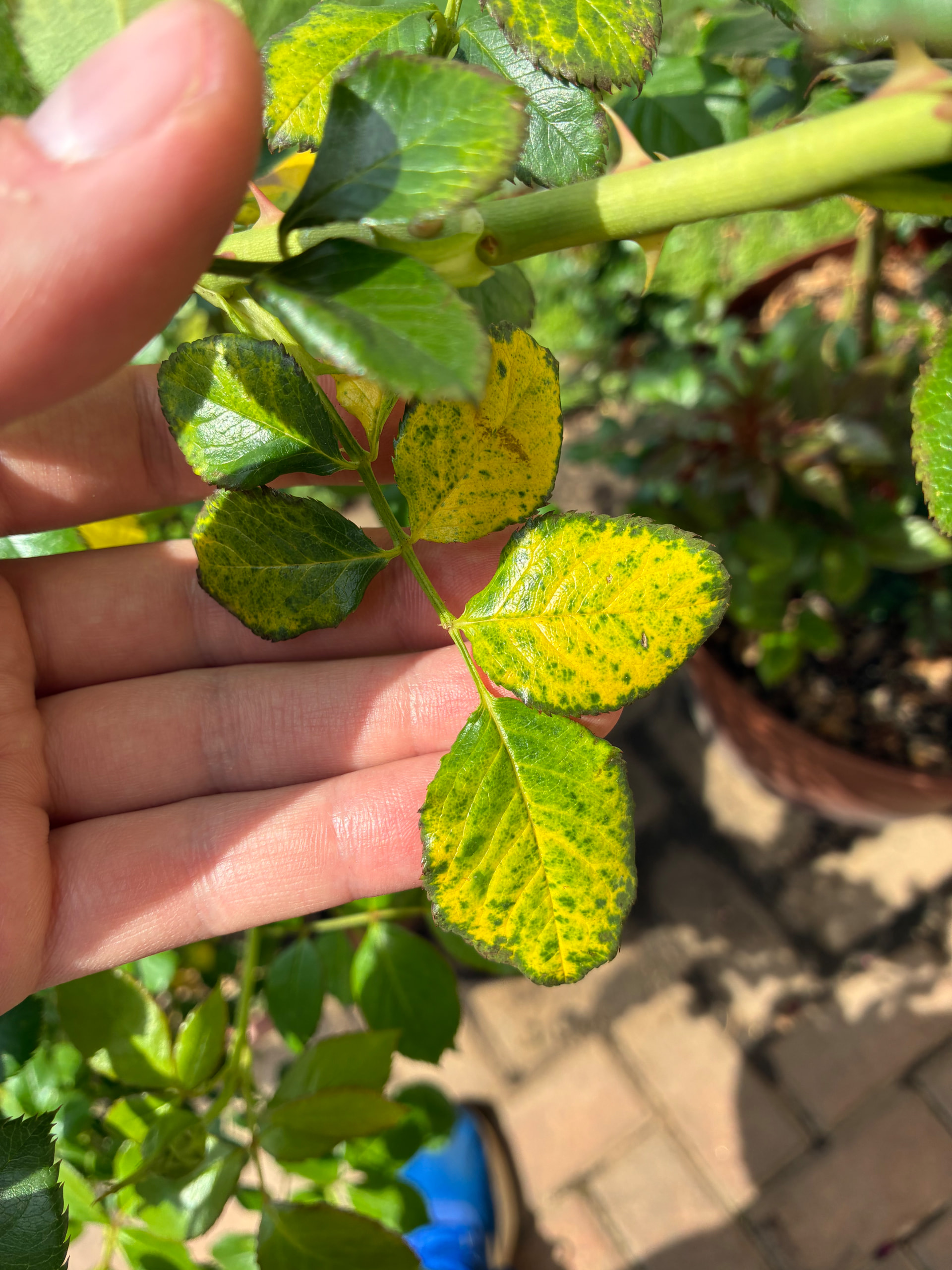
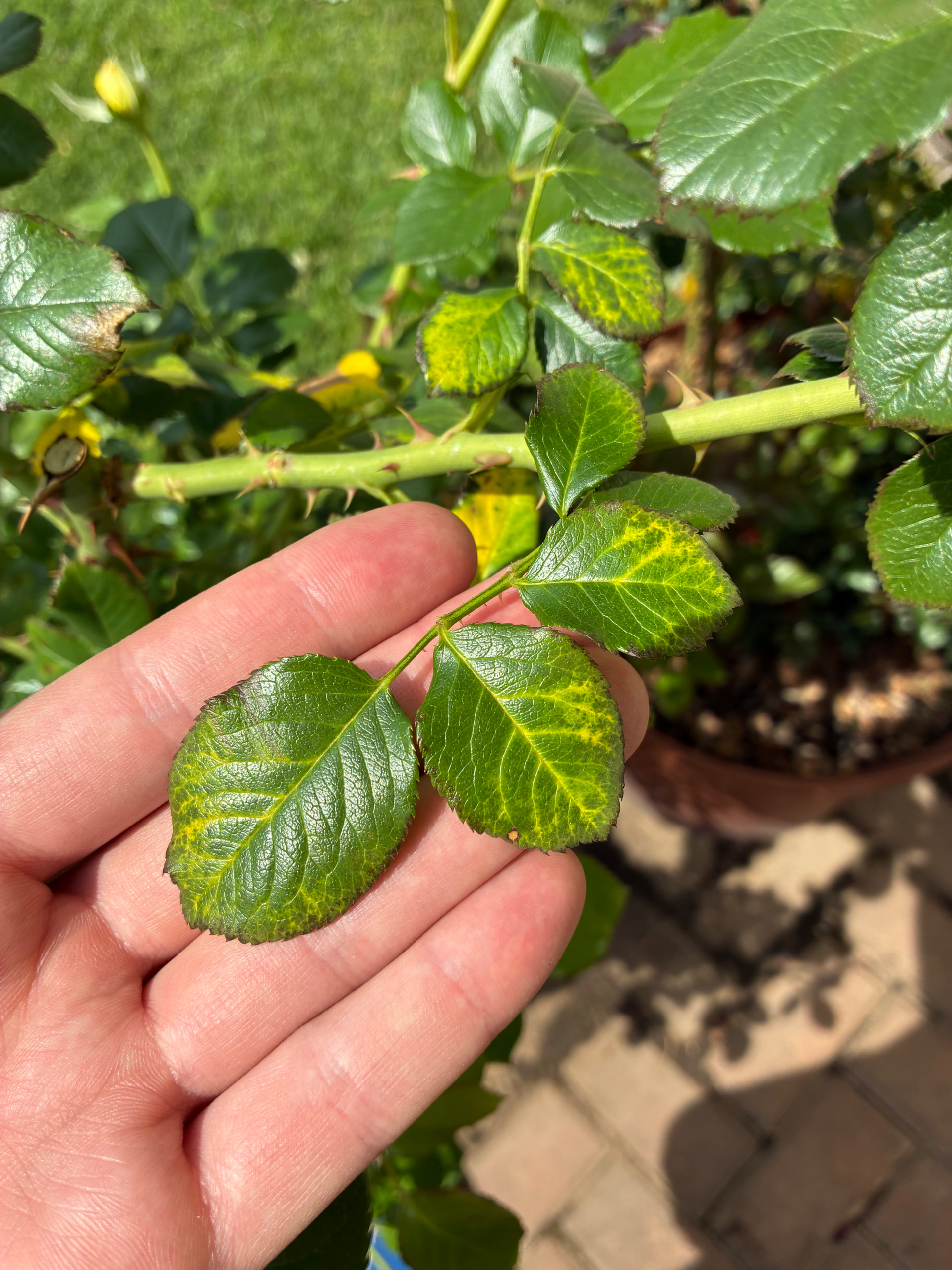
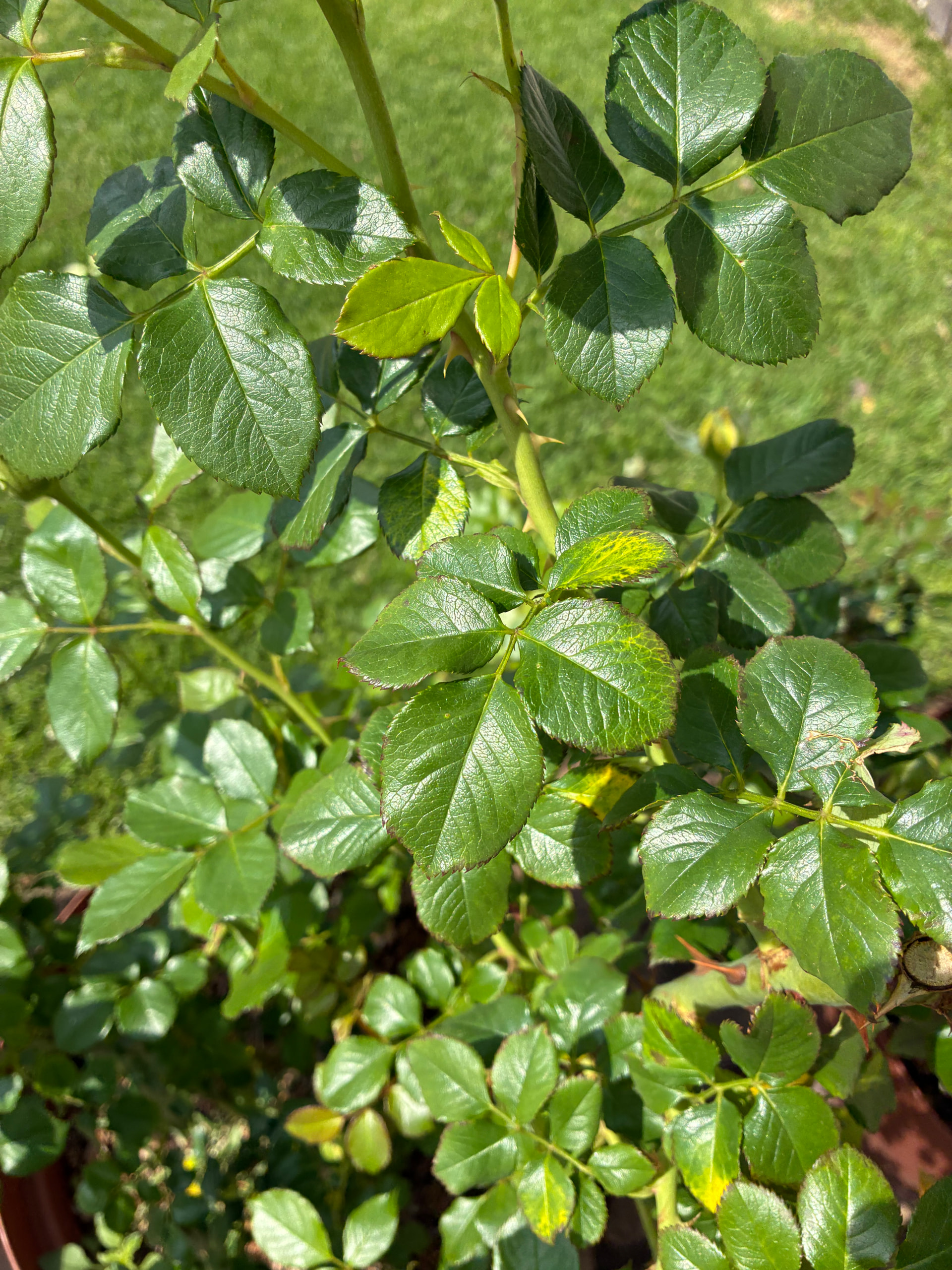
Just want to check if the following could be rmv:
Burgundy iceberg
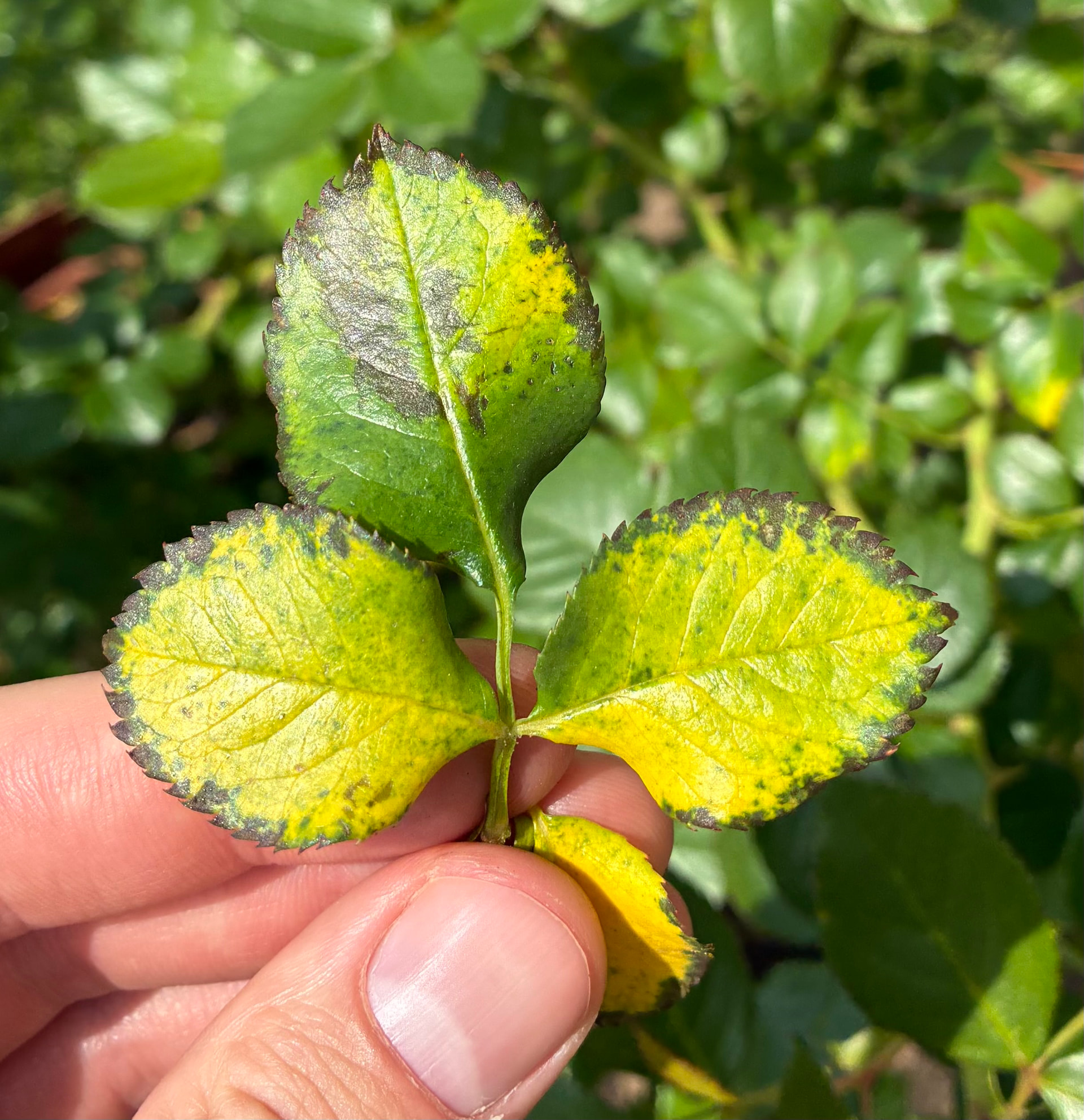
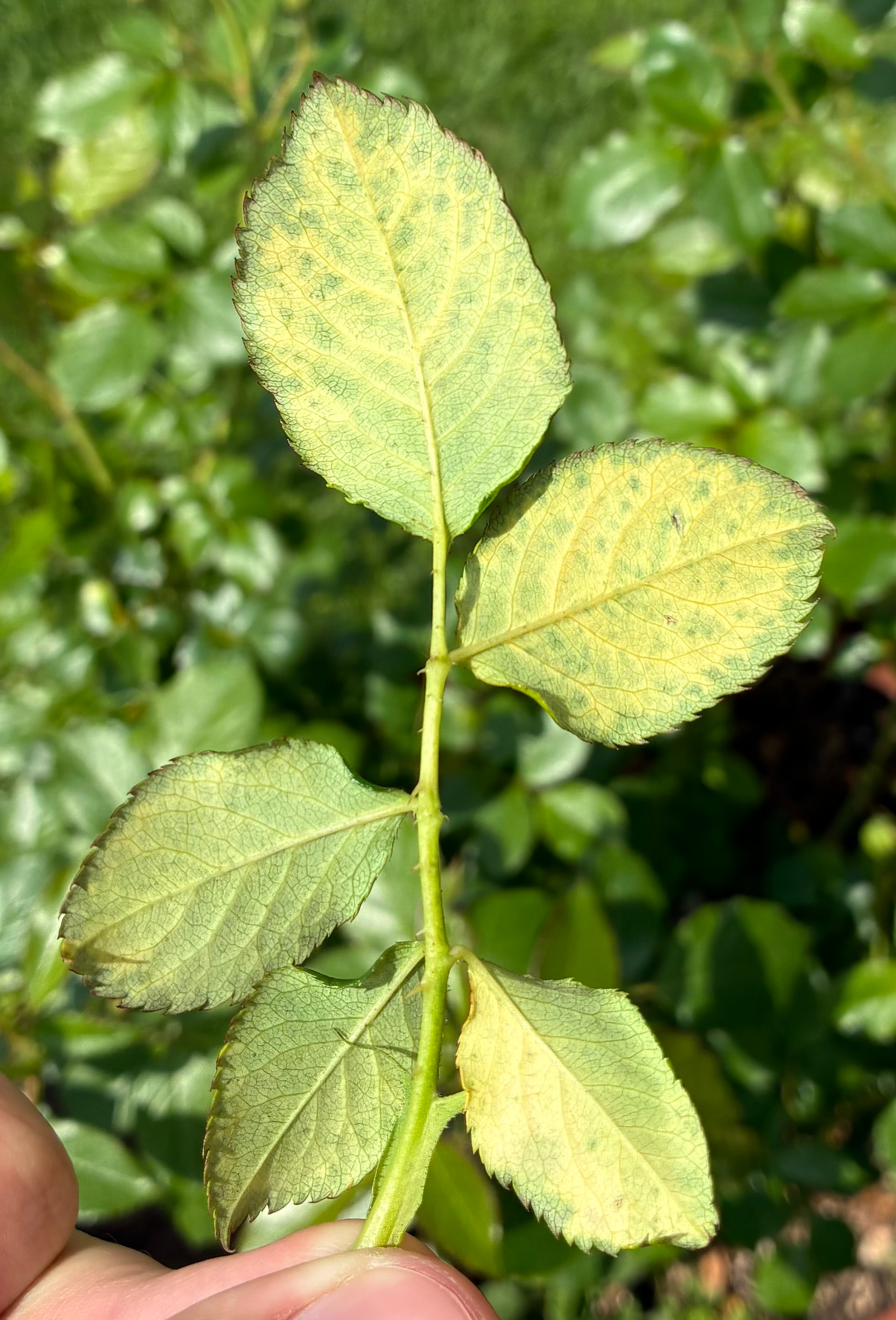
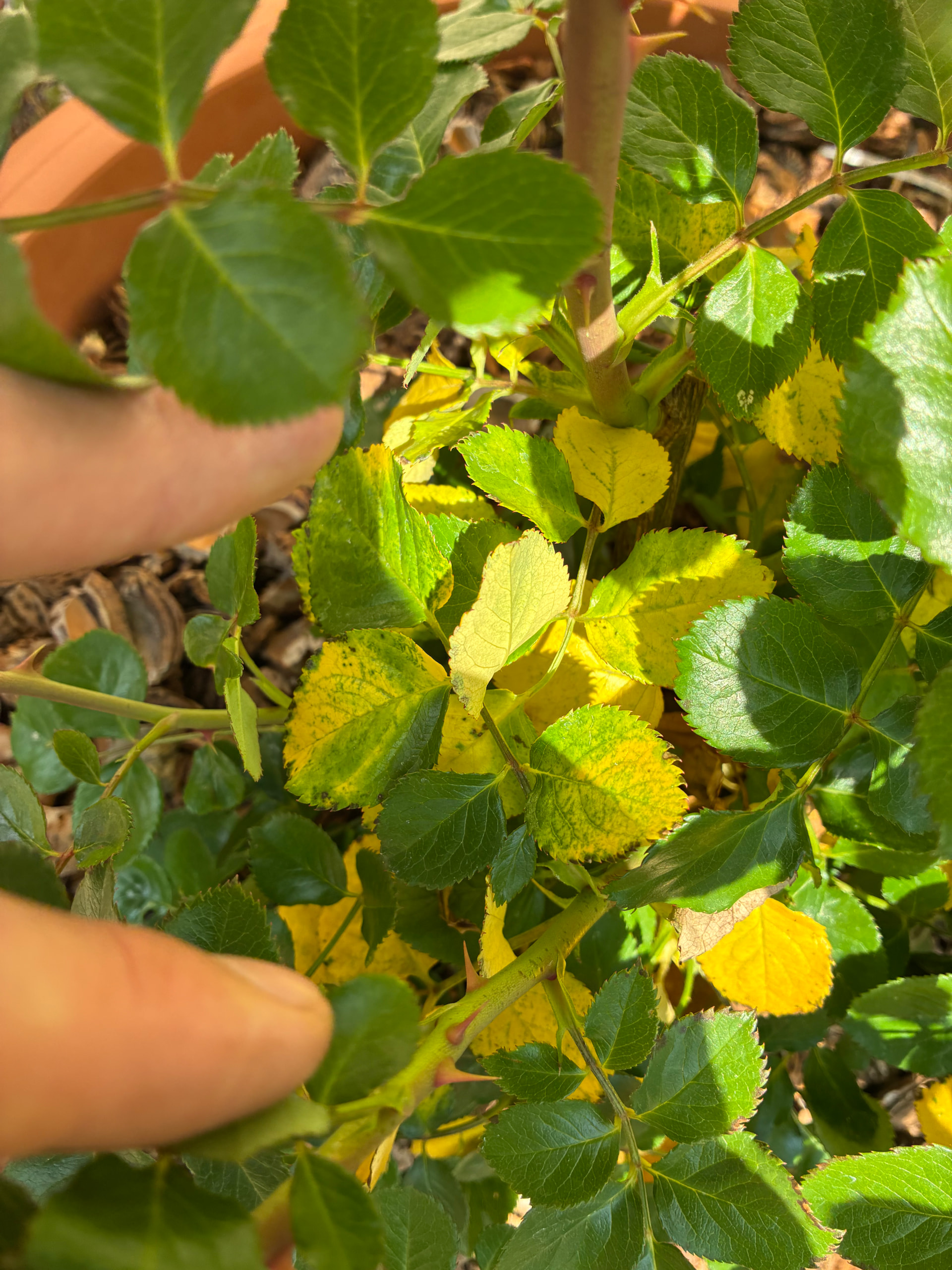
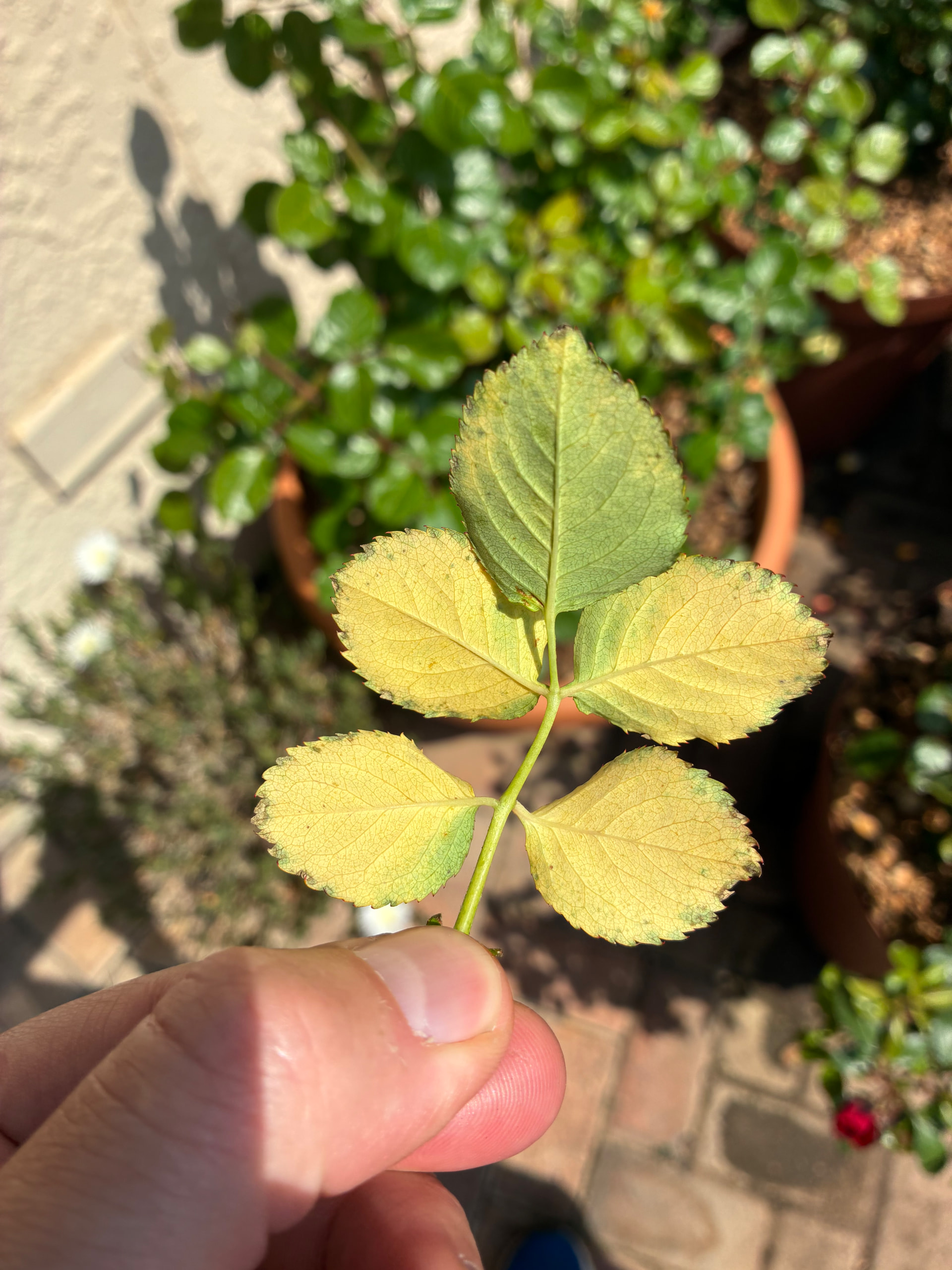
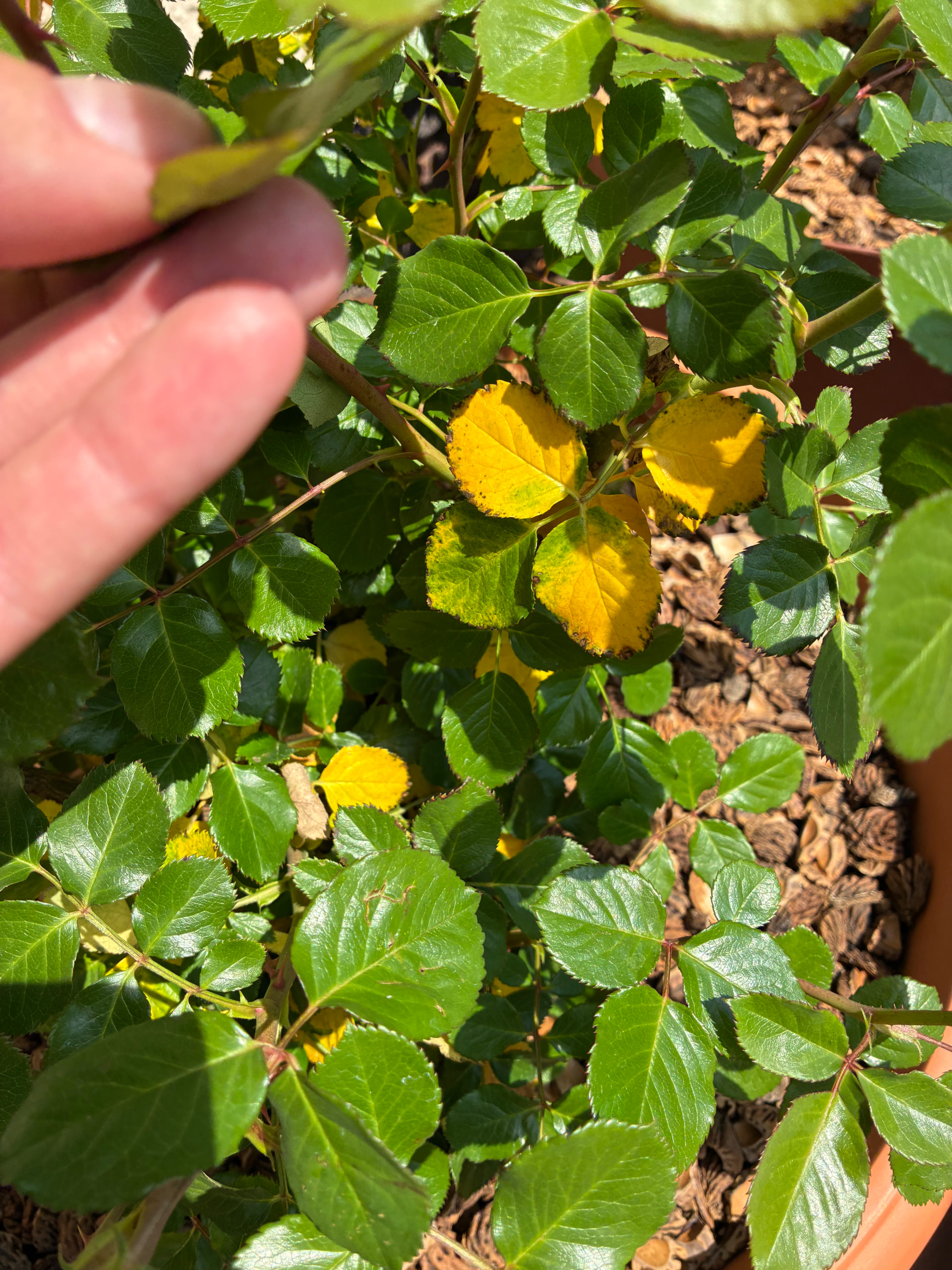
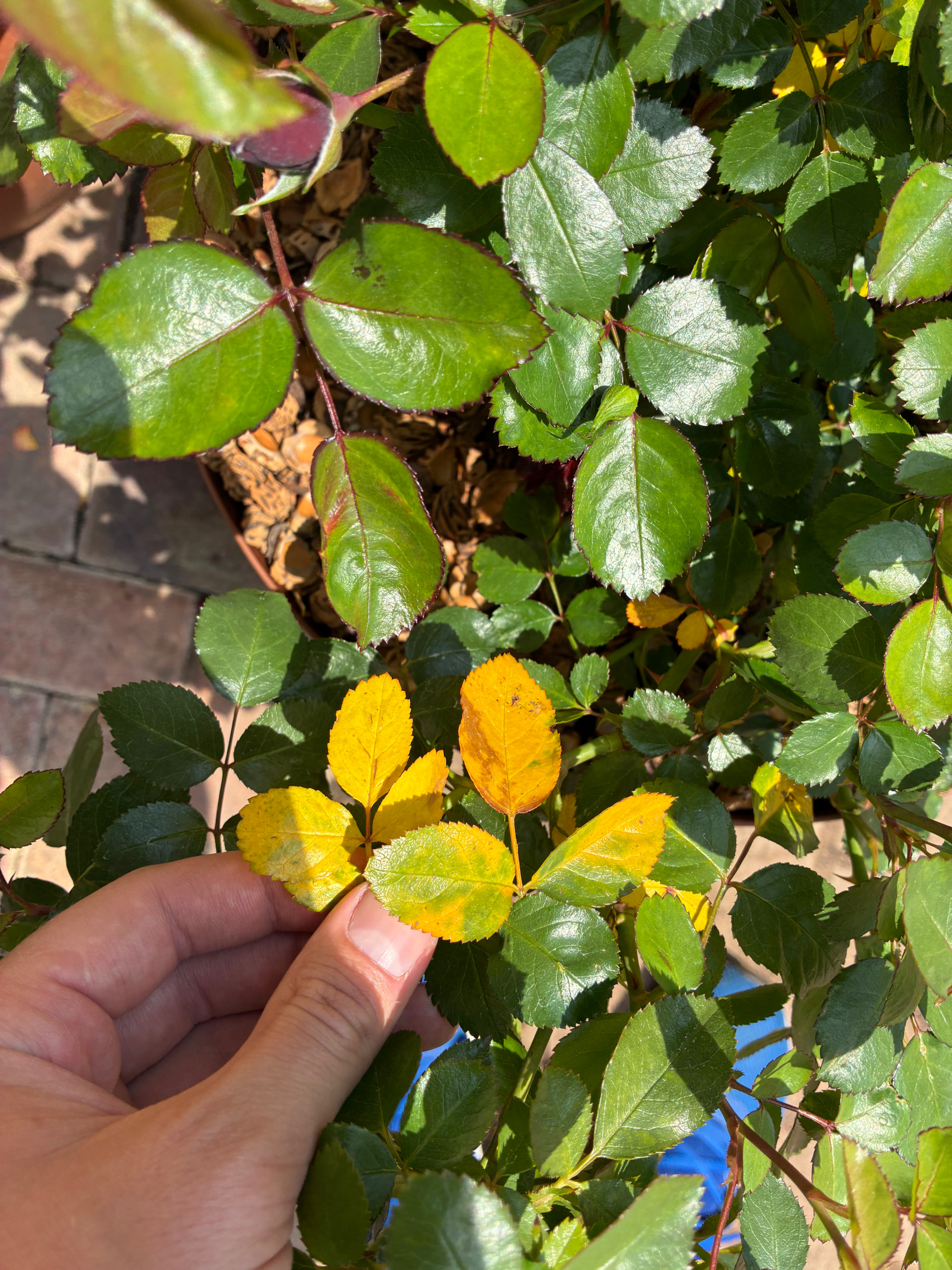
This is Blondy, some of its leaves yellow without and trace of spider mites and it keeps on returning in the same localised area
Marzipan:
OOAC:
Maybe it’s just natural leaf drop, but I thought better safe than sorry.
2 Likes
The yellowing foliage inside and toward the bottom of the plant would be normal leaf drop. Plants in general, are the perfect commune. Every part contributes to the whole or it is reabsorbed and shed. As the plant grows, new grow begins shading the older, lower, more interior growth, reducing its sun exposure. Once its threshold of light is passed, the plant begins taking chlorophyll from it, turning it usually yellow, then sheds it. This is the foliage which traditionally begins spotting and rusting first. I don’t know for sure if the darkened areas on the foliage is due to aging, heat or fungal issues. I’ve been fortunate to have only really grown roses where spotting diseases were not common so I’m not the best at diagnosing them. If it’s been particularly hot where the rose grows, extra water can also cause the yellowing of foliage. There are several moving parts there to consider.
The white spot on the new foliage could be genetic. Some combinations do that. I raised a rather large population decades ago of Schoener’s Nutkana selfs and many of them had the white/green variegated foliage like that. I’ve not experienced virus symptoms resembling that, but that really doesn’t mean a whole lot. It COULD be viral. I’m sure others will have other experiences and opinions.
1 Like
Here in the U.S. you can generally assume that any grafted rose bought at a store is infected with multiple viruses, but that’s in big part due to the pervasiveness of virused Dr. Huey rootstocks. I would imagine that in places where they grow their rootstocks from seed like in Europe the viral situation is different, albeit still an issue due heritability and mass propagation.
One issue that makes things harder to diagnose is the interplay between mosaic viruses and fungal diseases. Viruses probably make foliage more prone to fungal issues that cause yellowing, and fungal issues probably have the potential to weaken a rose enough to exacerbate viral symptoms. Heavy emphasis on the word probably here. There are a lot of variables in presentation, viruses, climate, cultivar, and plenty of other unknown factors.
That said, the variegation in the first pic sure looks a lot like RMV to me. And whenever chlorosis originates from the veins of a leaf it should be treated with some degree of suspicion.
1 Like
The variegation in the first photo does NOT resemble RMV, nor would that generally show on only a single leaf on a plant. It is almost certainly a chlorophyll-deficient chimera. It’s possible that growth from the buds at the base of that leaf would also express the characteristic, but that kind of variegation can be rather unstable.
I agree that the other photos show leaf senescence, which could either be normal or stress-induced.
Stefan
1 Like
I definitely have a few roses that only give off one or two chlorotic leaflets a year. I think it’s more common in hotter climates where there’s a smaller temperature window for RMV symptoms.
1 Like
Regardless of the extents, it is not an RMV pattern that is depicted in that photo.