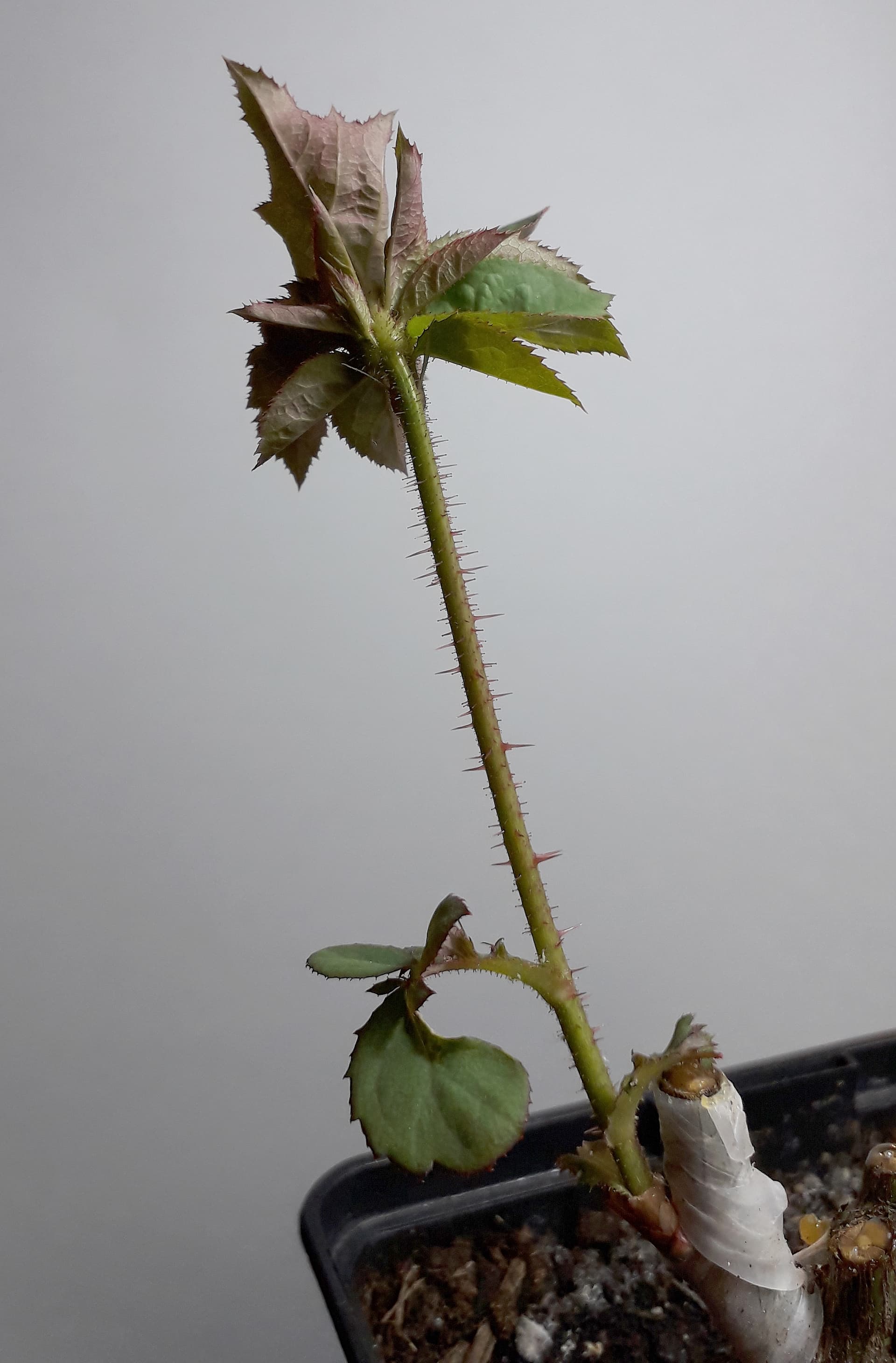
In the case shown I applied the chip-budding method for propagation. I use this technique almost every year in spring for many types of roses, from scions taken in December, which I keep in moist sand in the fridge. It works most of the time, but the highlight is that once-flowering roses in particular already flower in the following year, as there is enough wood to develop during the course of the year. Recurrent blooming roses are still blooming in the same year.
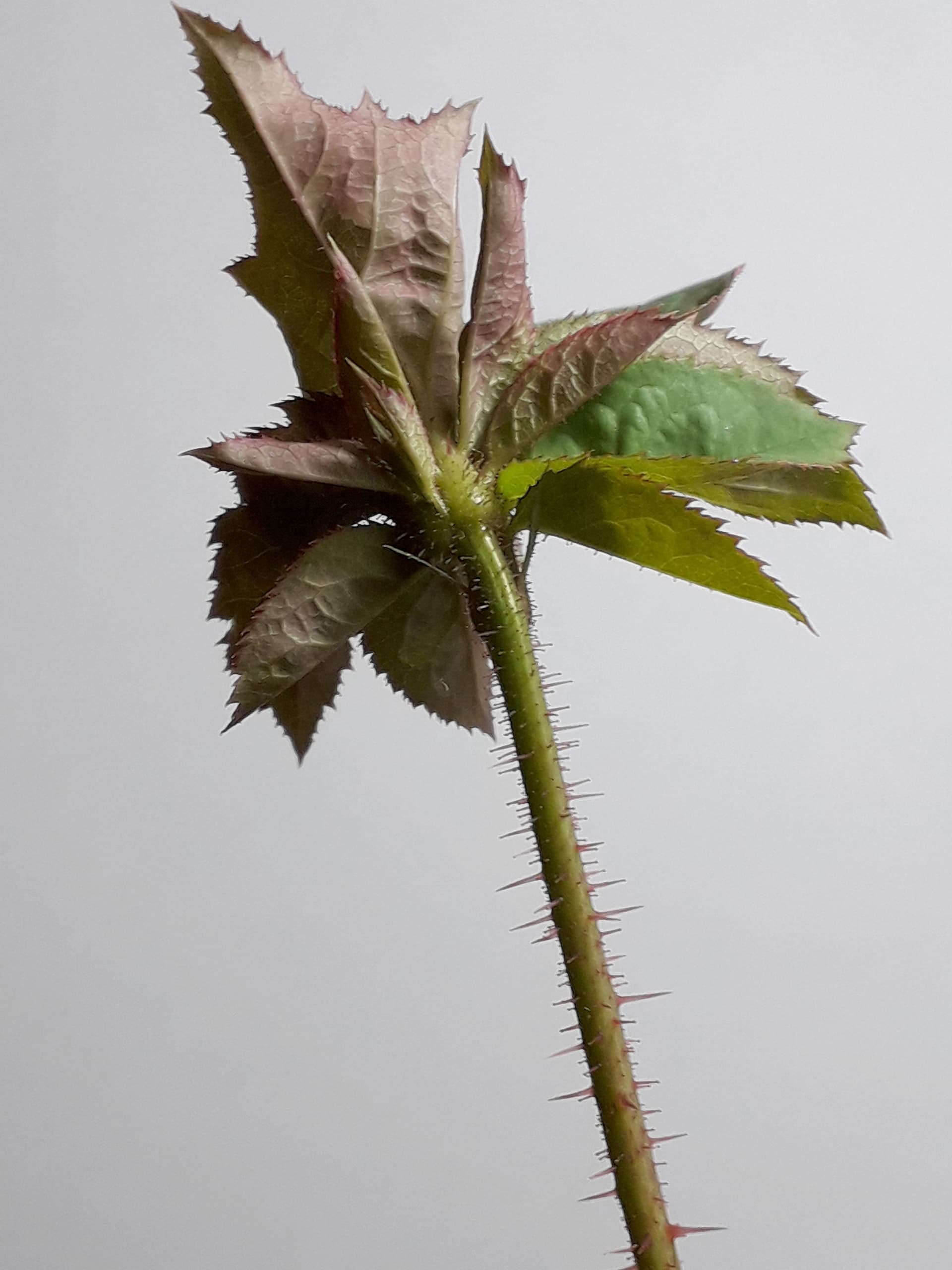
The illustrated sprout began 4 weeks after chip bud grafting. Since a few days I’m going to realize that there is possibly a formation of a bud. Of course, it is still far too early for the fresh plant at this stage. The many small needle spines with glands are also very untypical. This has not yet happened.
My question now is whether this graft has any chance of thriving well. Maybe someone can report from experience or simply has a guess. Thank you very much for advice and help!
I see similar growths on cuttings and even seedlings from time to time, and it is nothing to be too concerned about–while one might normally remove a flower bud to direct energy toward growth, in this case there is probably a substantial amount of photosynthesis occurring in the vegetative parts around the bud, so it might be better to leave it alone. You should see more normal shoots appear from vegetative buds at the nodes closer to the graft union, but probably not until after the flower is finished, unless it is a particularly fast-growing and fast-repeating variety. I would simply continue to gently encourage more growth through good care.
Roseus, what zone are you in? Another post you mentioned June for once-bloomers to flower the following year. I’m wondering what is “enough wood” for a graft and how long does it take to develop?
Hello vadr, these are completely different procedures. Nevertheless, the chip-budding method is more tolerant with regard to bark loosening (sap flow) early or later in the year. The procedure I used in June shows generally faster results, but the boundary conditions, especially the sap flow, must be very-very right. This year both procedures failed due to the very cold spring. The cold, clear nights with late frosts lasted well into May. The required sap flow was therefore not sufficient at this time, not even for early chip-budding. I’m in zone 7a. The flower forcing for the once-flowering roses is done. Let’s see if it works again next year.