Hello to everyone!
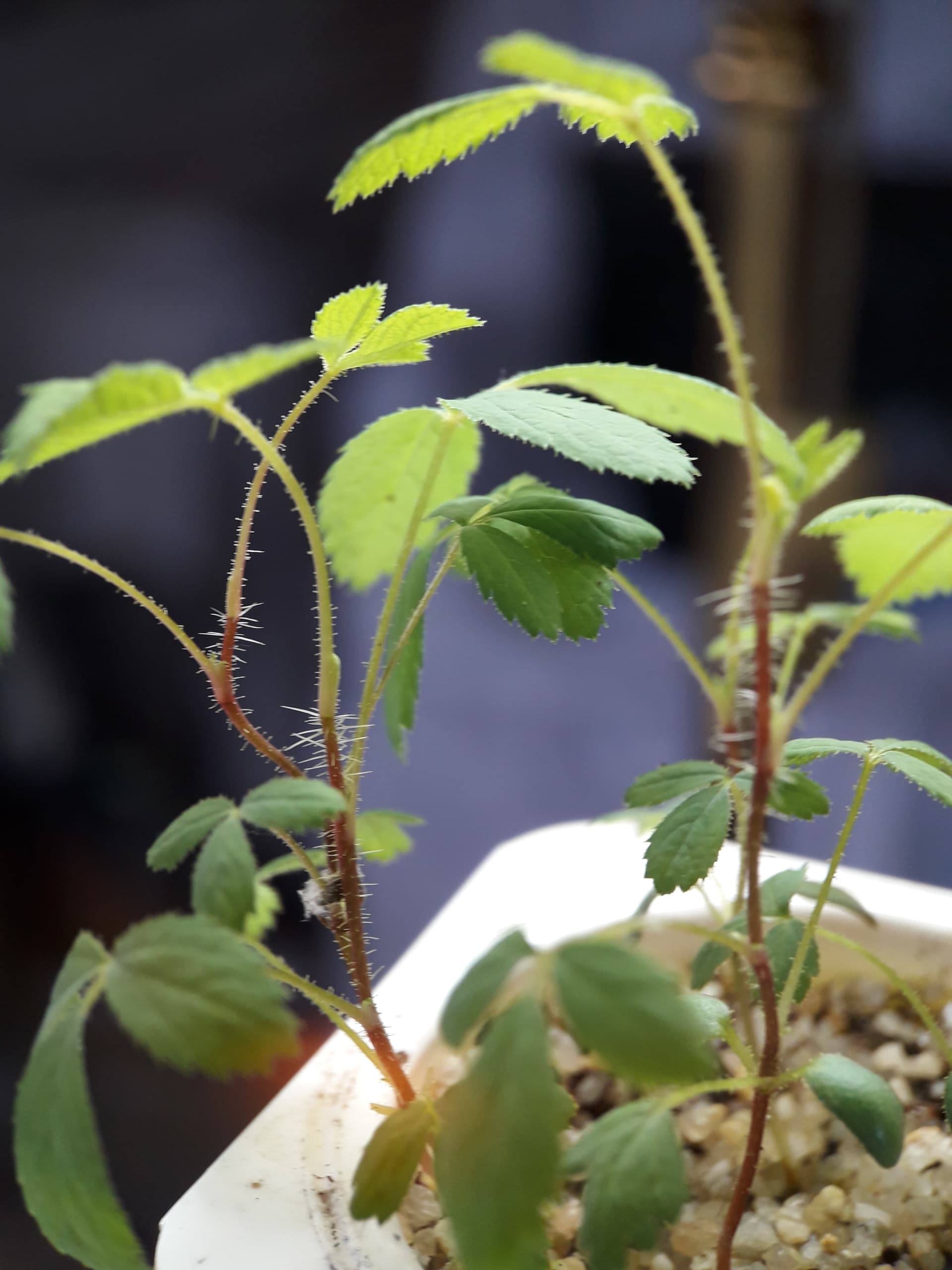
The seedlings shown come from the cross ‘Rotes Phänomen’ x ‘Nuits de Young’. The goal for me was to create a variety with moss and rugose foliage. Opinions here in the community were pretty unanimous that the moss odor from such lineage doesn’t smell very pleasant. I wanted to check for myself whether there are any exceptions possible. This crossing and vice versa gave rise to a large number of seedlings. 2/3 of them were clearly recognizable as centifolias and classic rugosas. A distinctive Moss rose was not included. The other third seems to be more of a little visible mix with rugose dominance, as the images show. However, I miss strong mossing traits on all and do not believe that this will change significantly in the F1 as the plants mature. Moreover, I’m struggling whether the baby roses illustrated are actually very weak moss rugosa seedlings or rather a classic rugosa with few more glands.
I would be grateful to hear your opinion. Thank you very much for your support.
Hi Roseus,
I don’t grow any moss roses but do have a bunch of rugosa seedlings and the seedlings in your pictures definitely seem to have something extra. That’s a cool cross by the way!
They look very young. Perhaps allow them to mature some more so it becomes more apparent? In the below thread they discussed the inheritance of mossiness. Some posters seem to say mossiness can increase over time. Unfortunately all the photo links are dead, but there is reference to an article that you might be able to find on the topic.
I hope someone more knowledgeable about mosses can comment.
Unfortunately, there is nothing good to report. They all proved to be too weak for the outdoor season because their root systems were genetically underdeveloped. As is often the case with Moss roses and special hybrids, powdery mildew was also a problem. Shortly after the start of the outdoor season, a severe infestation occurred. This also contributed to their weakness. In my experience, p.mildew at such an early growth cycle has never resulted in strong and vigorous plants. The chances are much better if the infestation does not occur until July/August. In most cases, this is a short-term, mild fungal infection that does not weaken the rose excessively at this older stage and usually does not recur the following year.
Definitely seen that horror movie with my couple of moss cross seedlings (thin as old land telephone wire) and other cross seedlings…. Under developed and white as snow and staggered through summer … surprisingly Mdm de la Roche lambert x Caroyal still appears to have survived under snow as it melts away.
R. laxa x M de la Roche Lambert can’t find yet. Should of taken cold … its there somewhere, not all snow gone.