Anyone else experiencing mildew explosion? We are currently having the hottest may on record. I would say over 80% of my Charles De Mills hybrids have mildew, however there are 3-4 which seem immune. All ready culled a few as it was the whole plant… I guess this is how I bring down my numbers
Extreme heat causes water stress and that stress inhibits the plant’s immune system. I’d read in rose books from Britain decades ago that water stress causes even resistant types to mildew. I didn’t believe it until I did it. It also causes them to rust. I’ve done that too.So, when either rust or mildew hits one of the roses, I increase the water and very often, it stops. When it doesn’t, a shovel cures it permanently.
2 Likes
Yeah the very worst I have put to rest but it’s good in way as I don’t have space for the amount I have. Additionally we had 2 late frosts 2 weeks ago which killed off most of the anthers on the early flowering roses. It’s been a mental start to the season.
1 Like
I am yet to really experience rust (other than one selfling I found), I imagine it will show it self eventually. What happened with your heat induced mildew event?
Also I watched a video of a rose youtuber (Fraser valley rose farm) and he called Charles De Mills “Charles De Mildew”. Now I have never seen mildew on Charles De Mills in my climate, however I am betting when you cross mostly Portlands who are also known for mildew (only seen very little one year) with Charles that’s what happens. Then we have a frost of about -1 followed by 30 degrees celcious 2 weeks later. As I say the worse hit ones have been culled but I would say it is an epedemic… The trials are very much in effect.
1 Like
What I am experiencing now is what I would call a mildew apocalypse. I think the spore load is now so high even the ones that were doing okay have started to show signs of it… I’m wondering if I intervene with some milk spray or if anyone has any thoughts. No exaggeration, 7 plants have succumbed to every available space being covered in the White death. Would anyone recommend I continue my extreme form of testing or is now the time to give the roses more space, cull more of the ones even with minor levels of spores… Helllllpppp!
If the seedlings are put close together, it might not be a proper test, since it puts too much extra stress on them. The spores are easily carried from leaf to leaf by wind or splashing water. If the branches are near together, the fungus has very little distance to travel. So it’s essentially equivalent to massive reproduction.
I would recommend saving the seedlings that were originally resistant and setting them aside, planting them farther apart, and watering them very thoroughly. I think that this action alone will reduce the massive fungal load and solve the problem for many of them. In my experience, a mild infestation clears up on its own over the course of the year and is completely gone by the following year. I’m more skeptical about severe infestations, since the milk treatment hasn’t helped much in those cases—and, more importantly, the relief wasn’t long-lasting. It would be worth a try anyway. The genetic predisposition is often simply stronger. On top of that, extreme weather conditions are becoming more common, which doesn’t exactly make things easier. I’m keeping my hands crossed for you!
N.B. Nitrogen fertilization promotes soft, fleshy leaf tissue, which is particularly susceptible to powdery mildew. If powdery mildew infestation is already present, nitrogen application should be stopped immediately to avoid further increasing susceptibility.
1 Like
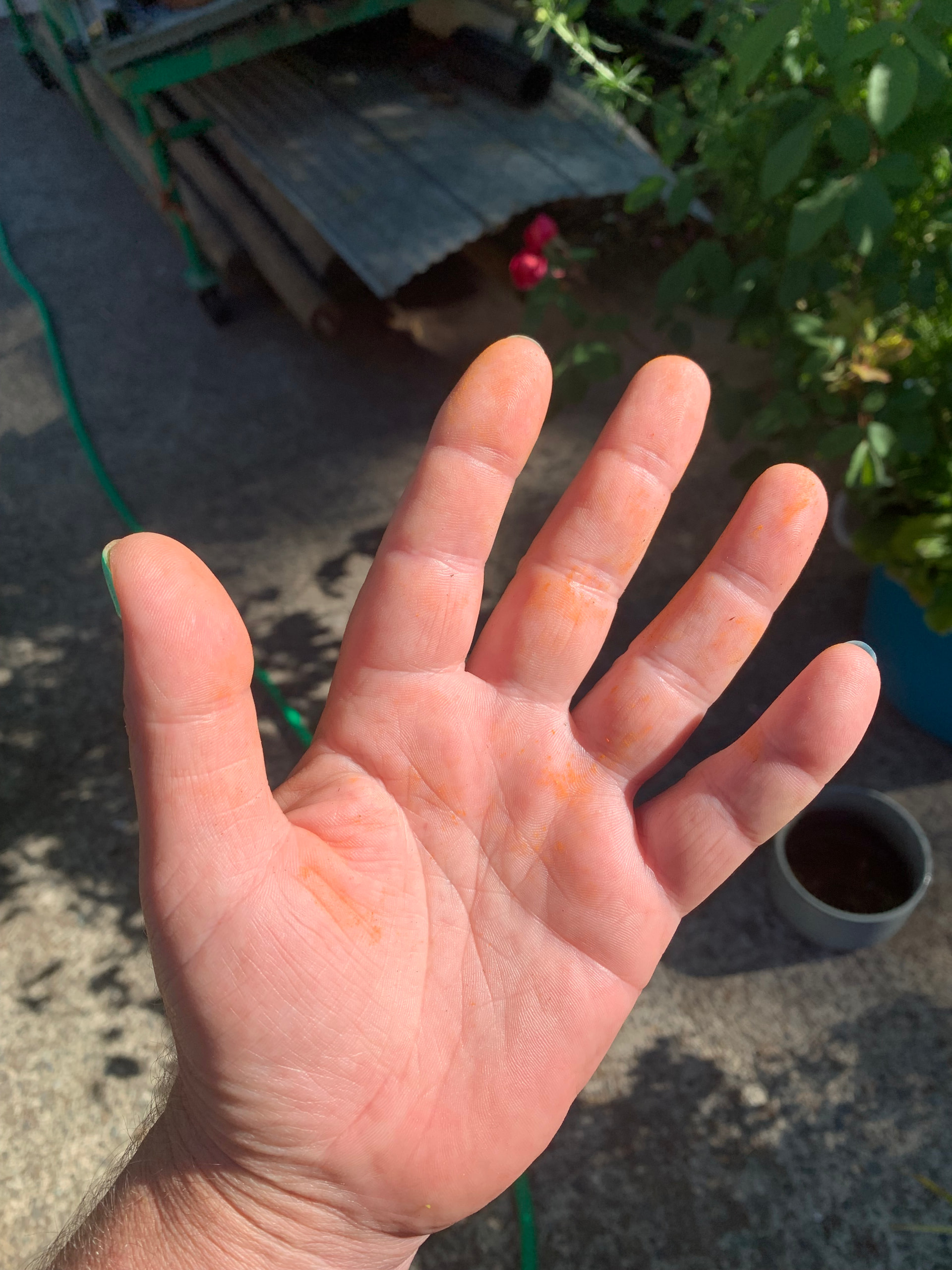
Just pulled a bunch of rusty leaves off of old ‘C. F. Meyer’, and my hands are COVERED IN SPORES!
I sure enjoy the scent and the huge silvery-pink blooms, but DAYUM is that MF hard to keep clean!! It is really the only rose I grow that will rust. When I get land to plant in, it’s going somewhere moistish, FOR SURE.
1 Like
I have done a milk spray and moved out the healthiest roses and then used the space left to spread those roses out more
1 Like
Might have to do a heavy weed on that bed to free up more air flow
1 Like
Meyer has beautiful blooms and smells SO good but I rid myself of that curse many years ago because of the rust. You won’t be tempted to pass on those bad genes once you banish him from your grounds.
1 Like
I’m already against it! lol #EffectivelyNeutered
1 Like
After much weeding and milk spraying I decided to cull another 9. 4 of which were filling 7 litre pots but totally covered in mildew leaf and stem and were starting to get warped. I think there are 2 more currently on the mildew edge of cull for me and then 8 more that have limited vigour. At this rate out of a 148 rose season I will have very few!
1 Like
This is the first year my ‘Winchester Cathedral’ has suffered from powdery mildew, I think because I have been sparing in watering my established roses and there has not been as much rain as I might like. If it was the first year I had seen it, I would think it a bad plant, even though it is one of my favorites in the garden in past years.
1 Like
It’s a brutal year for it, barely ever seen it before. But I am using Charles De Mills and Portland roses. I was warned!
I’ve had to deal with mildew recently as a vendor sent me a Bessie with PM on it. I grow indoors so it was really annoying as my garden was PM free up until that point. You’ll want to use propicanozole and micronized sulfur. The propicanozole will eradicate it from the tissues and the sulfur acts like a protective barrier.
To lower the severity of the infection/chance of infection overall I’d use silica as well. You can buy AGSil 16H for this. It has been shown to reduce the severity by 46%.
2 Likes
I plan to avoid any major chemical intervention. It’s painful but it needs to happen so I know which ones can take it
Thanks for that. Something I was unaware of. That also makes me wonder if the differences we often hear of in PM severity is related to the plant-available silica levels in different geographic areas.
The study you provided was written beyond my pay grade, but I found a more layman-friendly version published by Rutgers:
2 Likes
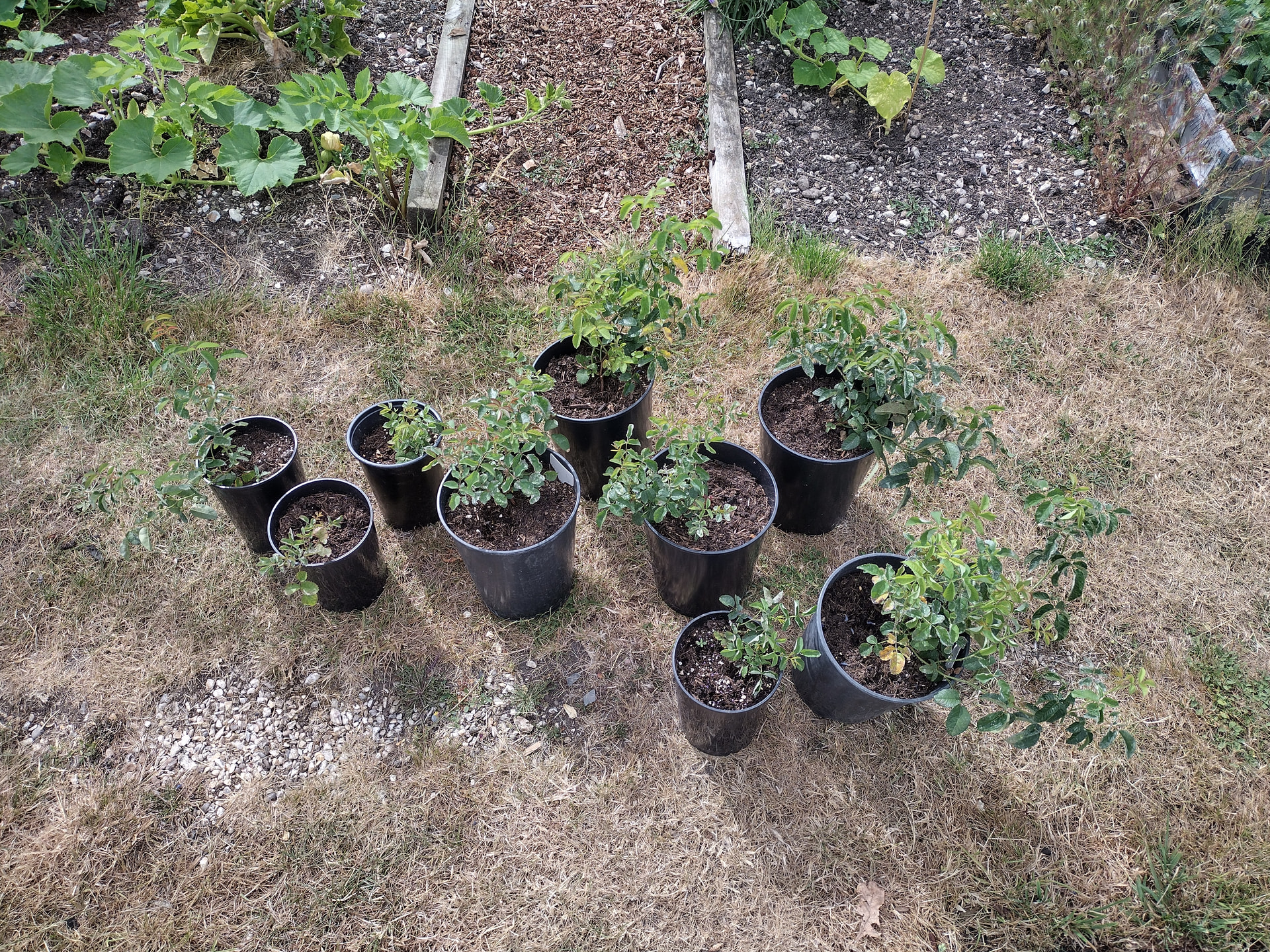
Another 9 in the bin, using the soil as mulch for my vegetables… So not all bad in the heatwaves! I have decided that I did need to continue being harsh. The fact that some (very few) had no real issues showed me that I was being too sentimental. I have now gone from ones that are covered, to plants where stems are so badly effected it’s breaking them. Where this occurs/is occuring the roses will be culled. I seem to have been under the illusion that I had all the space in the world. The only one I kept from last year will be culled. It’s now massive and in the ground covered in mildew. The fact that it’s a pretty large (adult) rose makes me think that this problem won’t get better. It has also taught me that if I am to keep using Charles De Mills as a mother plant. I’m going to have accept three things. One that they have a strong chance of mildew (1 of the Charles De Mills hybrids is highly resistant) and two that continuing to shove Portland’s Into them who are also susceptible is insane… I need new blood. The inbreeding to get that purple flower must have taken generations of not caring about mildew at the cost of getting that stunning flower. Three, I both love and hate this hobby… In 4 years I have kept 4 roses. Only one of them probably should have been kept (my only success, in my opinion) one of them if it sets hip maybe useful. Please give me at least one win this season… I have the numbers!
3 Likes