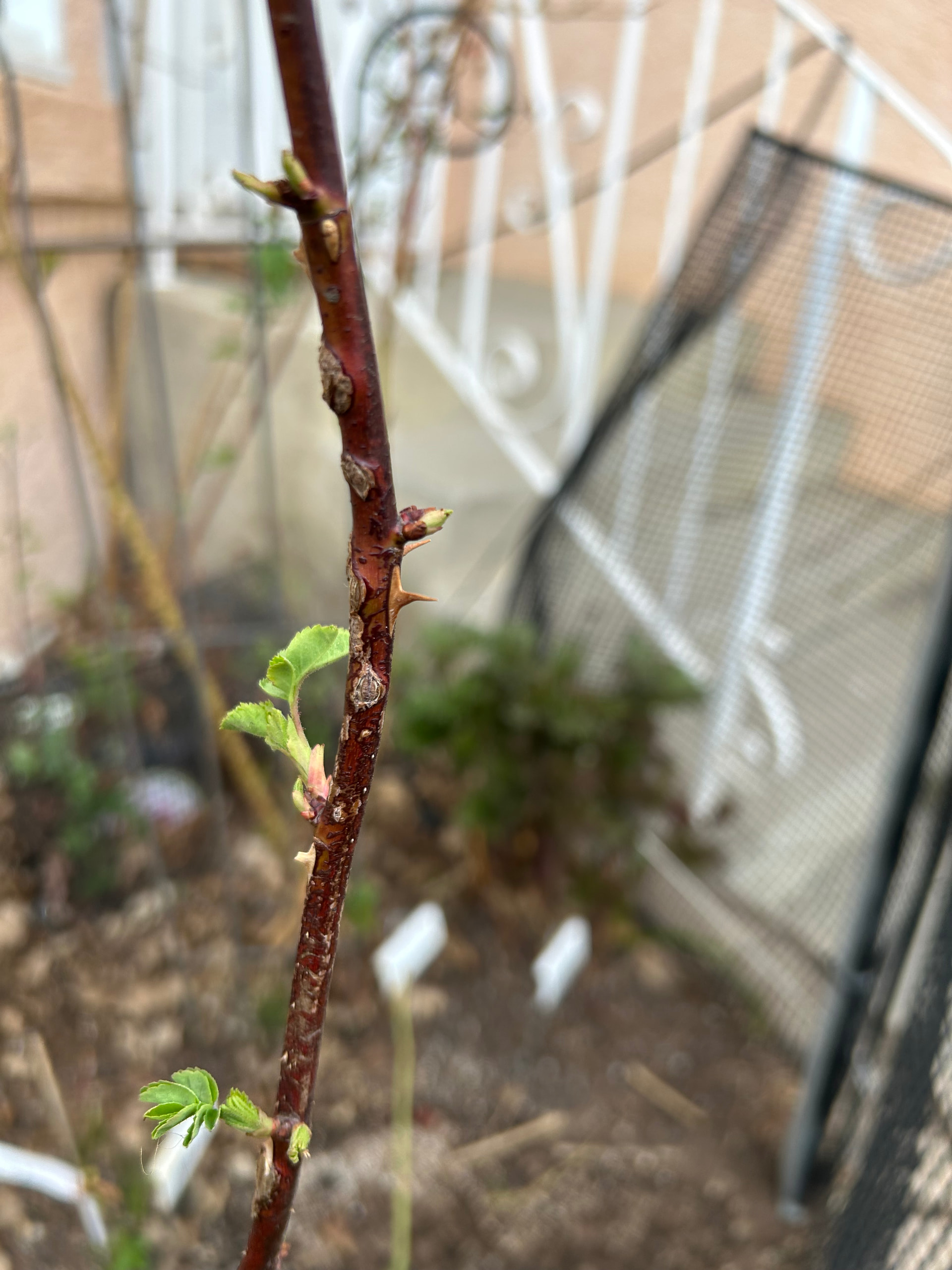
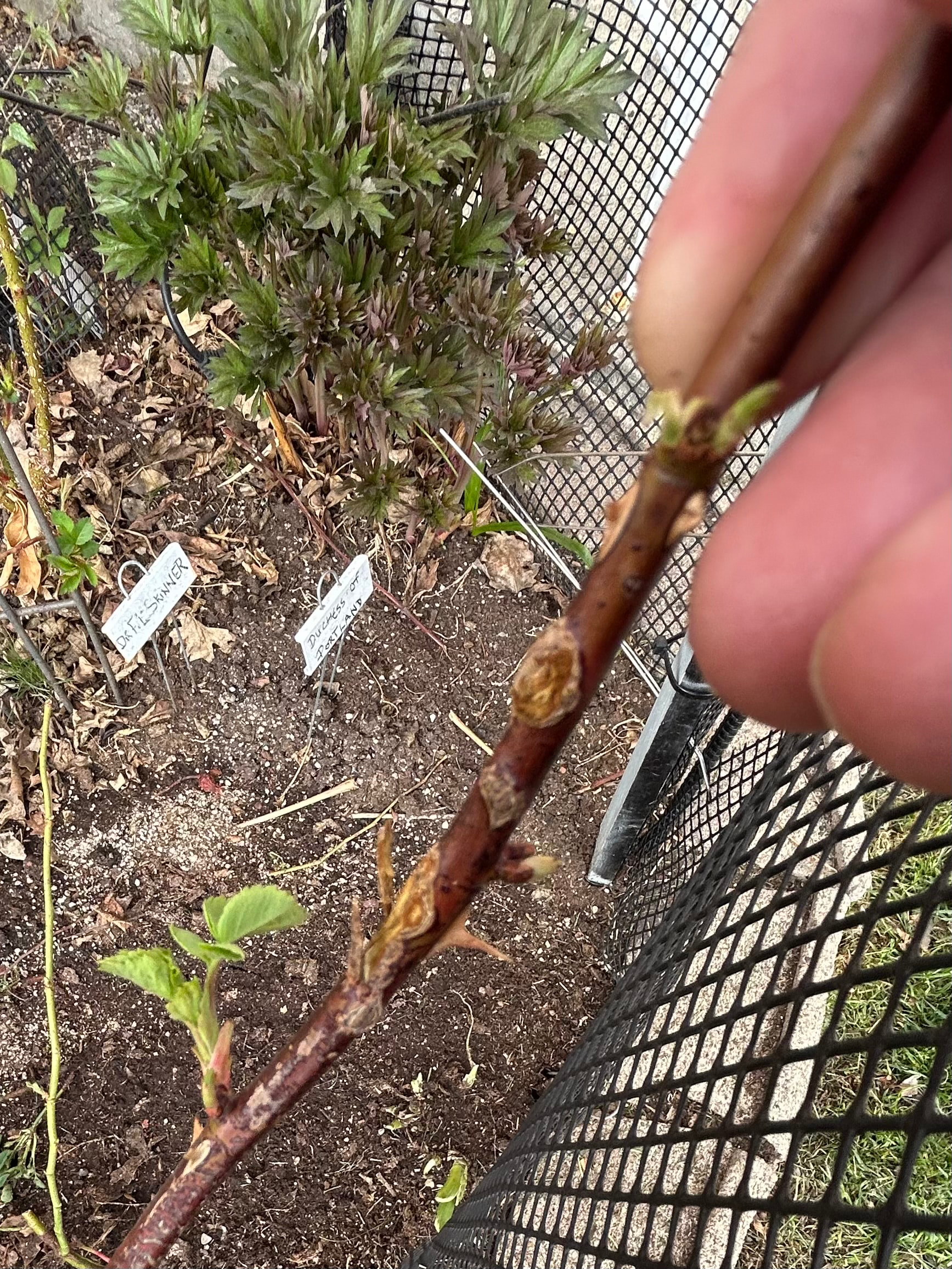
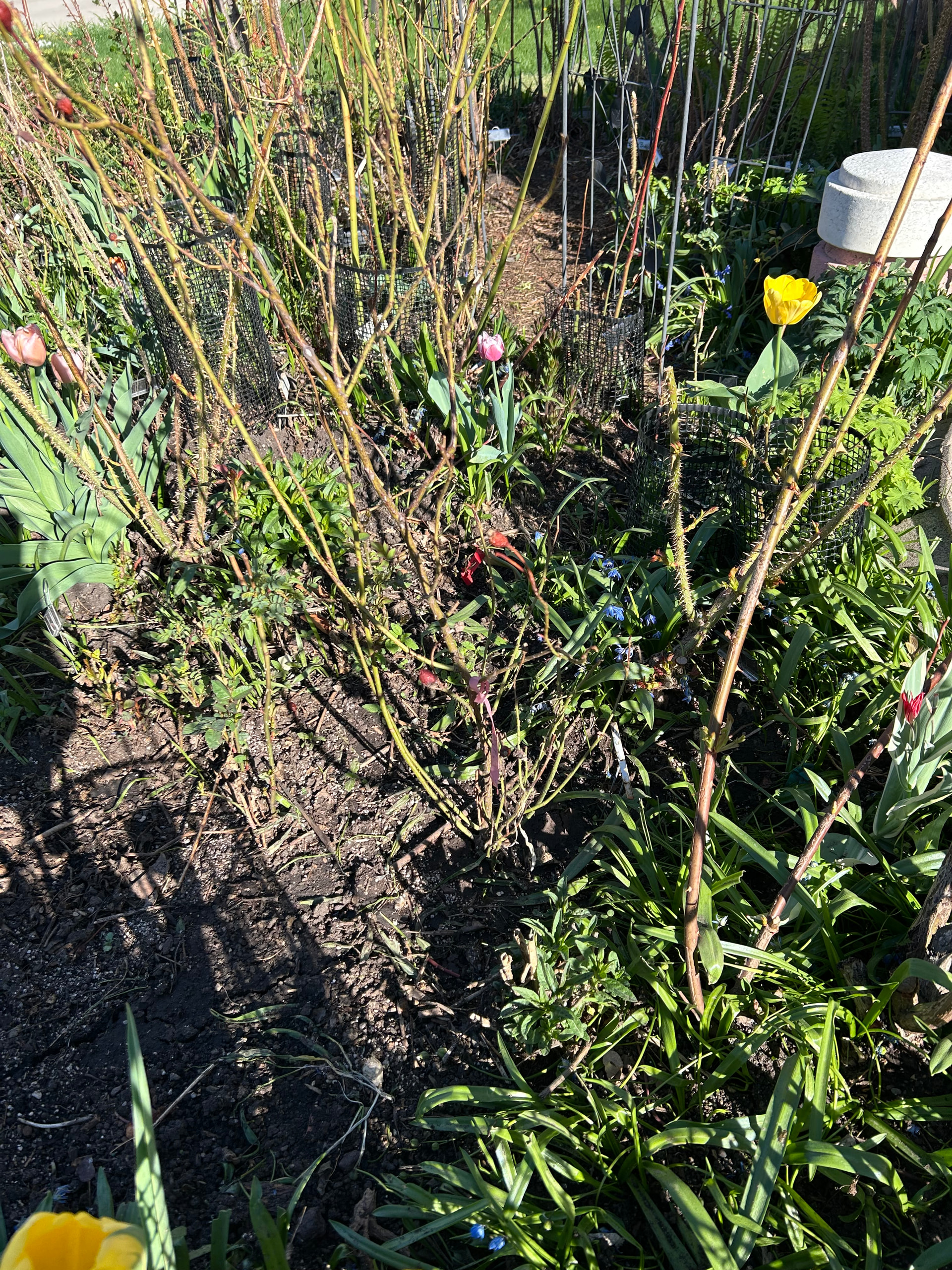
Compared against a few reference pics but the diamond shape not a visual match to my eyes.
Don’t recognize it as a leaf scar or wind damage.
Always gives appearance that could slid finger nail under edge and pull it off - l can’t.
Another pic after OFAL knife surgery … no idea but three “ circles make me wonder if remnants of old leafing site or node as l call them. No idea why weird “callous”. Still think its a warning sign.
It looks like normal cambium tissue forming scars to protect and seal wounds in the cane to me.
1 Like
Thanks l am going with cambium your scar-healing opinion. Its a windy, “haily” hill where the rose grows - one of my Gallica x Fedtschenkonian crosses
PS
Some ITMe obs of “damaged” cane is two leaves have developed along cane for most of its “non frosted out” cane length. The three cambium circles under scarring must of been a clue. Do not see this on my Fedtschenkonian today. Believe seen it on R primula.
Yes on R primula too. The old three tries if original leaf node damaged by spring ice? (Pickering feed back me when received roses with blanched bud grow that burned way back in the dawn growing roses - “ don’t worry be happy two more chances”. This primula example using all 3 strikes this spring for this node hoping no “mark the bird fydrych” is pitching (hail).
3 Likes
If you practice budding, you’ll observe many such scarred over wounds in stocks and canes from which you remove buds without removing the canes from the mother plant. Interesting you crossed Gallica X Fedtschenkoana. DNA analysis of Autumn Damask revealed it contains both Gallica and Fedtschenkoana, perhaps other “ingredients” as well. I’m not remembering the full “recipe” as it’s been quite a while since I’ve read them.
1 Like
Your absolutely correct that was my intent (strategy?).
Move gallica hardiness (nearly zero for seed parent gallica - though very good seed parent) through use of R fedtschenkoniana. And hope for some recurrent fortune from rumours.
Gallica for mauve hope?
Damask don’t last in my garden, not even Kazalnk(sic). Neither do usual damask.
First two winters thought my plan worked, had it made - last winter’s result said “More testing req’d.”
1 Like
Addendum
I need to add after my global statement no damask survives in my garden, that perhaps one does.
I read on HMF the Canadian “Grannie’s Rose” is believed to “have damask in it”. Opinions by pioneer hybridizers with strong ties to Europe.
Grows well in my garden - once bloomer. Has very little winter damage. Seems to breed easily so far. Lots of historical references.
No results as early days - other than small crosses still alive outside after 1/2 winters.
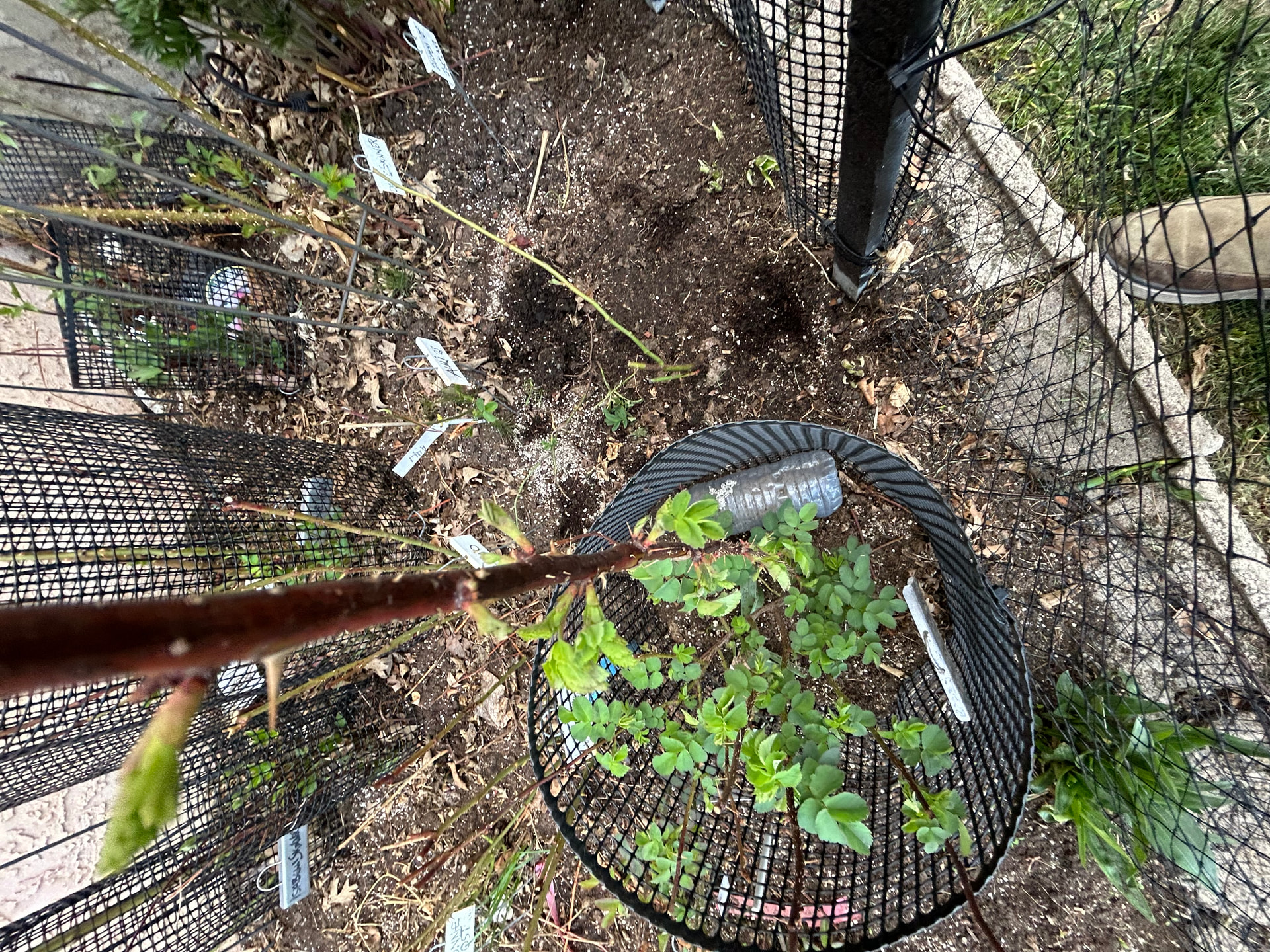
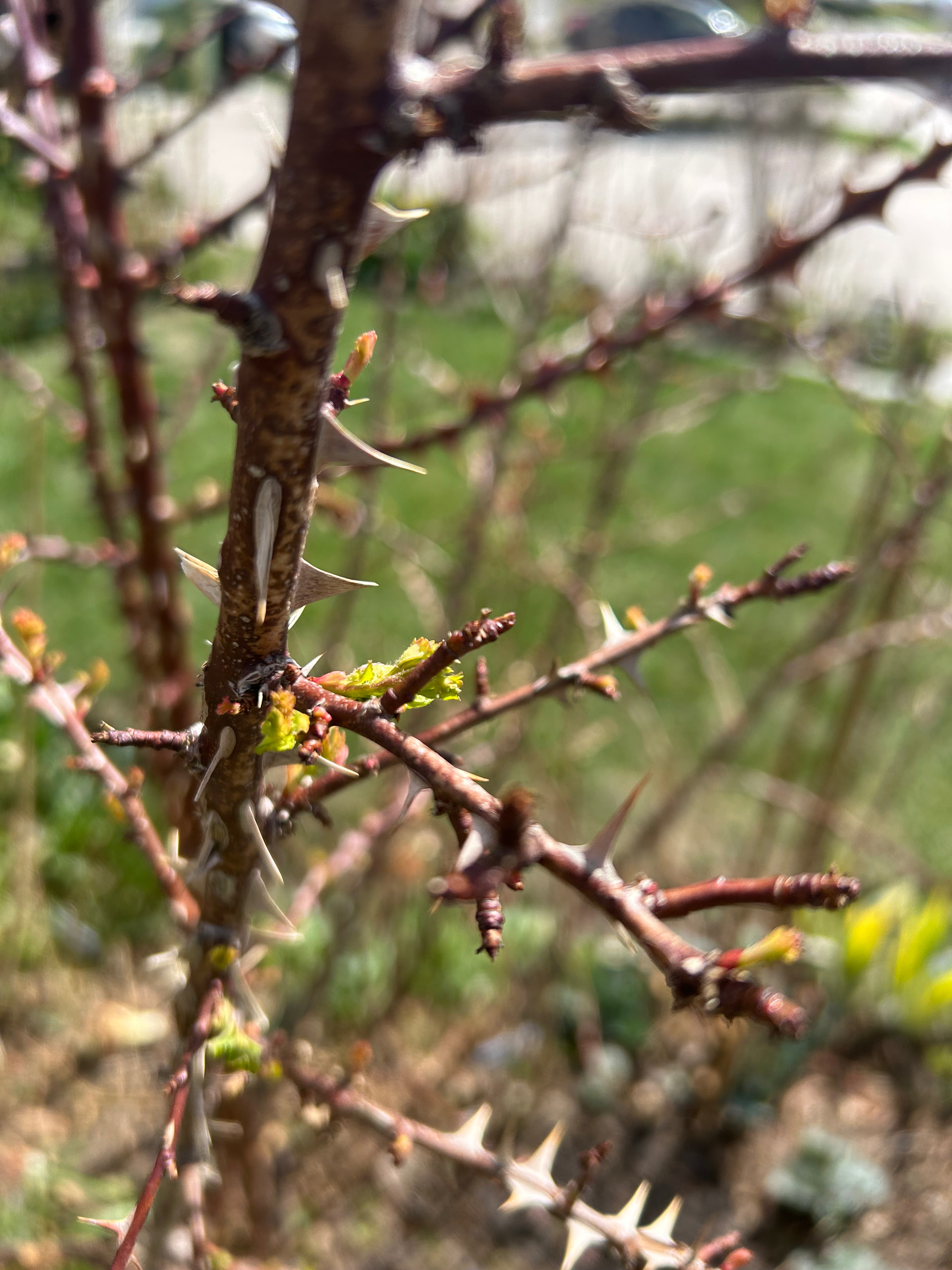
Today photo - takes time to get leaves in my garden, the centre rose with pink tag …