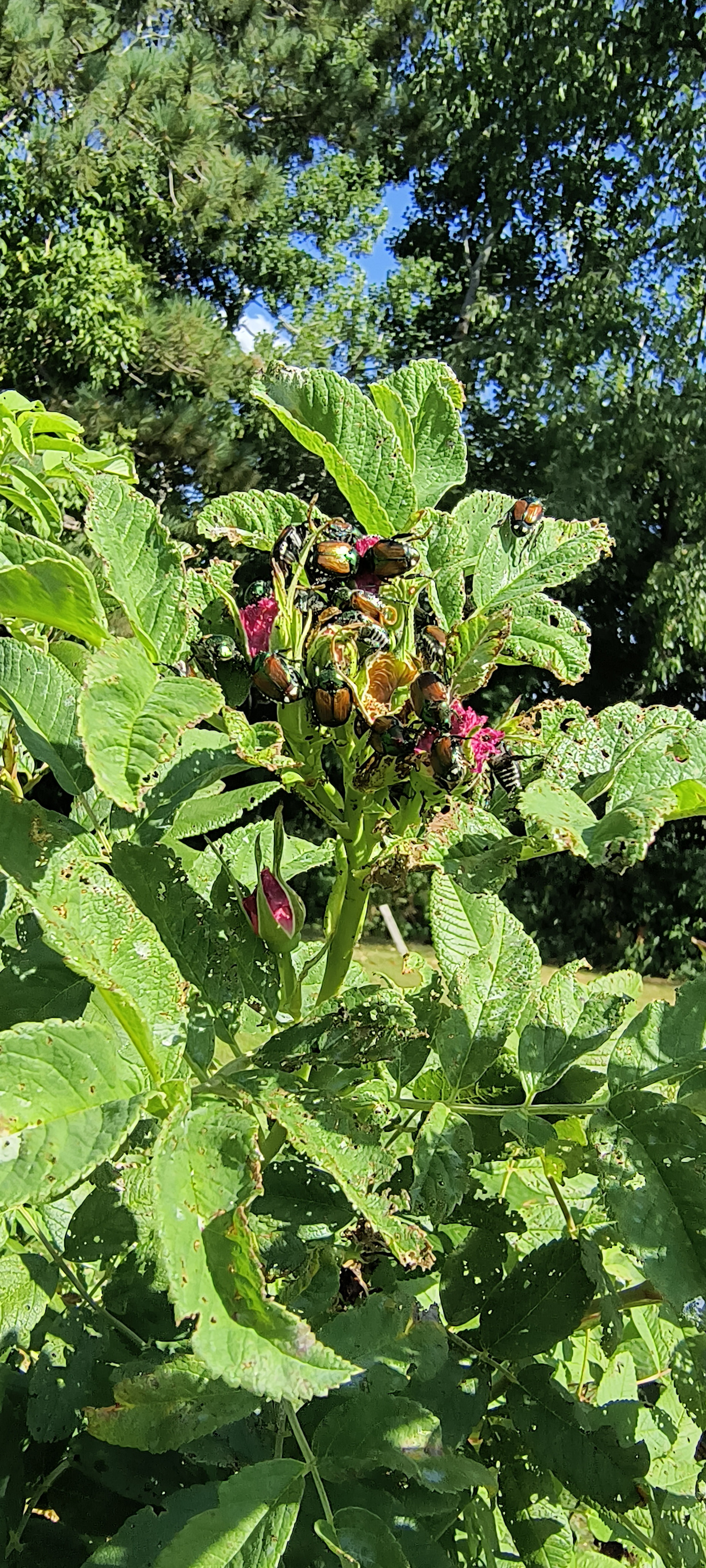
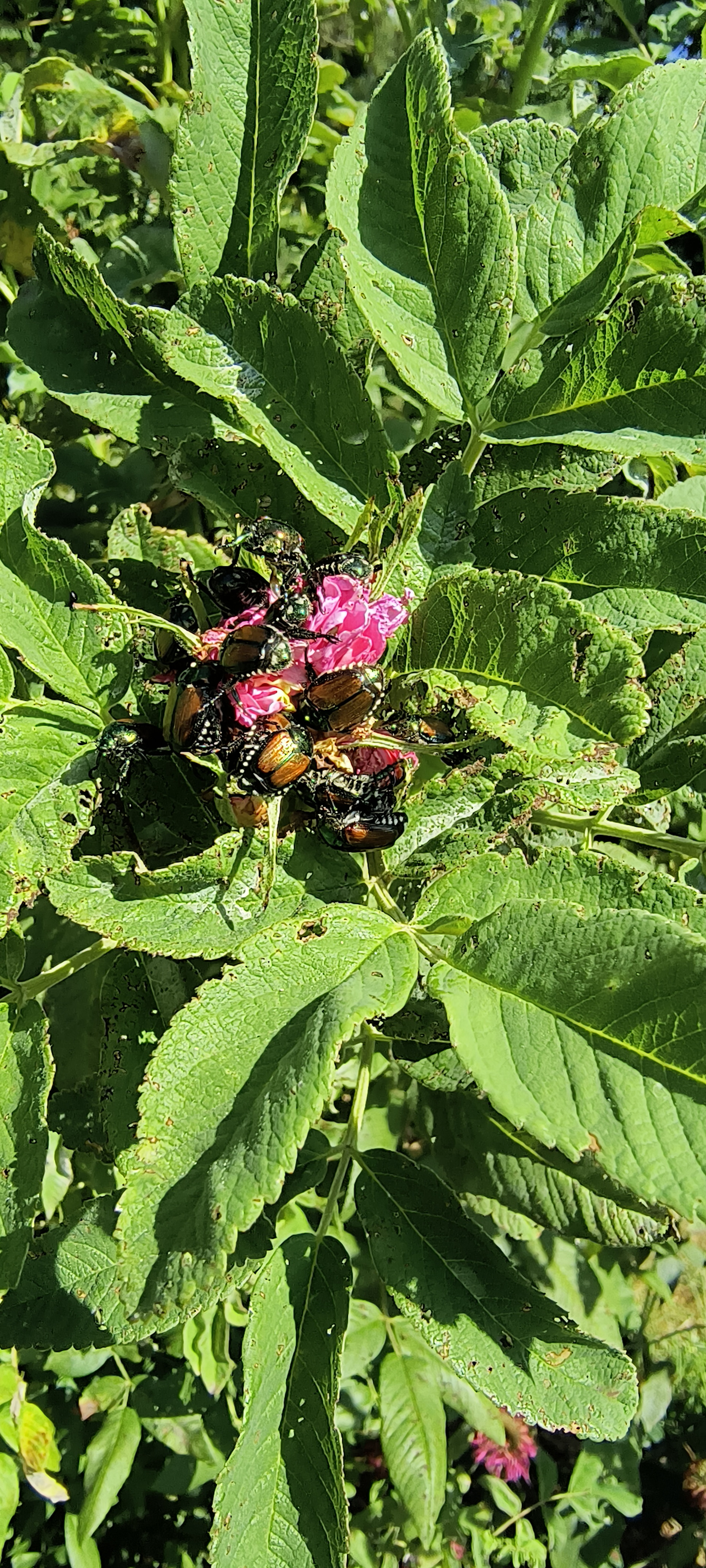
The prognosis for the expansion of Japan beetles in Canada is going to get worse. Beetles will continue to spread since no legislation exists to compel each and every land owner to aim for eradication and reduce their numbers by putting out traps. I believe that if every landowner would set out traps for at least the next decade, we would certainly see their numbers dwindle if not outright disappear. British Columbia did just that and nipped it in the bud as soon as the beetles showed up on the mainland. The province of Ontario lost that battle decades ago.
I’m just curious if anyone is contemplating giving up on rose hybridization or has given up entirely because of the horrendous Japanese beetle situation that plague areas of Canada and the United States ??
If you have Japanese beetles attracted by numerous roses planted in your garden or property, how do you manage testing your seedlings without the beetles devouring them to bits?
Or is it mostly individuals without Japanese beetle problems that are able to hybridize and test rose seedlings with a peace of mind?
Dee - JB’s are definitely among the worst insect pests for me here in mid-Michigan. When I first started seriuosly into roses, I made the mistake of putting out beetle bags! I followed the instructions and put the bags way out on the edge of my property, but I think it drew beetles from the whole county to my yard. Don’t do it! (Or I could selfishly say “do it” in the hope that your traps in BC will draw them 2000 miles away from my yard!)
I’ve tried the milky spore treatment for several years after the beetle bags and didn’t see much in way of improvement. This past year at urging of a much more experienced rosarian, I put up some bird houses and feeders (blue bird nest boxes, Oriole jelly feeders) and this is THE most effective thing I’ve seen. I still have a few JB’s but not nearly the nuisance of before calling in the birds. Also, you can use a sacrificial plant - “Kiss Me over the Garden Gate” which is an annual that grows to about 8” tall. JB’s seem to prefer it over roses, so you can collect the beetles and feed them to your chickens or just drown them in soapy water. Don’t give up, just get even!
I live in the country where there is an endless supply of Japanese beetles unfortunately. I’m surrounded by farmland, pastures, neighbouring lawns and even golf courses. I usually bring the trap out when hand picking becomes overwhelming around mid-July. There are a couple bird feeders in the yard but placing bird houses puts the birds in danger because of my 2 cats. I have no choice but to spray here and there, both with or without traps, when beetle numbers are out of control, especially on recurrent roses. So I keep roses to a minimum with a preference for once-bloomers since they flower before the beetles arrive. Their aromatic foliage still attracts them, even when the plants are out of bloom. Milky spore doesn’t survive in our soils because everything here in eastern Ontario freezes solid like an ice cube.
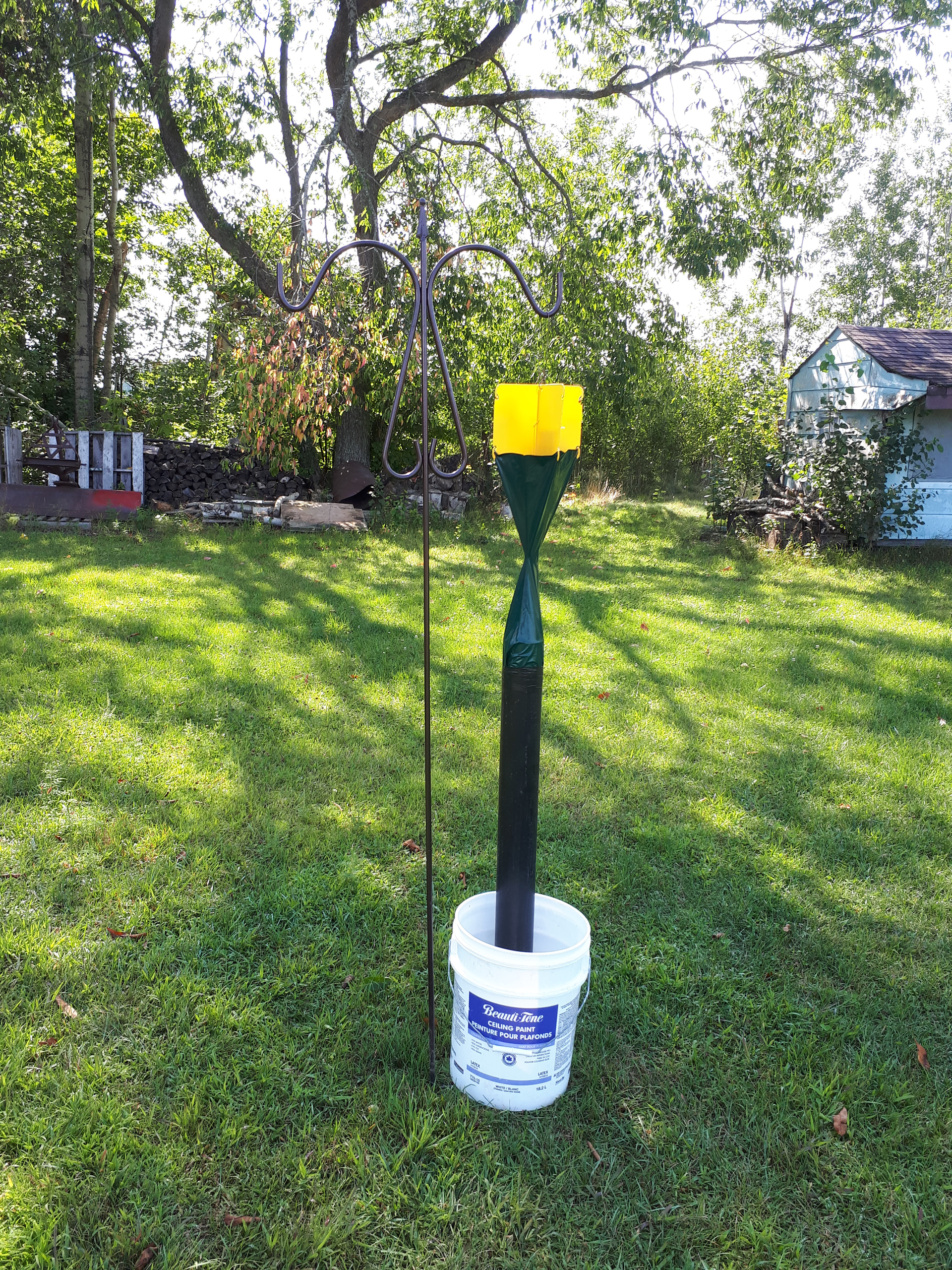
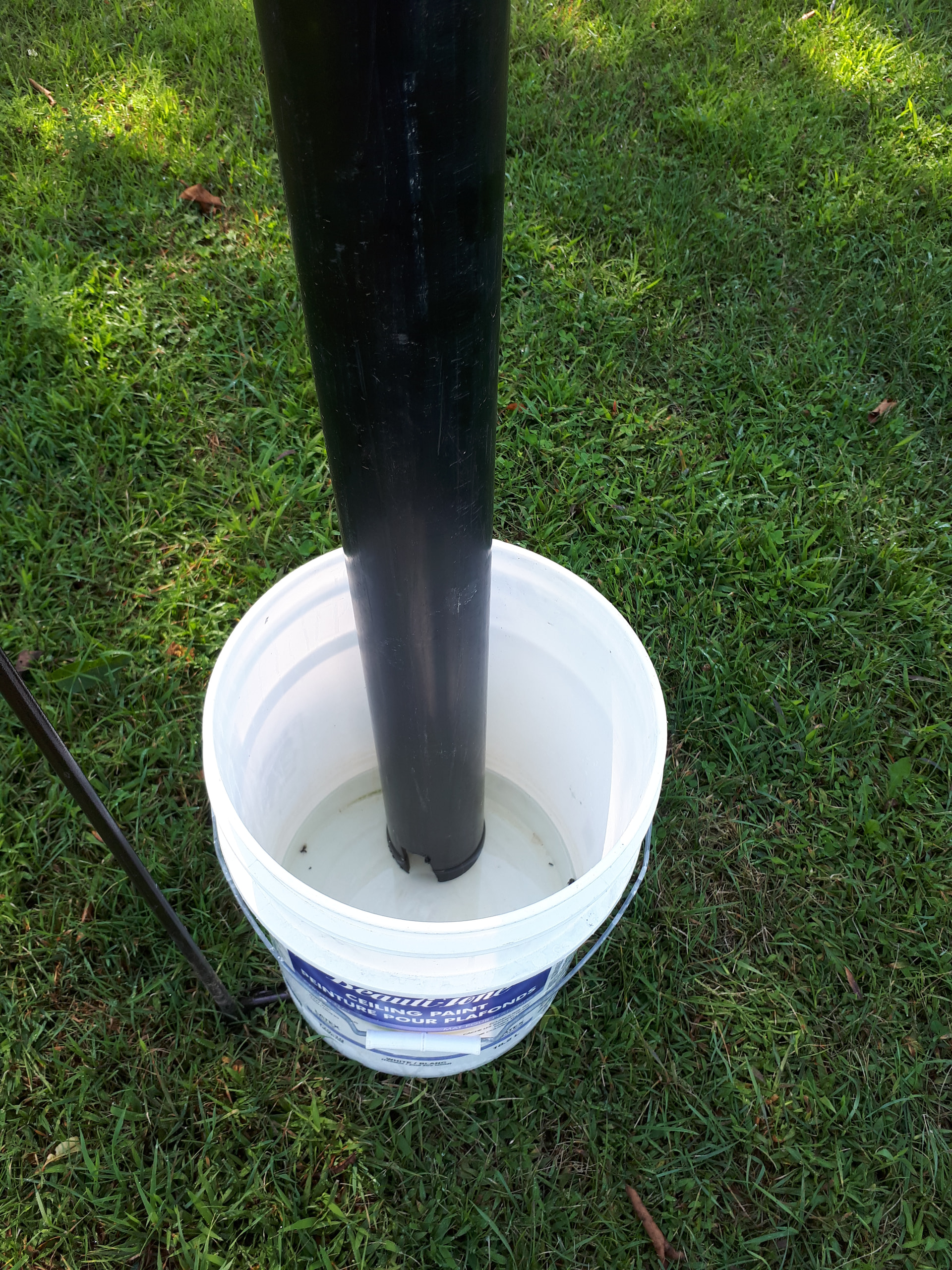
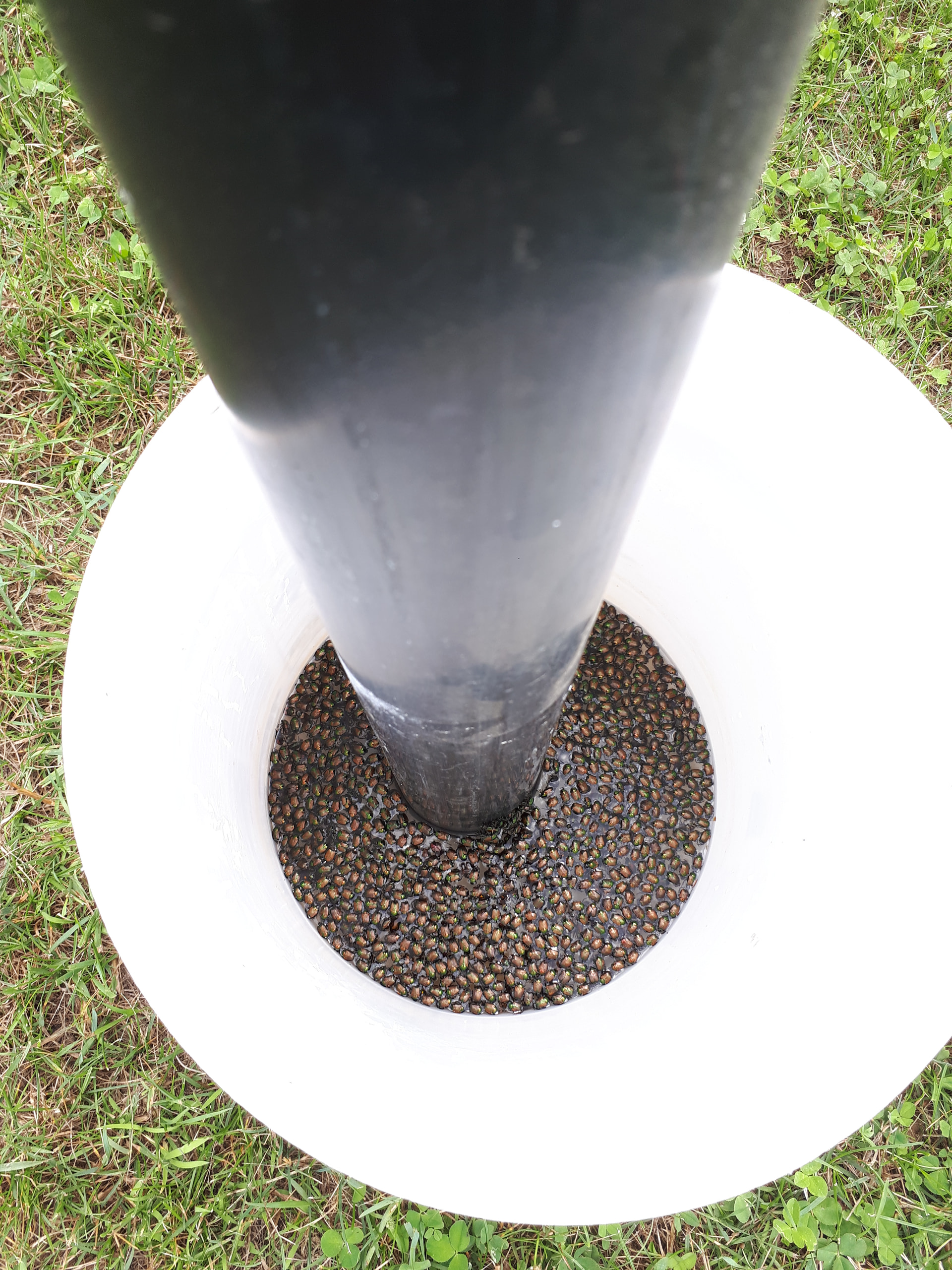
I’ve substituted the trap bags with a PVC pipe going into a bucket of water. As you can see, it does collect alot of beetles. Easy to dump and no stinky bags to contend with. I may try foregoing traps next year but I don’t think it would make much difference given the severity of my area.
Thanks for the plant recommendation…I’ll be sure to keep an eye out for it or try finding some seeds if they’re available in Ontario. I didn’t know there was a plant they prefer above roses. The white blooms of my giant fleece flower (persicaria) attracts them like crazy but they don’t cause any damage to it like they do to the roses and other ornamentals.
Dee -Your situation sounds just same as us. We’re out in the country, 10 acre minimum lots mixed w wood lots & farm fields. Zone 5-6. We also have cats, but bird houses up on re-bar stakes are pretty hard for cats to get. Once & a while a bird becomes a snack, but not often. I highly recommend you try the bird houses. I struggled w JBs as the worst pest for 15+ years. Let the birds do the work!
I grow large plots of zinnia in addition to my roses and sometimes the JBs are mauling them too. I find imadichloprid-applied before flowers open to minimize effect on bees -to be most effective.
Trying to think of new ideas, like a screened-in little summer house for the roses? Here in northern Colorado, the Japanese beetles arrived several years ago. I discovered last season that they love not only my roses but my woodbine (Virginia creeper) that I’ve always had all around the yard as a cheap green privacy screen. Moving forward…
There’s Virginia creeper growing wild all along an old wire fence in the back yard, just in front of the tree-line. The Japanese beetles must cross rose territory first before they get to it, lol. A screened in area is ideal for seedlings, thank you.
I can understand your reasons for scrapping the traps. I do believe, however, that success in eliminating them would entail a national effort: if each and every landowner set out traps for at least 10 years, we would see their numbers dwindle and vanish completely. Sadly, this isn’t going to happen any time soon as not every land owner is into gardening and hybridization. Production for bait and trap availability is yet another issue. The province of British Columbia eradicated them via traps the moment they showed up. I have faith that it CAN be done but this would require persistent intervention on a national level.
In the meantime, the Canadian government has banned all chemical pesticides from the retail shelves within the last 15 years and regulate their use to licensed applicators for commercial agricultural operations and golf courses. So with many home gardeners, it becomes a personal choice as to what method one chooses to manage their situation.
One idea is to work on developing early and once-blooming varieties that “beat the beetles” - meaning that they flower prior to the arrival of those monsters. So that blooms can at least be enjoyed early in the season without the nuisance of Japanese and American rose chafer beetles tearing them apart. Cultivars such as Wasagaming, Therese Bugnet and Agnes are examples of such Canadian bred early bloomers (albeit poor fertility) that are enjoyed. The Burnet/spinosissima varieties are also early flowering roses. I’m aware that recurrency and ever-blooming traits are highly valued in forthcoming hybrid creations but a resurgence in producing early once-blooming roses could be a focus to satisfy a market of individuals who are sick and tired of having their roses ravaged to death in areas where beetles are out of control, and who can actually smell a rose for what it’s worth without having to douse it with citronella oils, garlic concoctions and what not as a deterrent. Aside from the ever-blooming poodles on the current market, a revival for once-bloomers can make a rightful come-back because of these nasty pesky beetles.