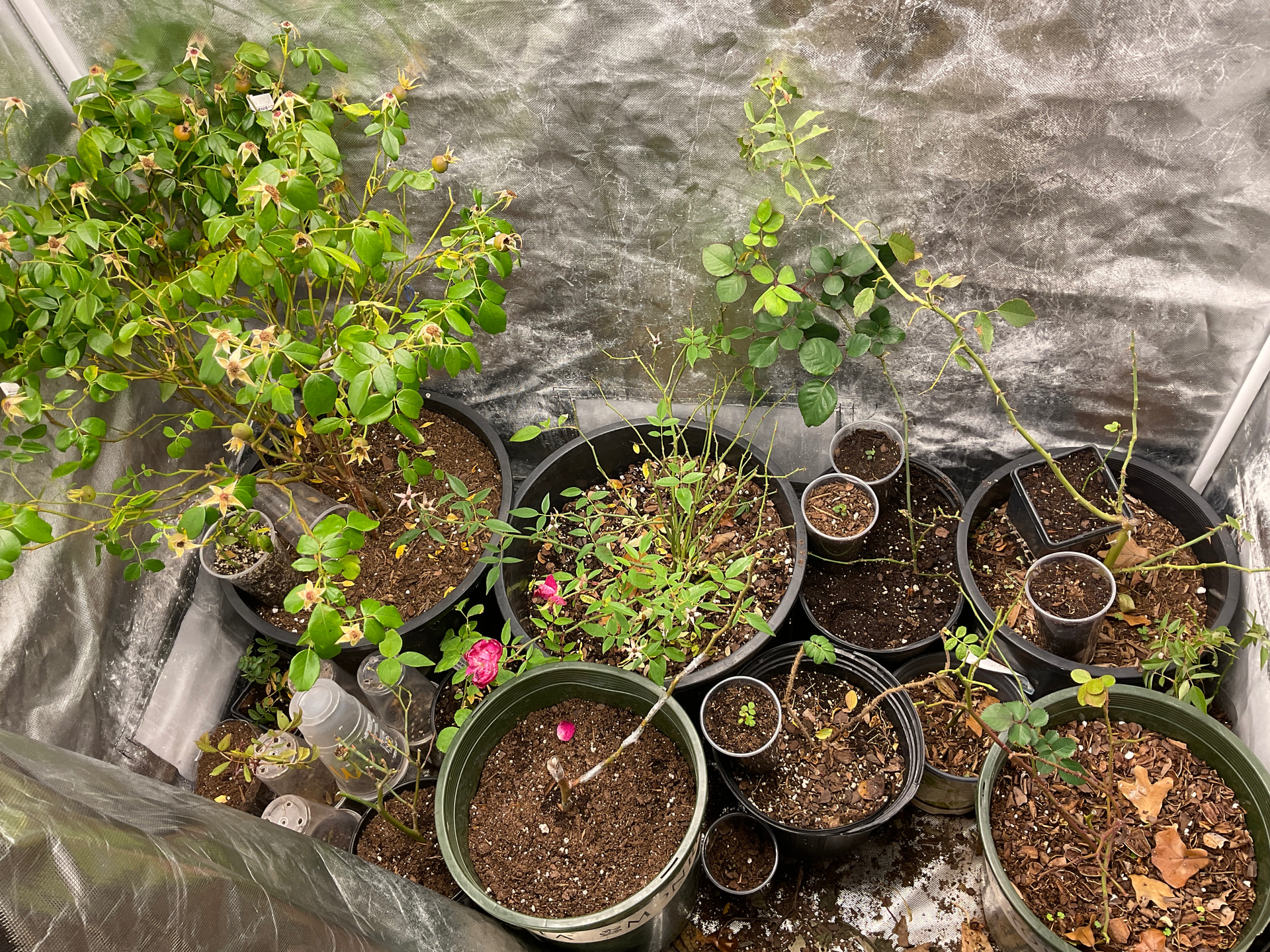
I got the grow tent set up about five days ago. Having winter rose projects does wonders to stave off the blues. Last year it was just cuttings and OP seedlings, but this year I had a few potted roses with hips that weren’t quite ready before a cold front.
After stashing them in the garage for like a week I figured I’d try them out in the grow tent. I assumed the worst but lo and behold, not only has everything begun pushing out new growth but the hips turned orange as well.
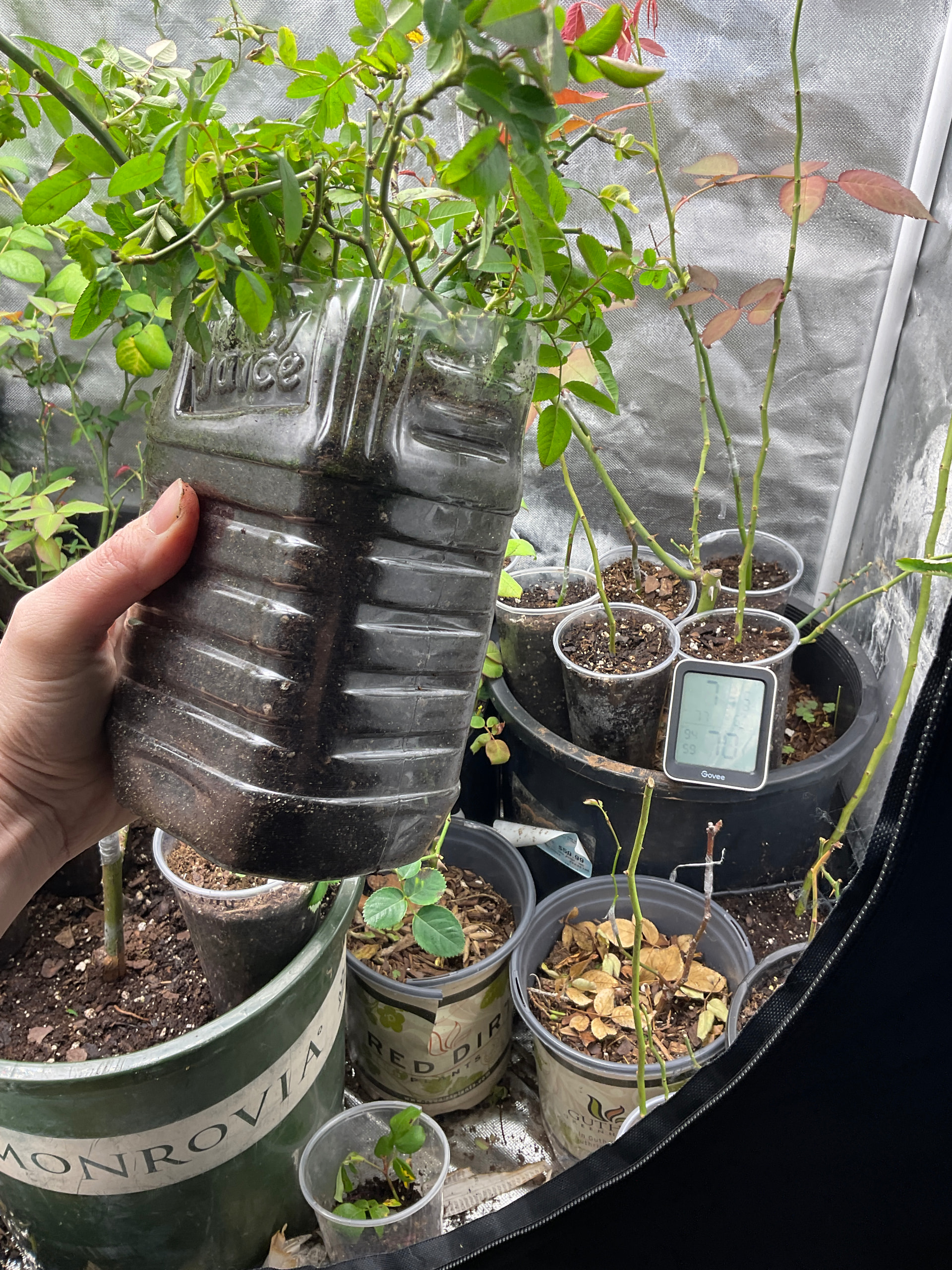
Since no planning went in to this, it’s just a random assortment of seed parents, rooted and unrooted cuttings, some precocious seedlings, and Pink Clouds graft attempt that I have little hope for. I wanted it as full as possible as I learned last year that my cuttings didn’t root without good humidity. Whether that will cause problems for the bigger plants has yet to be seen.
I’ve come up with a few experiments I’m going to try out:
Indoor pollinations. If they’ll take and if they’ll grow to maturity
If the tent can be used to bring once-blooming roses out of dormancy and induce blooming. And if that process can somehow be used to get a second flush.
If the humidity helps or hurts graft success.
Success rates of rooting cuttings without callusing them first.
I swear there was another idea but I’ve forgotten.
Anyways, if you’ve made it this far and would be interested in some free 0-47-19, Basye’s Legacy, or Pink Clouds rooted cuttings let me know. I was gifted them last year and would love to honor that generosity by paying it forward (provided that those cuttings don’t all fail). And I’m going to have a bunch of r. arkansana seedlings to give away this spring. Would also be open to swapping or trading
i’ll be following this closely. i have a couple of these tents i love to experiment with. one of the pieces of gear i recommend is the acinfinity humidifer. it has a humidity probe and can essentially turn your tent into an automatic mist box if used with a controller.
i think the tents have a lot of potential, for, example, rapidly raising a seedling to maturity under intense 24 hour light and fertigation. obviously that wouldn’t speak to its garden performance, but if you had a really special seedling, you could raise it up a year or two faster instead of waiting for nature to take its course. i keep my seedlings under my lights on 24h light and there seems to be no issue. i have found that using a bottom-watering system and airpots really allows plants to grow robust root systems under indoor light, especially if you are dialing in the rest of the environment with watering, light intensity, and feeding.
one thing i’m planning on doing is growing a fussy performer under a hydroponic soilless medium and basically gorging it on salts, like florist roses, and then when it has a great big flush of buds tapering off the feed to see if it simulates the lean condition roses are supposed to like in order to set seed. the nice thing about trying this in coir for example is you can flush the residual nutrients out of the medium right away and get a reproducible hip-setting system that you could use as a guideline with different roses if you can figure out a protocol. you could also do like a flood tray, for example, with a bunch of 1-gallon potted roses that are willing to flower in that cramped of a space. the sky is really the limit with this kind of stuff!
In a couple years if I start doing more grafting that’s something I might look into a humidifier setup. I used to grow oyster mushrooms and had a humidifier and fan connected to a hygrometer that you could program to turn on/off in response to humidity levels and temperature. As it stands now I’m enjoying the simplicity of the low-tech setup. Between the heat from the LED grow light and the moisture from all the pots the tent remains quite humid. I’ll put a hygrometer in tonight to find the true humidity percentage.
I feel like the seedlings I had under 24/7 lights last spring performed better once I put them outside. Something about real sunlight just can’t be beat. But my setup was bottlenecked by the heat emitted by my lights. Could only make it so bright without burning the seedlings and cuttings, but of course I wasn’t doing anything in the way of fans or climate control to mitigate the temperatures.
Update. Without a fan running the humidity is too high for grafting. Surprisingly, a few of the grafts appear to have taken but the moisture has made it so that some of the wounds from debudding and grafting still hadn’t healed and had even started to grow mold on the sap. Operator error played a part, I’m sure. My first few attempts I struggled with the parafilm to get a tight seal, and that space is where the moisture caused problems.
I’ve lost no cuttings so far, and after harvesting the rest of the hips from that bigger rose it started pushing out new growth and will be the first of them to flower.
EDIT: Further graft attempts have been very successful, even healing faster than expected. Moisture issues solved via correct (airtight) application of parafilm.
Welp, my freezer/fridge gave out and I lost all of my pollen. And on top of that my seed germination rate has been terrible. Bad timing, weather, and beginner mistakes I think. I’m still holding out hope, but in the absence of pollen and seedlings my focus has turned to propagation. And so far my success rate has been really solid.
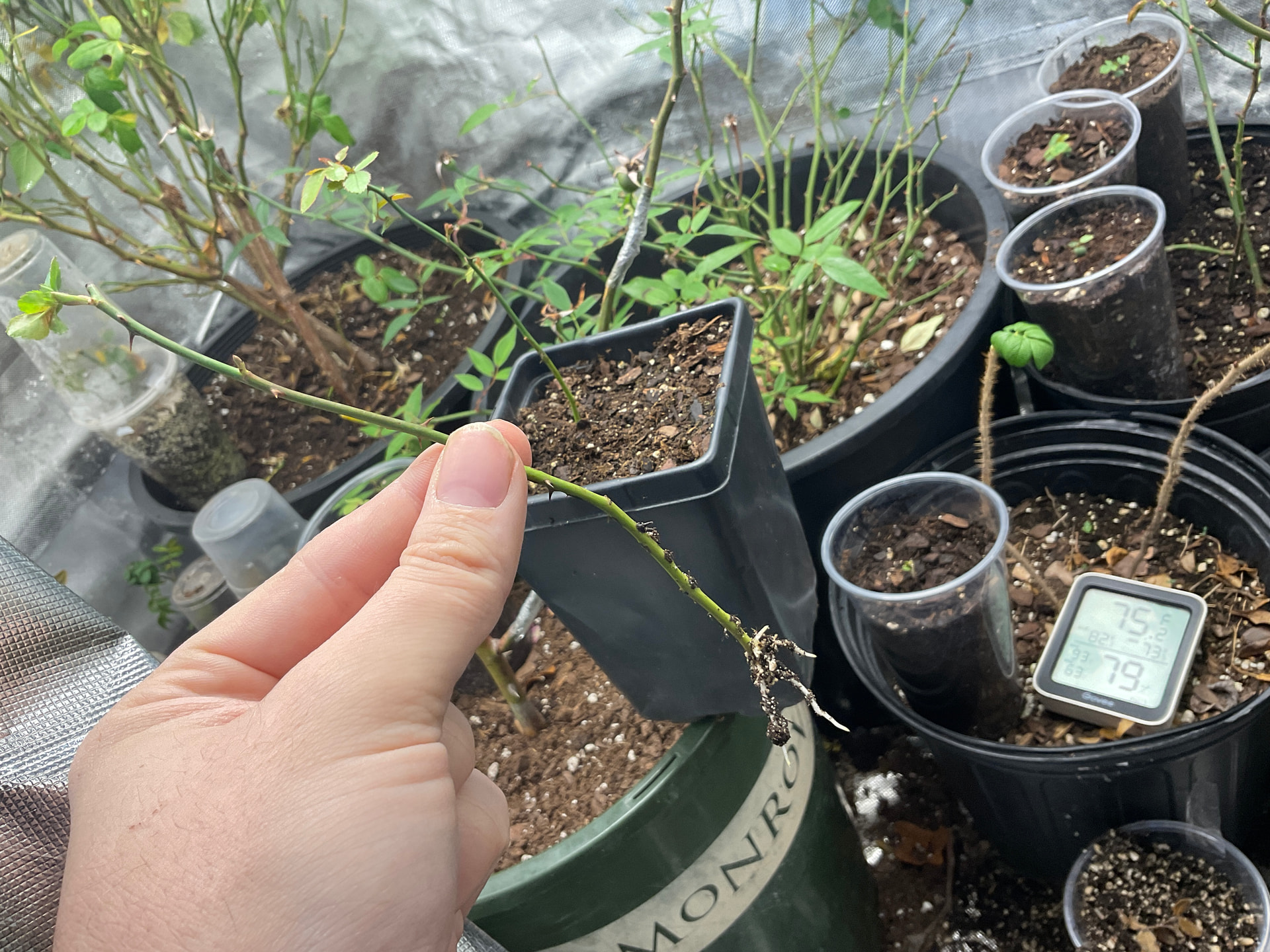
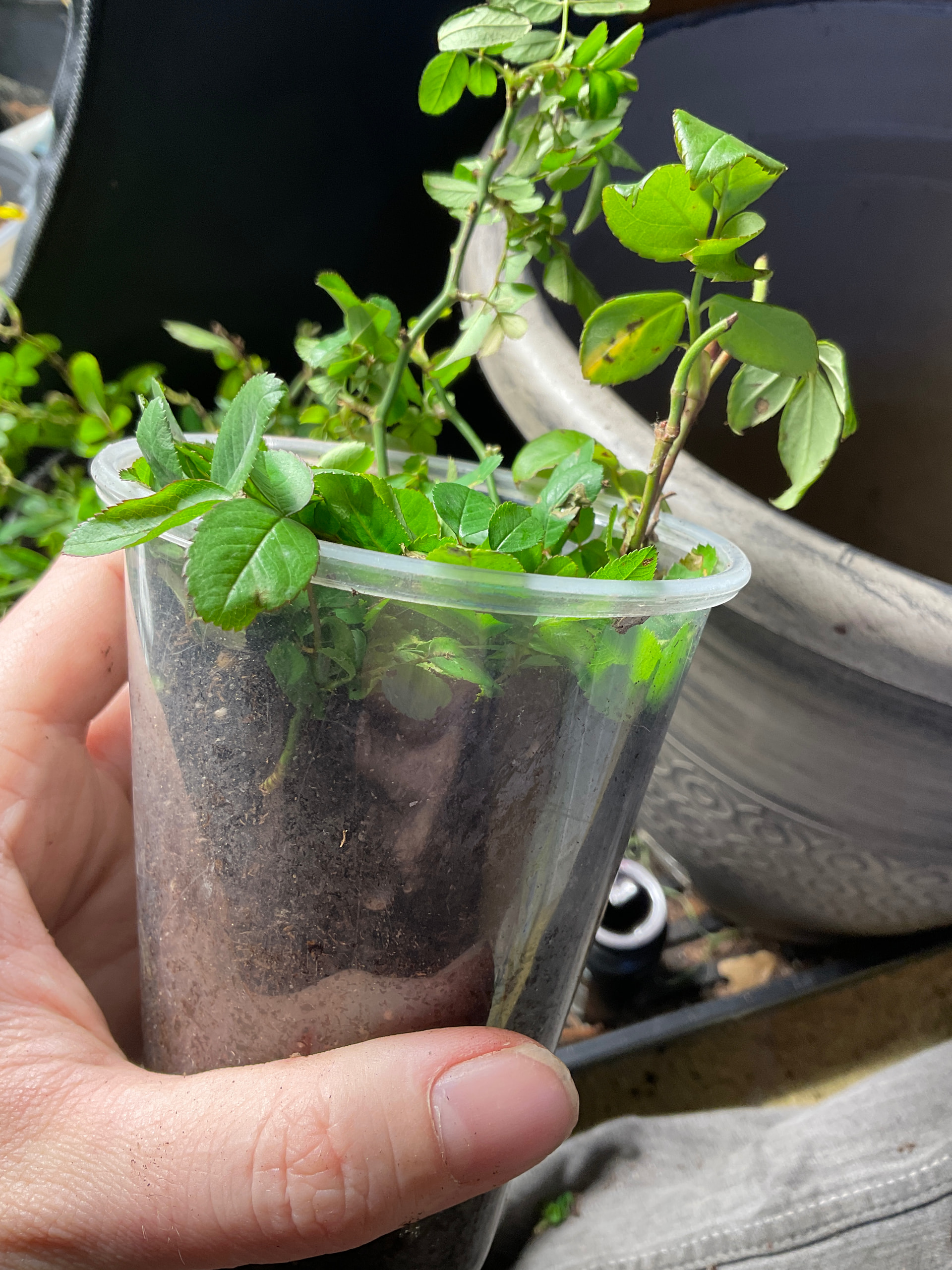
I calloused a few Pink Clouds cuttings via wrapping but for the most part I’ve just been dipping cuttings in liquid rooting hormone and sticking them in soil. For example:
Granted it’s 0-47-19 so it’s super willing to root, but even small stuff like this has been rooting super easy. I’m kind of just grabbing random pots of DIY soil mixes to use, but weirdly I feel like I’m having more success in soils without much aeration. Just compost, spaghnum moss, and a little bit of sand have been the winning combination. The tent stays so humid that the soil never dries out, so I just make sure it’s not too wet when I pot the cuttings and then it’s hands off. I think the dense soil mix allows for better contact and prevents the temptation to overwater.
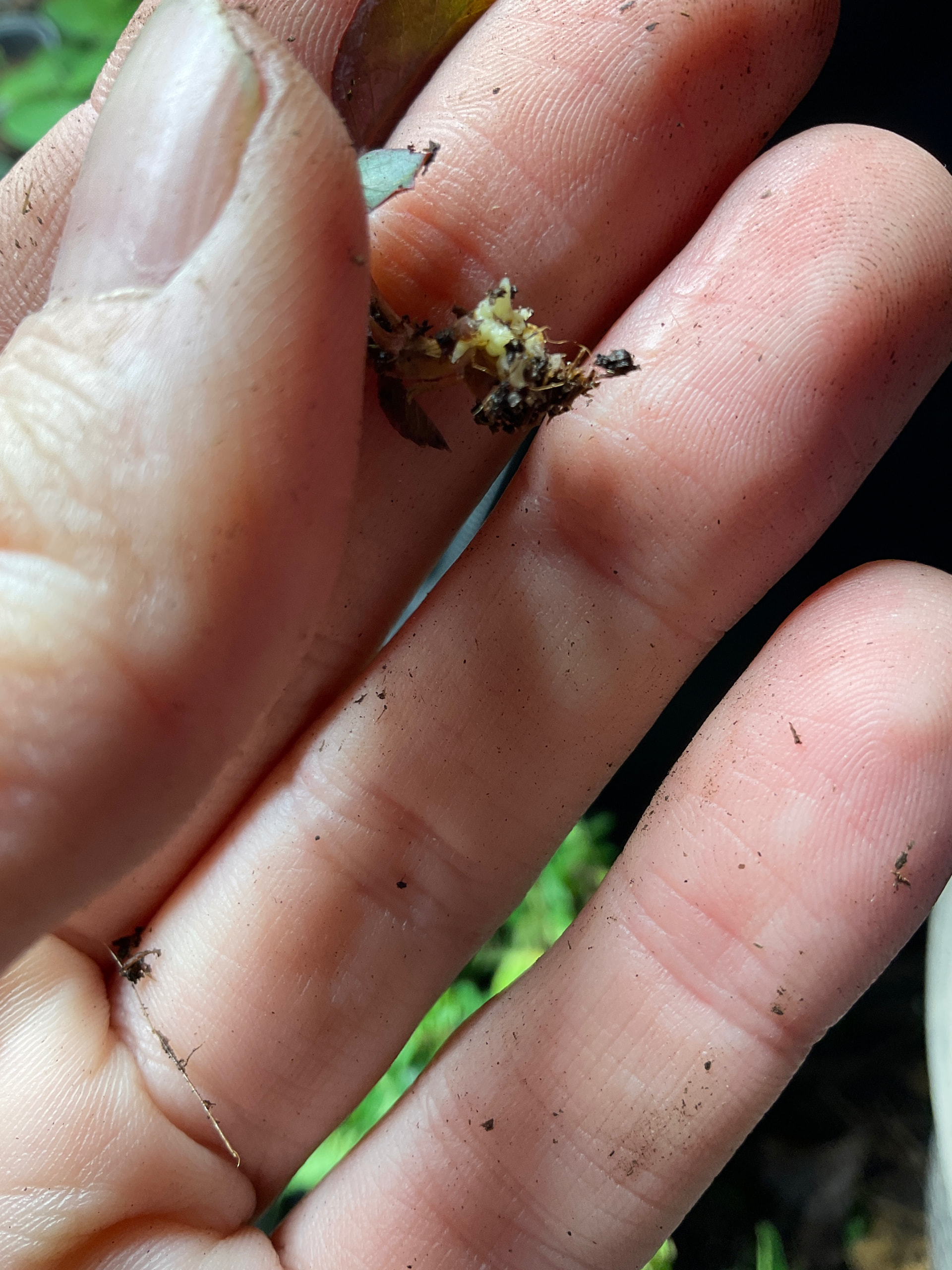
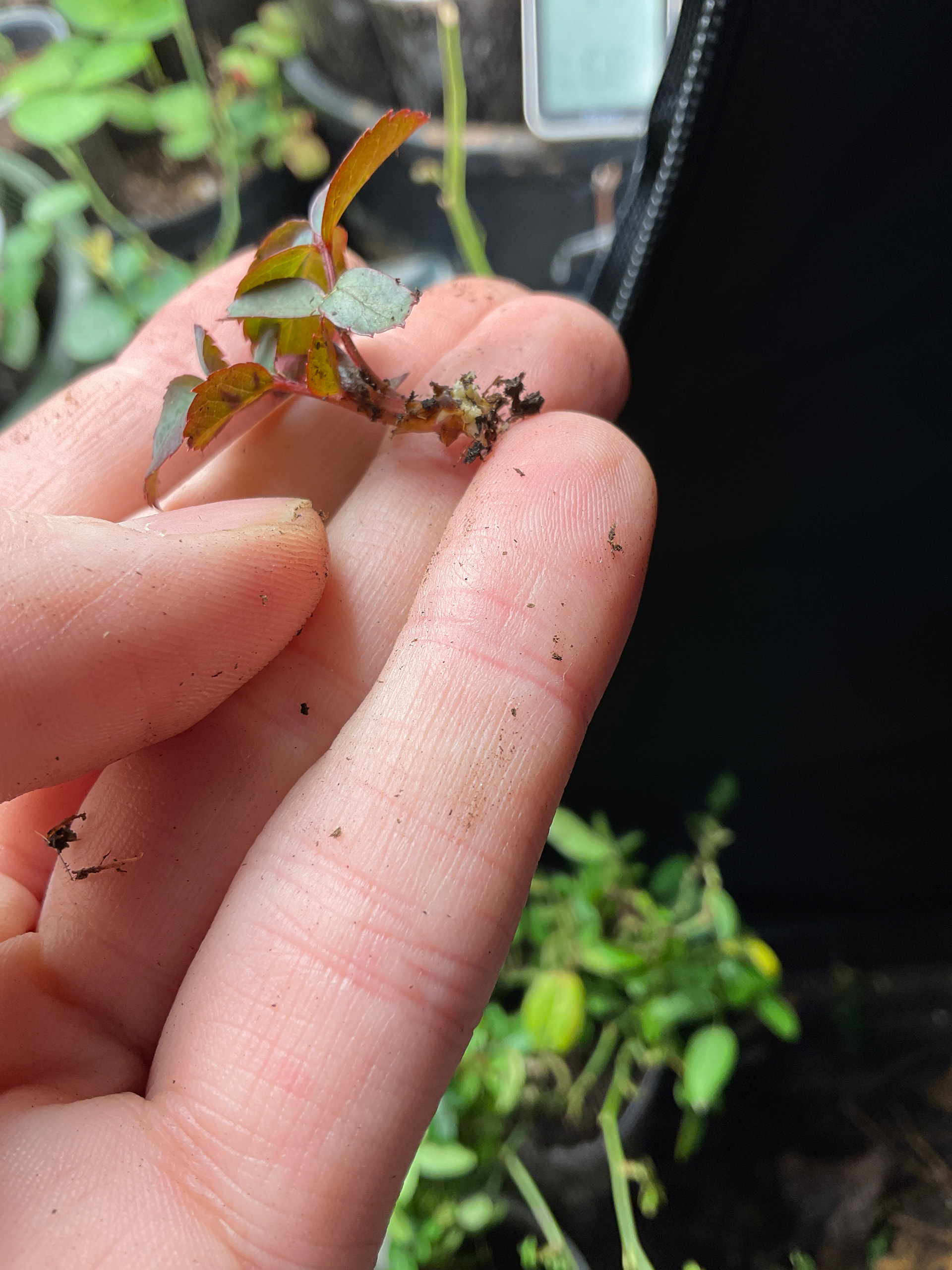
After seeing this little guy root I became emboldened:
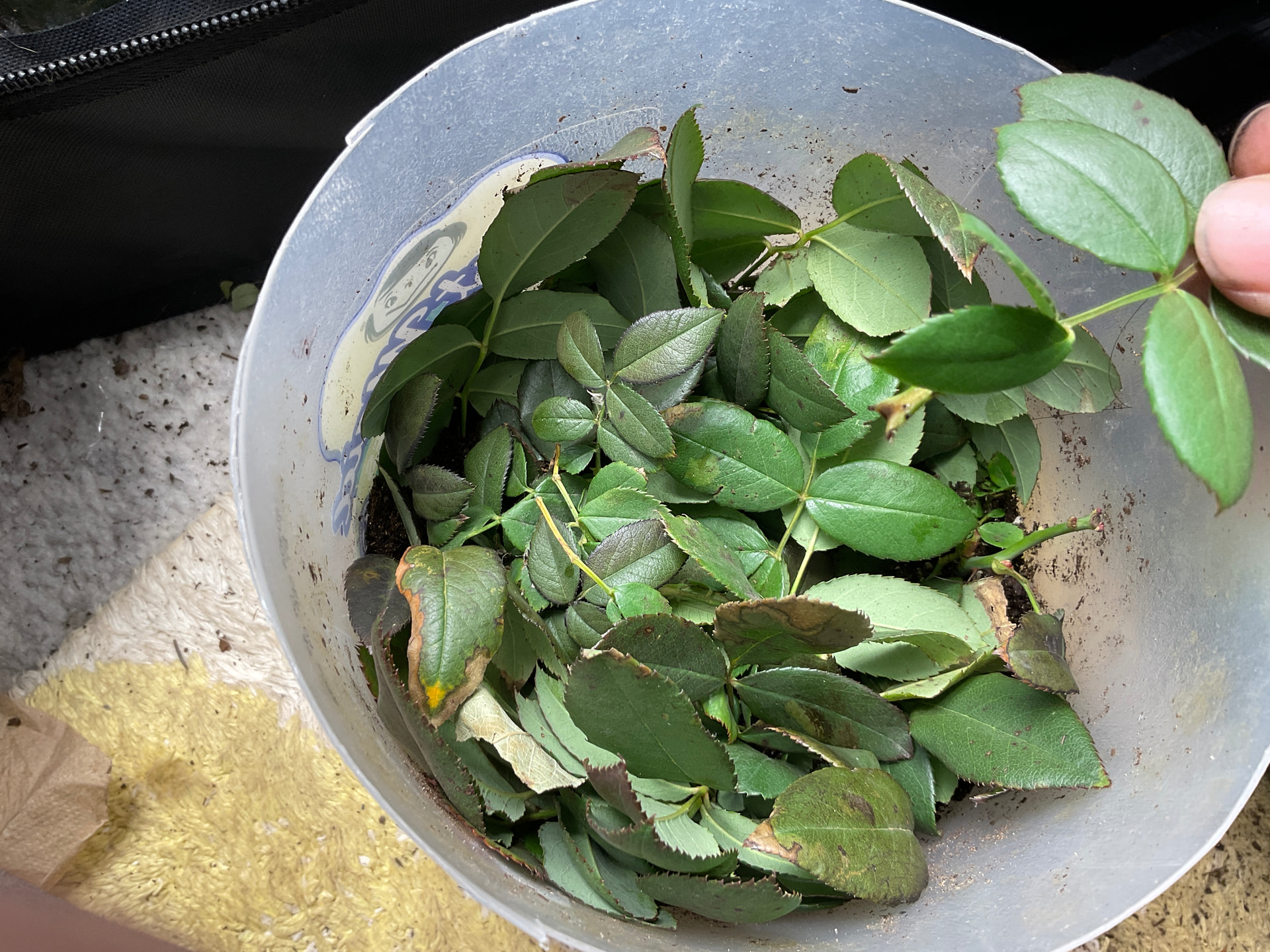
As such, I’m just kind of haphazardly cramming cuttings into pots and seeing what stick. I even dipped a bunch of leaflets sepals into some spilled rooting hormone.
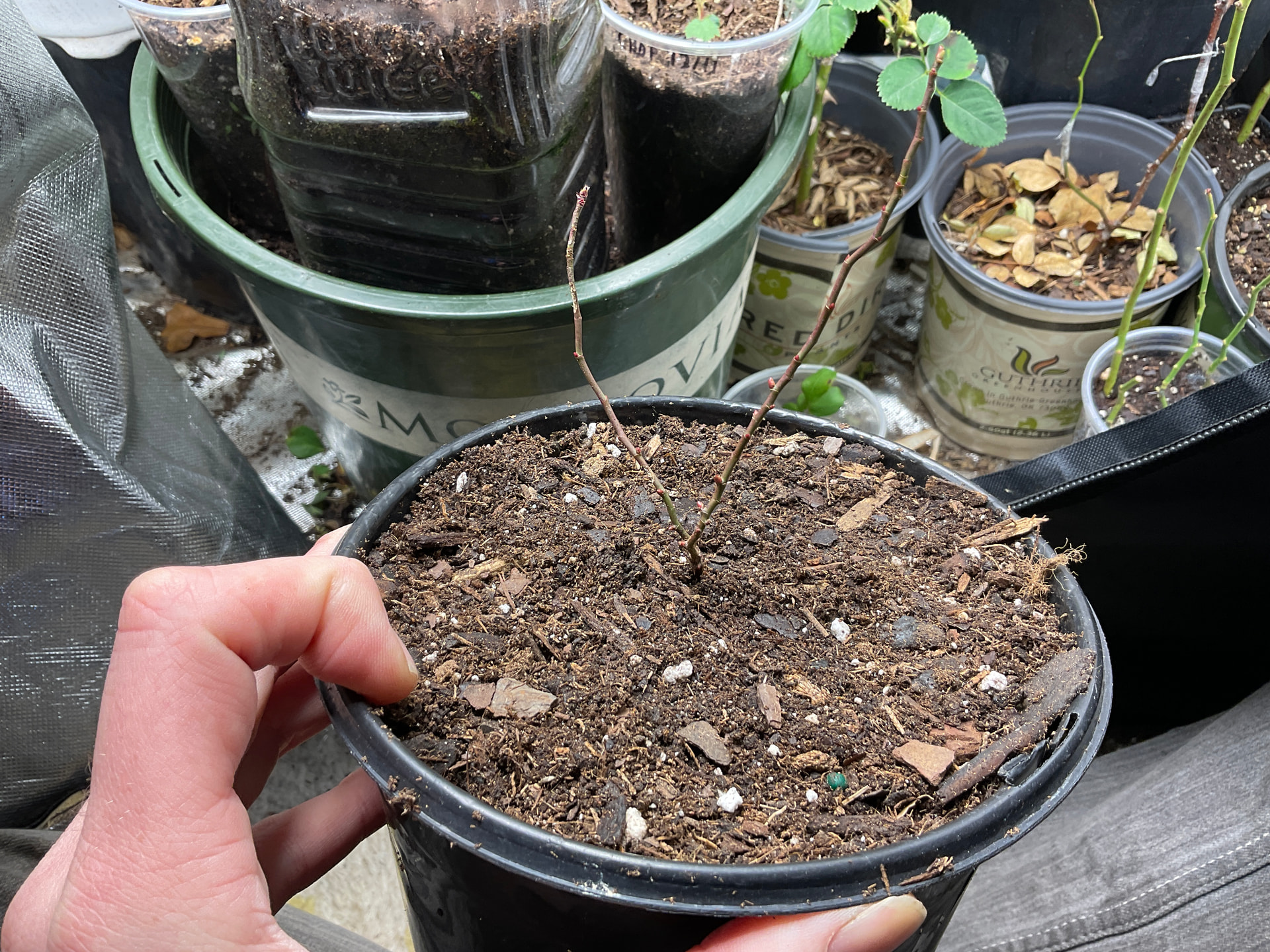
I also dug up a dormant r. foliolosa seedling which I grew last year. I only planted it in the ground about two months ago, so I’m curious to see if it’ll break dormancy and flower before springtime.
The species flowers super late here in its native range, like late June and into July, well after all of the other natives and once-bloomers that I hope to use as seed parents are done blooming. Being able to collect pollen now would afford me with a lot more latitude since losing my frozen pollen from last year.
Not sure why you would presume all your pollen is lost. Freezing extends life, but it’s not like there would be a fixed expiration date, and if there were, it’s not like trying to use old pollen carries a risk of food poisoning. I don’t know how old the pollen is nor how many months your freezer was broken, but if you kept it dry, there is a good chance, imho, you could still have viability, no?
If you have the blossoms to spare, I personally would try.
(If you want to get really fancy you can (in theory) try proofing the pollen in vitro by germinating in a sucrose/boric acid/calcium solution. Never tried it myself, but have wanted to try just for the experience.)
Sometimes, fresh blooms for pollen aren’t available when the hip-parent is blooming, so why NOT save pollen to make the crosses you want to?
I really like some of the seedlings I’ve gotten from the Barbier rambler ‘François Juranville’, but it’s mostly a one-and-done bloomer, with only a few sporadic later blooms. Saving its pollen from that prolific first flush to use on repeat-blooming roses later in the summer just makes sense to me.
Julia Childs has a very fast repeat, but Stephen’s Big Purple tends to flush slower for me. That difference is another strong reason to stash pollen for later.
I just know I’m going to jinx this by bringing it up, but it looks like some of that old foliolosa pollen actually took to both Gloire des Rosomanes and Easy Bee-zy Knock Out. My efforts with some other old pollen failed, but I had a lot less of it to work with. To get to my white prairie rose foraging spot you have to brave across a muddy creek and a woody thicket full of wild blackberry and poison ivy, so I made sure to gather enough to make it worth my while last year.
The humidity keeps the stigmas alive for several days longer than outdoors, so I wonder if that might also be beneficial to the process. As it stands I have proven a far more successful breeder of spider mites than roses, but I’ll probably be moving the seed parents back outside soon anyways.
I hit the plant with soapy water and then coated it in diatomaceous earth. I figure I’ll give it a week, wash it off, and see what happens. I’m not sweating it though. Spider mites are an inevitability here, but I grow a lot of native plants and put a lot of effort into attracting bugs and birds. The ecosystem keeps them innocuous outdoors.

 I tried a few times but did not work well. I hope it works for your goal.
 Looking forward to the 2026 season!