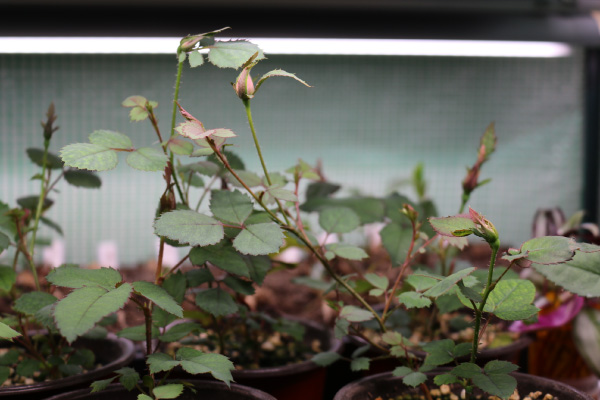
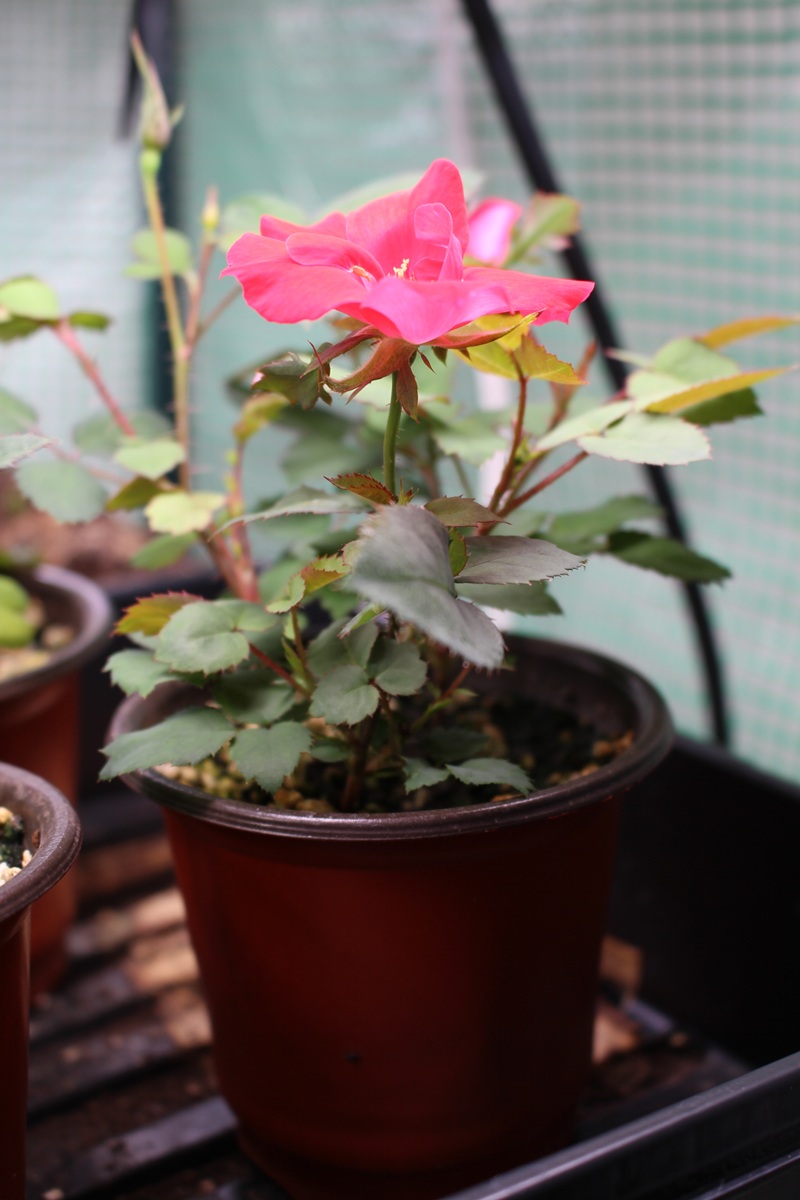
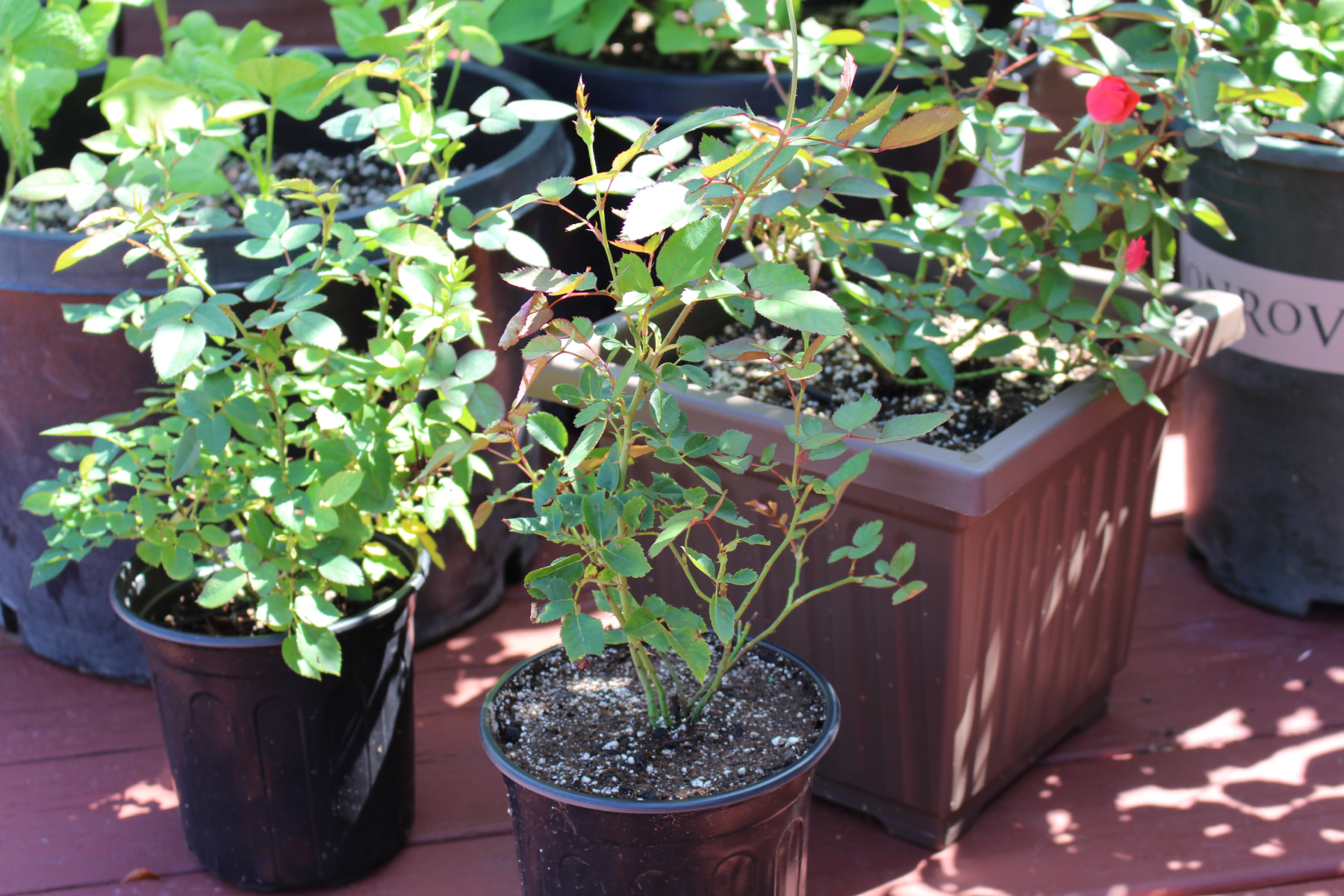
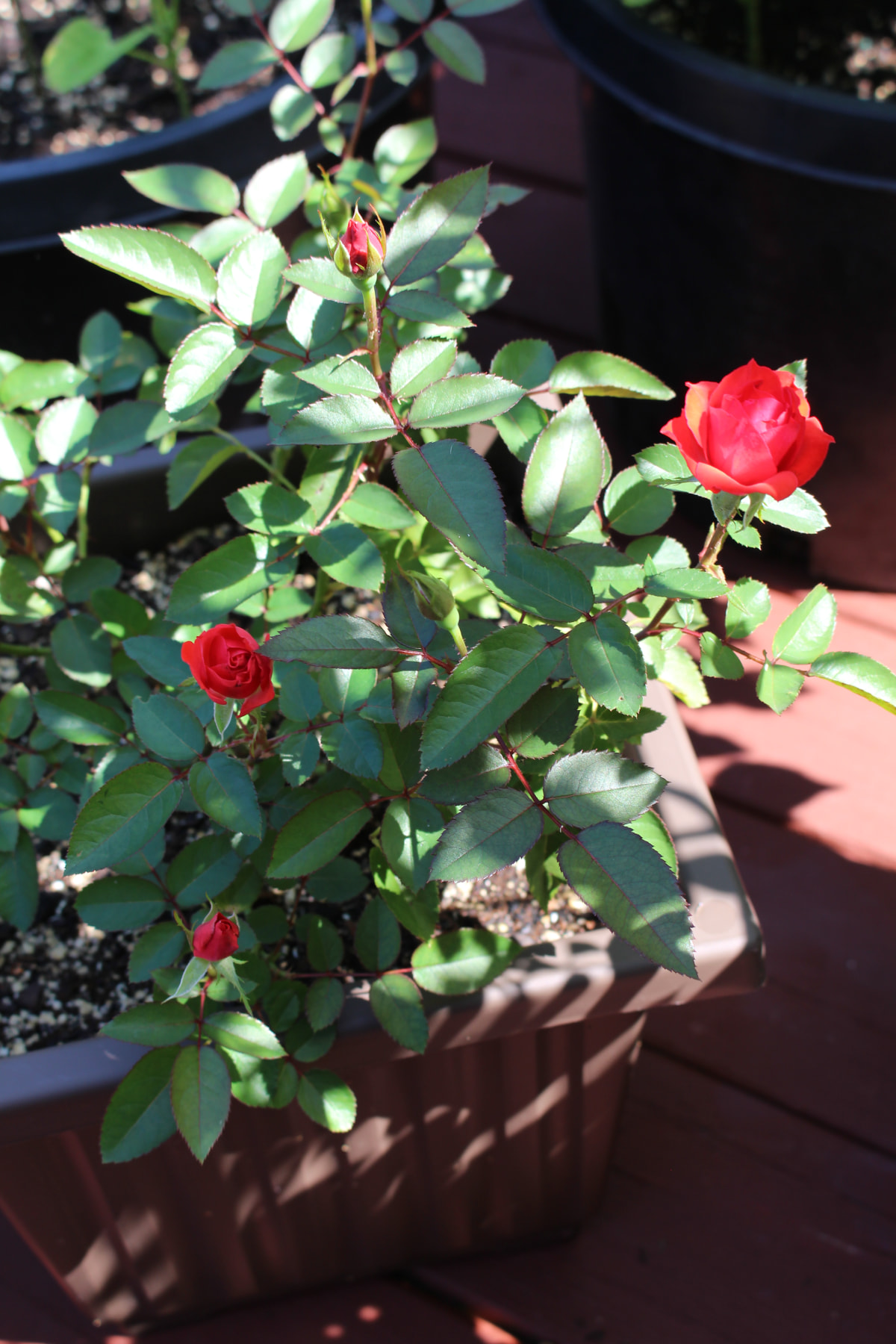
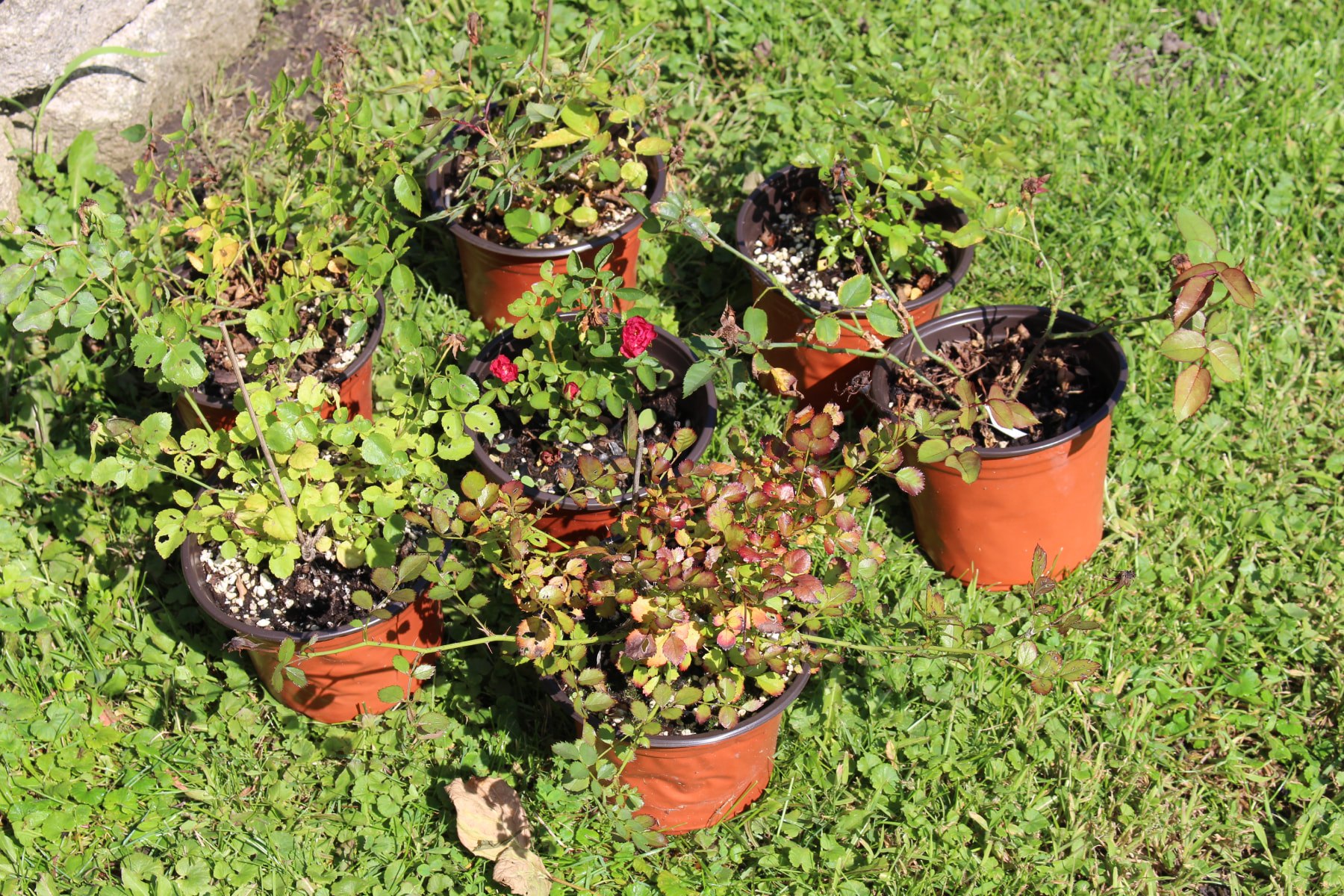
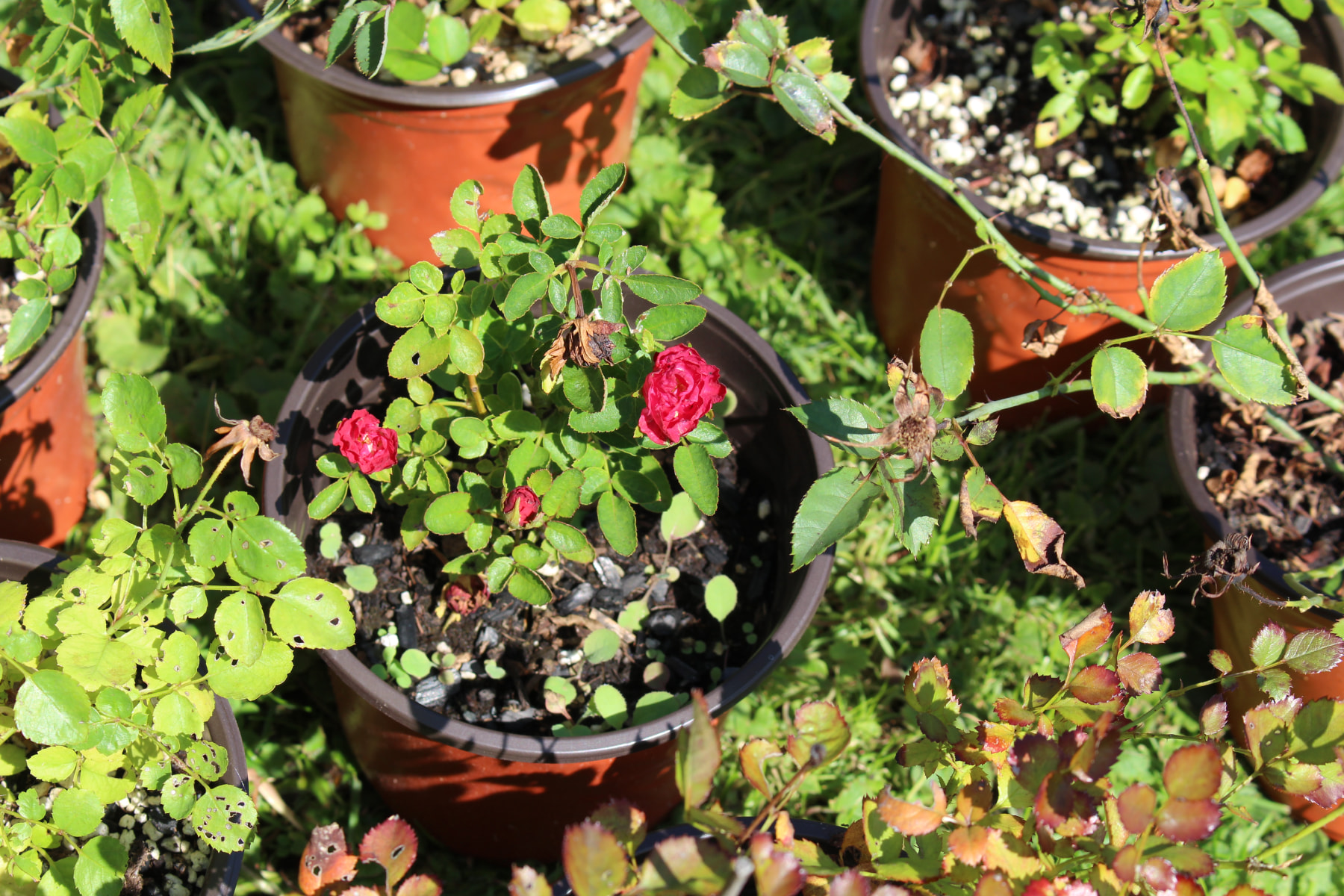
Early-blooming seedlings? It's only been ~30 days and they are already forming blooms

Hello everyone!

I’ve been following this forum for about a year now with the intention of learning about rose hybridization, and eventually contributing. I decided to finally make an account after I had something to share.

Some background:

Last year, I started my hybridization efforts a little late in the year (mid-August). All of my hand-pollinated crosses formed hips successfully, but none of the seeds germinated. They only had about 2 months from pollination to rose hips, so there was definitely not enough time for the seeds to mature.

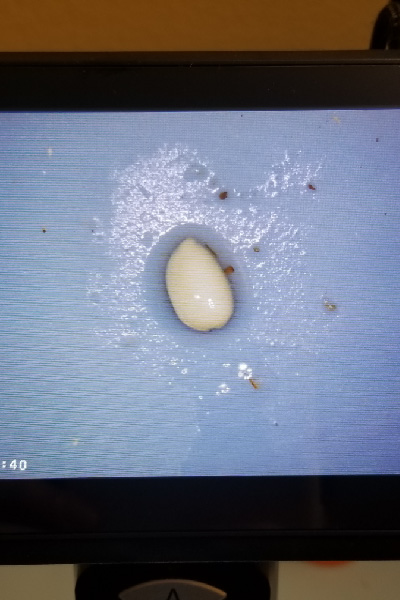
I also attempted embryo extraction and had several beautiful meaty white embryos, but they all rotted and/or were eaten by fungus in their moistened paper towels.

What I did:

Since I was going to stratify many of my own seeds, I collected a bunch of mature rose hips near the predicted frost date for my region to use as an experiment, since I knew that my own rose hips were immature. My intent was to use them as a control to see if my stratification would be a success or not, to rule out stratification as the reason why my immature seeds didn’t germinate.

Unfortunately, I don’t know which parents these rose hips came from, as they were collected from the ground in a bunch of different spots at a rose garden, and most of the roses were no longer blooming in mid-autumn.

I stratified these open-pollinated (I’m assuming) seeds in moist sand inside of an empty amber pill bottle. After around 80 days in the fridge, the seeds inside the bottle began to germinate in the dark, sticking out of the sand.

I planted them around February 20th in 4 inch pots with general potting soil amended with extra perlite and put them under Barrina grow lights for 16 hours of light, 8 hours rest. Some were even planted a couple of days later because they stuck themselves out of the sand at a later date.

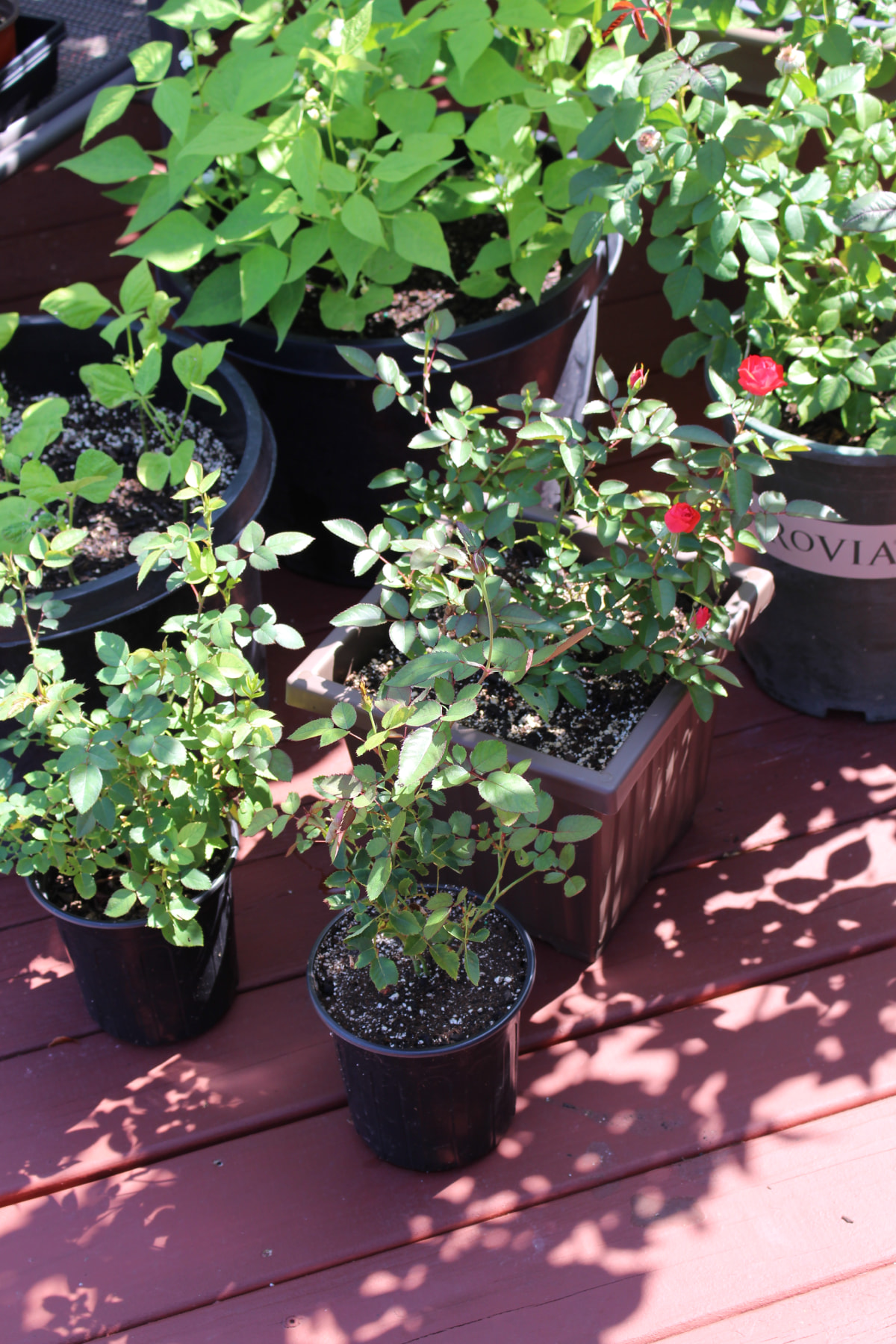
Below is a photo of the biggest seedling from February 22nd and then the rest of the photos are from today March 22nd.
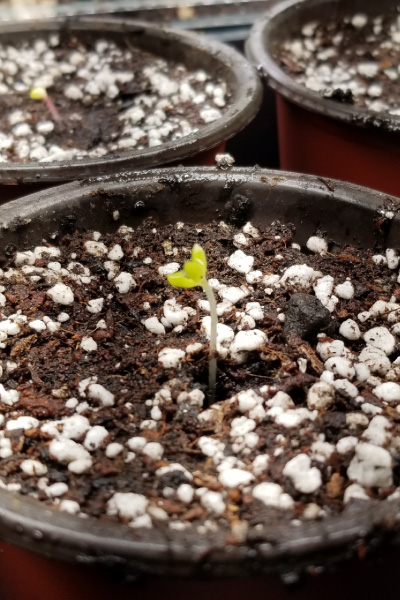
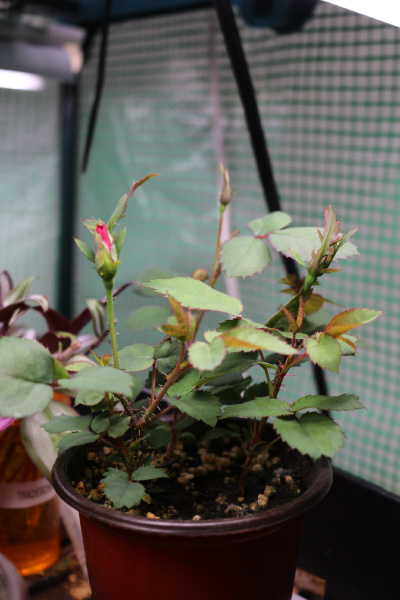
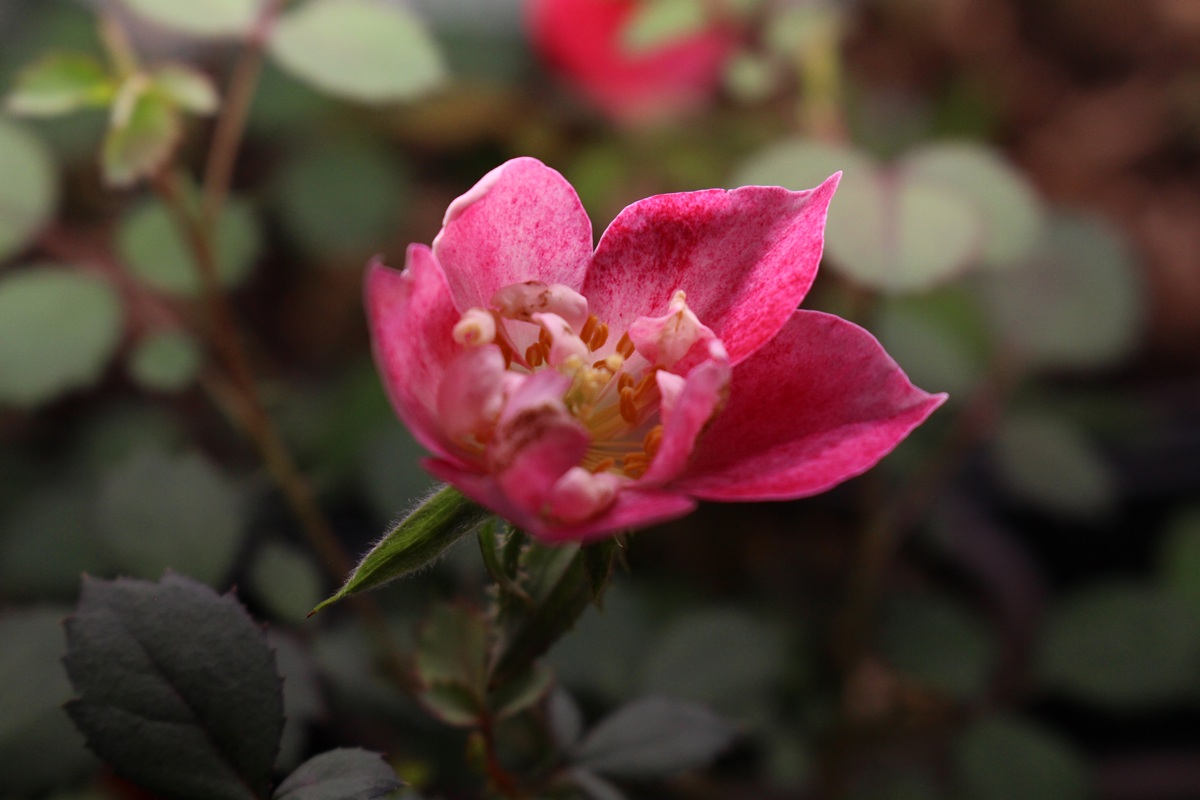
The bloom colors so far appear to be dark pink and light pink. I expect the blooms to turn out plain and boring, but they are all mine and I am raising them with love.

I can’t wait for this summer so that I can resume my hybridization efforts a bit earlier this time.

PS - I apologize if my post is misplaced or if I’m uploading the photos wrong. I will submit my post now and hopefully it shows up properly.

Thank you for reading!
10 Likes

Welcome even if you have been with us a year! Very impressive start, really like you tried embryo extraction so early on. It’s a shame your crosses were too late in the season to mature enough, I guess the excitement of that can be left for next season. Any ideas on what kind roses you want to breed or is it more all and everything? It appears all your seedlings have juvenile bloom so are most likely modern roses with Rosa chinensis ancestry

2 Likes

Thank you for the warm welcome!

The failure of my embryo-extraction attempts is quite frustrating because some of the embryos looked very plump and healthy, so I’ll never know if they would’ve been viable had I taken better measures at sterilization.

However, even with this failure, I still believe that any experience is a good learning opportunity. I learned hands-on about achenes and how they work, which was something that I had only read about previously. I also confirmed that my crosses set hips and my hand-pollination techniques were successful, so that knowledge will be very useful this summer.

I plan on doing more embryo extractions during the hips-harvesting period this time, rather than waiting post stratification.

In terms of my hybridization plans, my favorite rose growth habit is climbers. Regular shrub roses are pretty, but climbing roses are the ones that regularly take my breath when they are mature and in full bloom.

Out of my small (but growing) rose collection (slightly fewer than 10 separate varieties), only 2 of them are shrubs. The rest are all climbers. Everything I hand-pollinated last August had at least 1 climbing parent, with the hope that some of the seedlings would’ve turned out to be climbers.

My goal is to breed new climbers that offer large blooms, captivating fragrance, and vigor. I want something beautiful that can establish itself over an arch or pergola in as little time as possible, and can grow its fragrant self without much care. Also something that can tolerate pruning and can be turned into a shrub if preferred.

I went around my little garden last year and documented each rose, and rated each one on their fragrance, vigor, bloom size, bloom quantity/quality, and overall health. Then, I determined which rose cross could potentially create a child with the attributes that I’m looking for.

For now, I’m ignoring disease resistance until I get viable seedlings, and then I’ll judge them individually as they grow and cull them if necessary.

I’m planning on adding a couple more roses to my humble collection as I go on. I’m focusing on those inexpensive $10 bare-root roses from big box stores (the ones that are typically sourced from Certified Nurseries in Texas), because I strongly believe that roses should be affordable and accessible by everyone (and because I need their genetics at a low cost).

Hybridization efforts are so exciting. I regularly follow what others have grown on this forum.

I hope to have their success someday.

2 Likes

For your embryo extractions you might consider lowering the ambient temperature of the room, if you can. Outside of using a laminar flow hood or still air box there’s no avoiding it, but I’ve found that when I stored them at around 60 degrees it slowed the contamination long enough for them to sprout.

1 Like

Welcome Arren. I too love climbers, but must limit that love due to lack of real estate! Welcome aboard!

1 Like

Huh…I never considered temperature to be the problem. I had previously placed them in moistened paper towel baggies in my little 4-shelf greenhouse under grow lights, where my seedlings are currently growing. The mold and fungus grew in a matter of days. Somehow, I didn’t consider that embryos might prefer cooler temperatures.

I just extracted my final seeds that I had left in the fridge.

Out of 7 seeds, 2 had dead/rotted embryos, 2 I accidentally damaged trying to open the coat/pericarp, and the remaining 3 I placed in a 50ml centrifuge tube filled with sand that I had microwaved and allowed to cool. No idea if you can sterilize sand that way, but I figured the steam might kill anything in the sand.

I read your comment and I’ve now removed the tube from the greenhouse and I’ve placed it on the tile floor outside of the greenhouse, where it’s a bit cooler.

I don’t think anything will happen, but half of the fun is fantasizing, nonetheless.

1 Like

Thank you for the welcome!

I don’t have any real estate for climbers, either, but that’s something I’ll worry about if/when they grow too big. Right now they’re all 3 years old or younger, so I’m just monitoring to see which ones grow well in my backyard and which ones may need to be relocated or given away. Any that don’t bloom well or are prone to disease will have to go…and then I’ll have space for more climbers.

1 Like

Moistening your paper towels with diluted hydrogen peroxide instead of straight water should buy you a few more days before the contamination sets in.

Also hello welcome to the forum!

2 Likes

Thank you!

I used 1ml 3% hydrogen peroxide with 60ml tap water. I believe that’s what Don Holeman’s ratio is for solution B, which is the solution he instructs us to moisten the paper towels with.

I simply won’t be able to prevent contamination in my non-lab environment, even with generous use of 70% isopropyl alcohol to disinfect my tools and surfaces and diluted hydrogen peroxide to rinse everything off.

The factors that I’ll have to control next time would be light (not so strong), temperature (not so warm), and possibly doing embryo extractions when the hips are first harvested and not after months of stratification. I don’t know if that could make a difference or not, but I would like to attempt it with some of my future mature rose hips.

I’m also interested in creating a poor man’s tissue culture media (medium?) using grocery store agar and other basic ingredients. It should be a fun experiment!

1 Like

Welcome Arren and nice pfp, I haven’t had the chance to watch it all.

If all your embryos molded it’s likely your sanitation method, or possibly environment?

For example i do not struggle indoors with mold in my potting or wrapped cuttings. Whereas others do.

I follow Don’s ratios exactly. But everything else loosely. You will have to test to see what works for you.

Embryos prefer warmer temperature.. but so does the mold. Don mentions it on page 27 of the guide.

I think what she meant was the lower temperature slows the growth of mold and thus gives your embryo a better chance at survival.

Mine sit at about 90 degrees at 2-3 inches from the grow lights. I also have Barrina

Maybe 1 out of 20 or 24 in my last batch got eaten by orange bacteria

My biggest problem is the potting step. That’s where I start to lose them

I have many seeds to extract because I was too busy to stratify them this winter

1 Like

Thank you!

The mold or fungus has set in after the 4th day under the Barrina grow lights. The embryos themselves haven’t turned any sort of green in those 4 days. That’s the timeframe I’m using to test if I can extend the start of the mold/fungus growth period.

I also experimented with embryos from the mature rose hips I collected, and I only had 1 embryo turn a slight green or brown color before melting into the paper towel, so just that method for me has been a disaster.

It’s most likely my environment. I regularly get allergies inside my house, so I think it’s an air-quality issue. Without a laminar flow hood, there is no way for me to prevent air particles from entering the paper towel baggies.

By lowering the temperature, I’m hoping that embryos can continue to green up (if still viable) while the mold/fungus takes longer to grow. It’s a race, basically, between the embryos turning green or the mold/fungus growing too quickly and eating them.

I think I’m going to proceed with sand moving forward, because it’s something I can microwave more easily in a polypropylene container/tube and I can keep it sealed and cool until I have to open it to place an embryo inside.

Sand was also very helpful for seed stratification. The seeds in the sand were the only ones that germinated. The seeds from the same batch that were placed in paper towels had mold/fungus issues, and I had to rinse them several times and replace their bags throughout the stratification period.

Either way, the main goal this summer will be to do my crosses earlier to allow a full 4 months for the hips to mature and turn yellow/orange/red, and then to collect the seeds and to stratify them in sand, and hope that they germinate in the same way these seeds from the publically-collected hips did.

1 Like

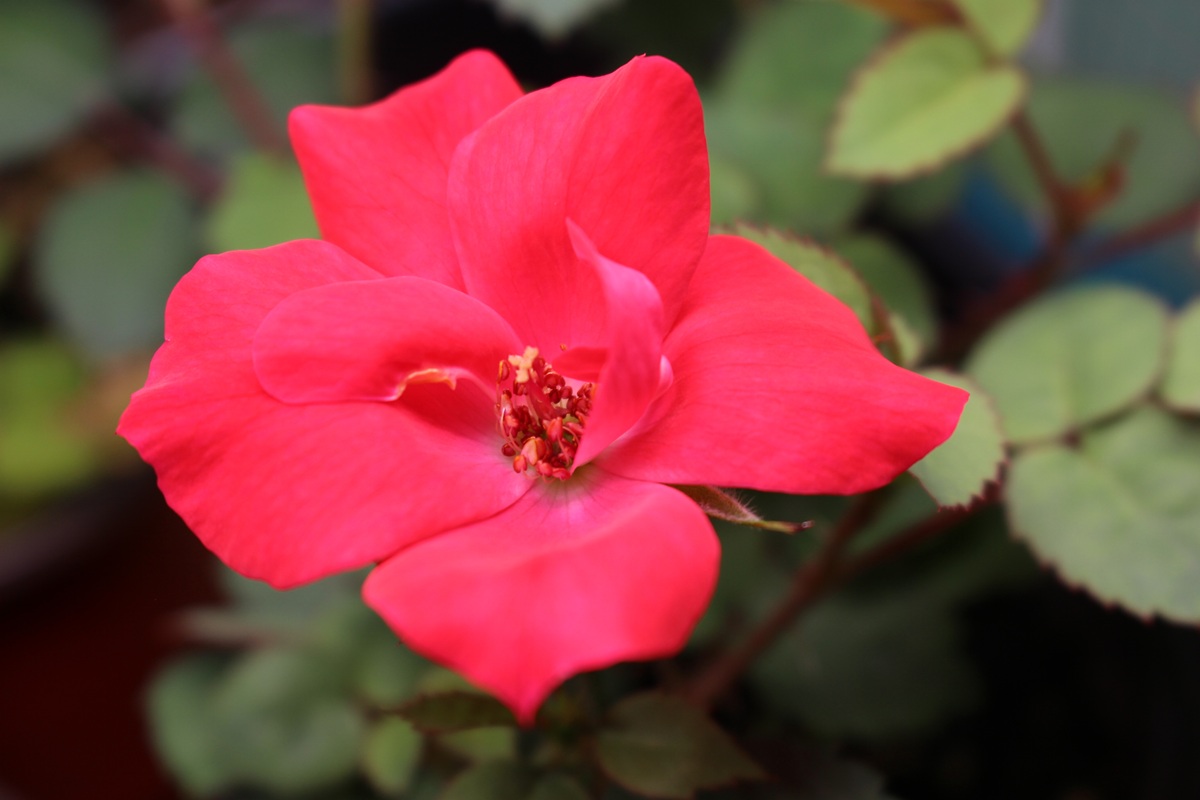
My first-ever bloom is here.

7 petals total, 4 on the outside, 3 misshapen ones on the inside.

The color is an over-saturated hot pink-red. My camera is struggling to capture the true color. The bloom looks almost fluorescent under the grow lights.

The fragrance is mild, somewhat similar to that fragrance from certain grocery-store bouquets, where you can tell it’s a rose fragrance, but it doesn’t have the typical strength of garden roses.

Overall, it’s an adorable little bloom. I’m quite satisfied with it.

“Welcome to the world, little one!”

7 Likes

Lovely stamens as well. Congratulations :tada:

1 Like

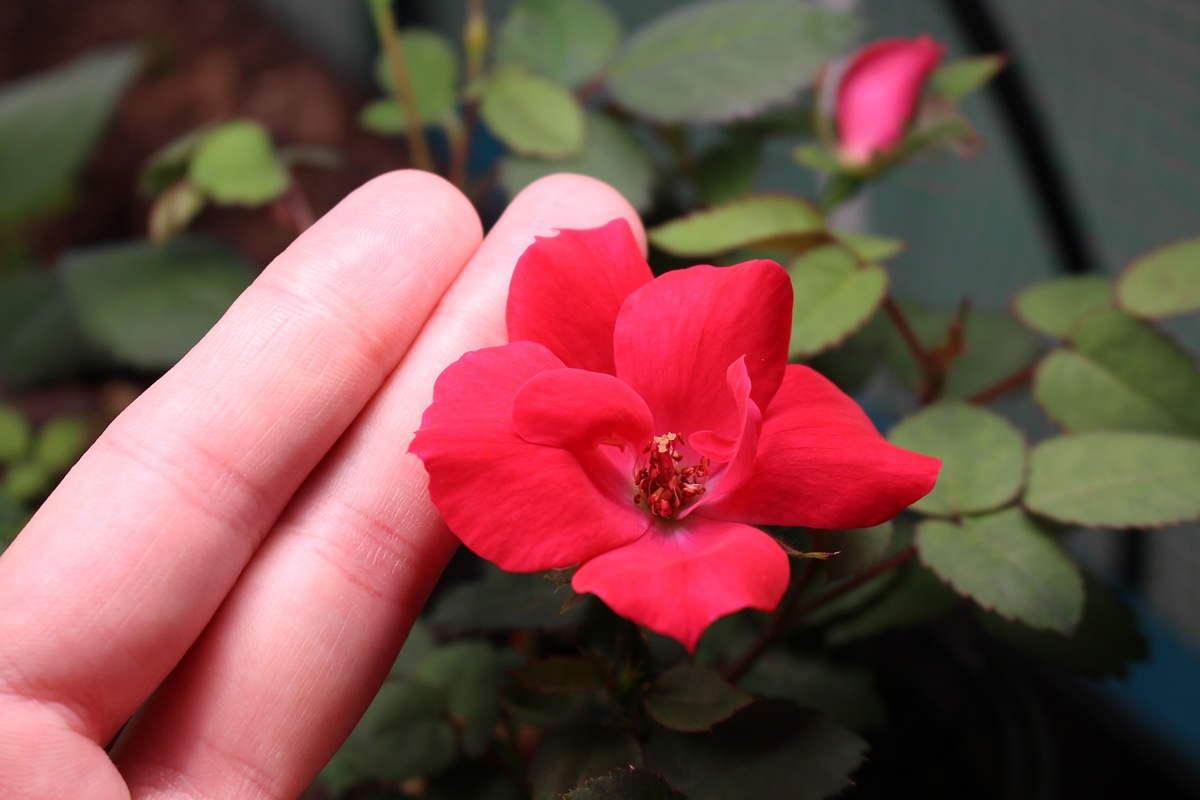
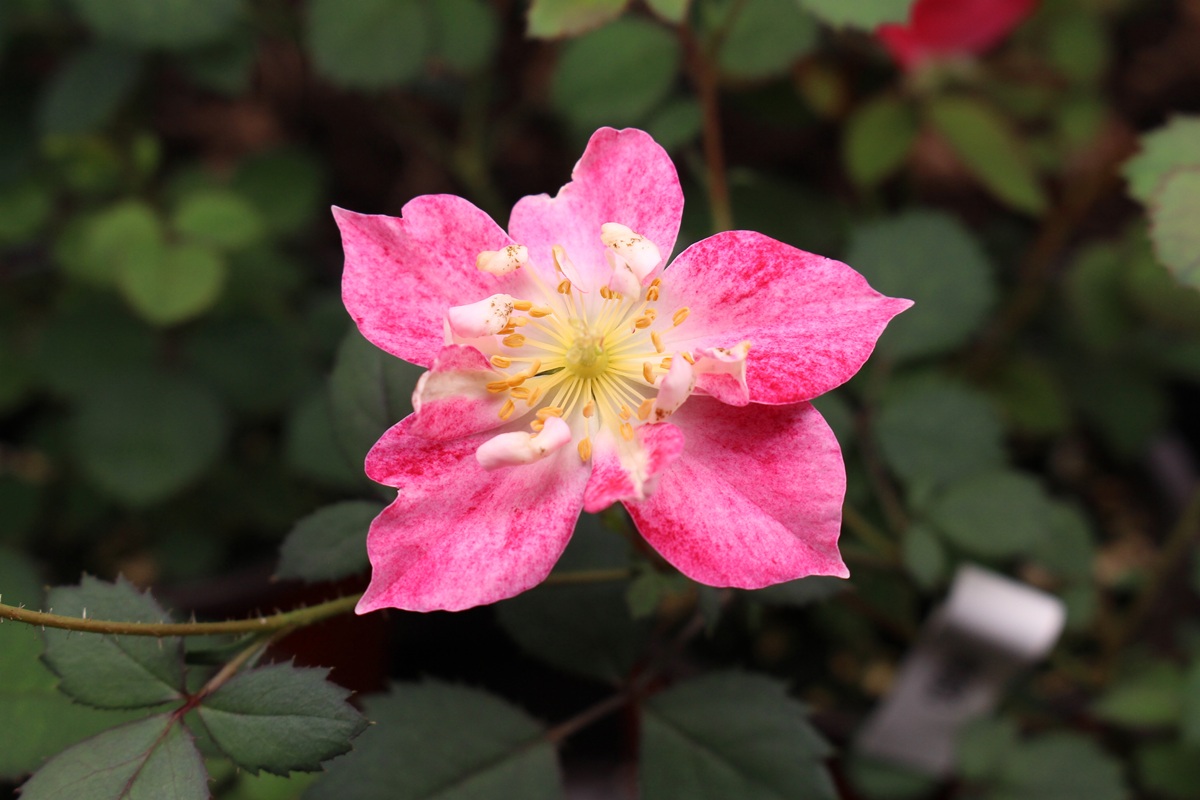
The first 3 seedlings that bloomed all looked similar, with the main variation being the petal count (either 7 or 9) and slight differences in color.

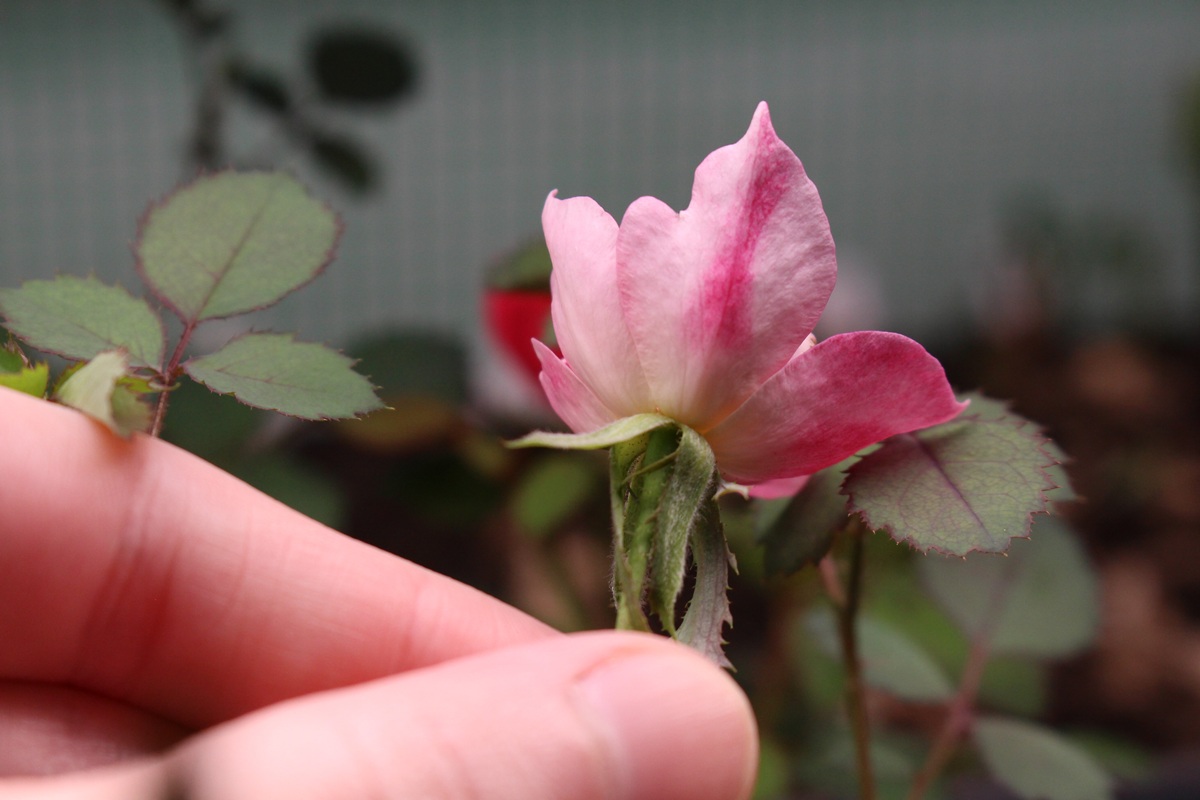
This 4th seedling has a freckled appearance, pointier petals, and the underside is a pale color.

It reminds me of cherry blossoms, or maybe a pink clematis.

This one seems to want to grow horizontally and stretch out, instead of growing upright.

I hope it has climbing/rambling tendencies, because climbing roses are my favorite.

4 Likes