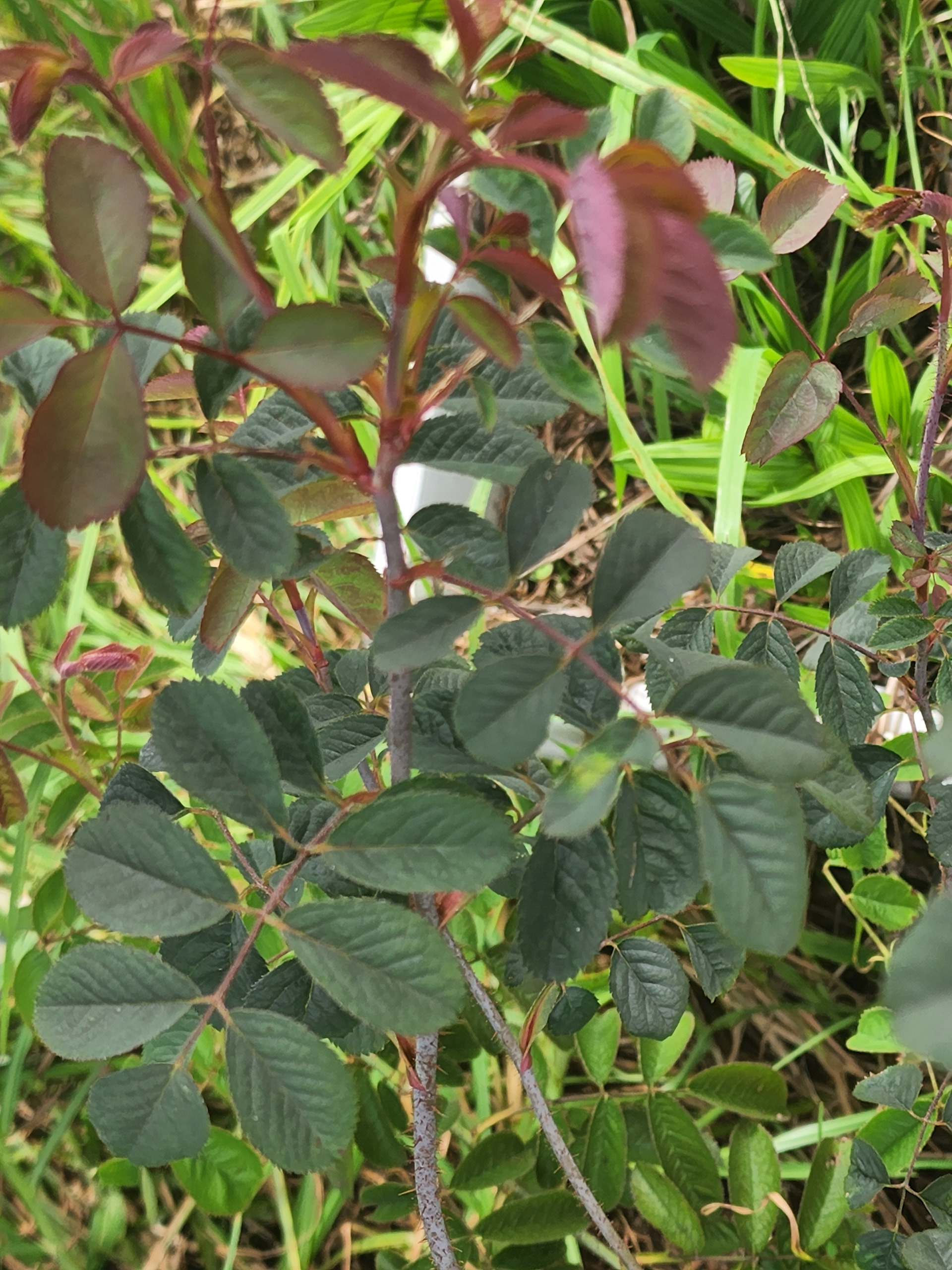
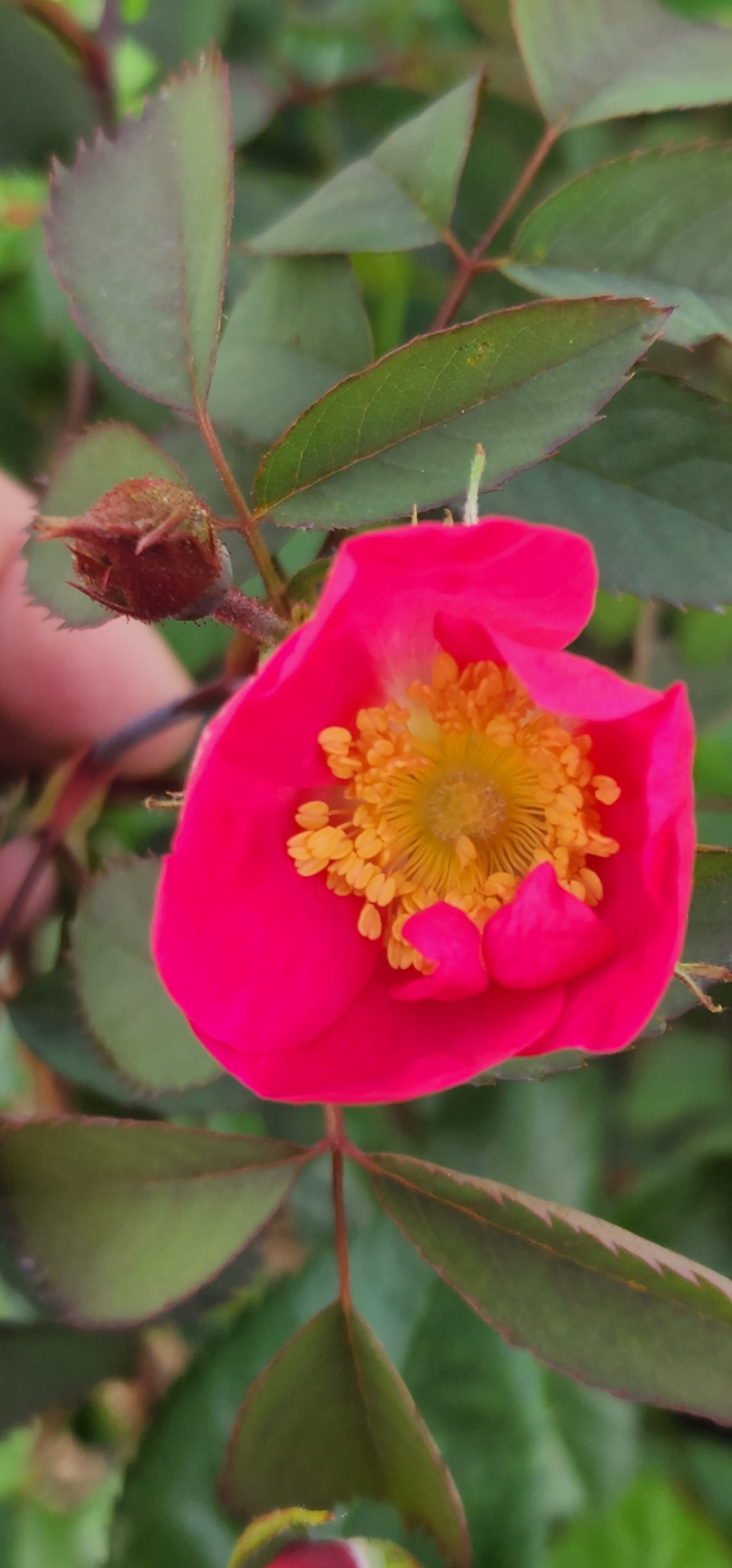
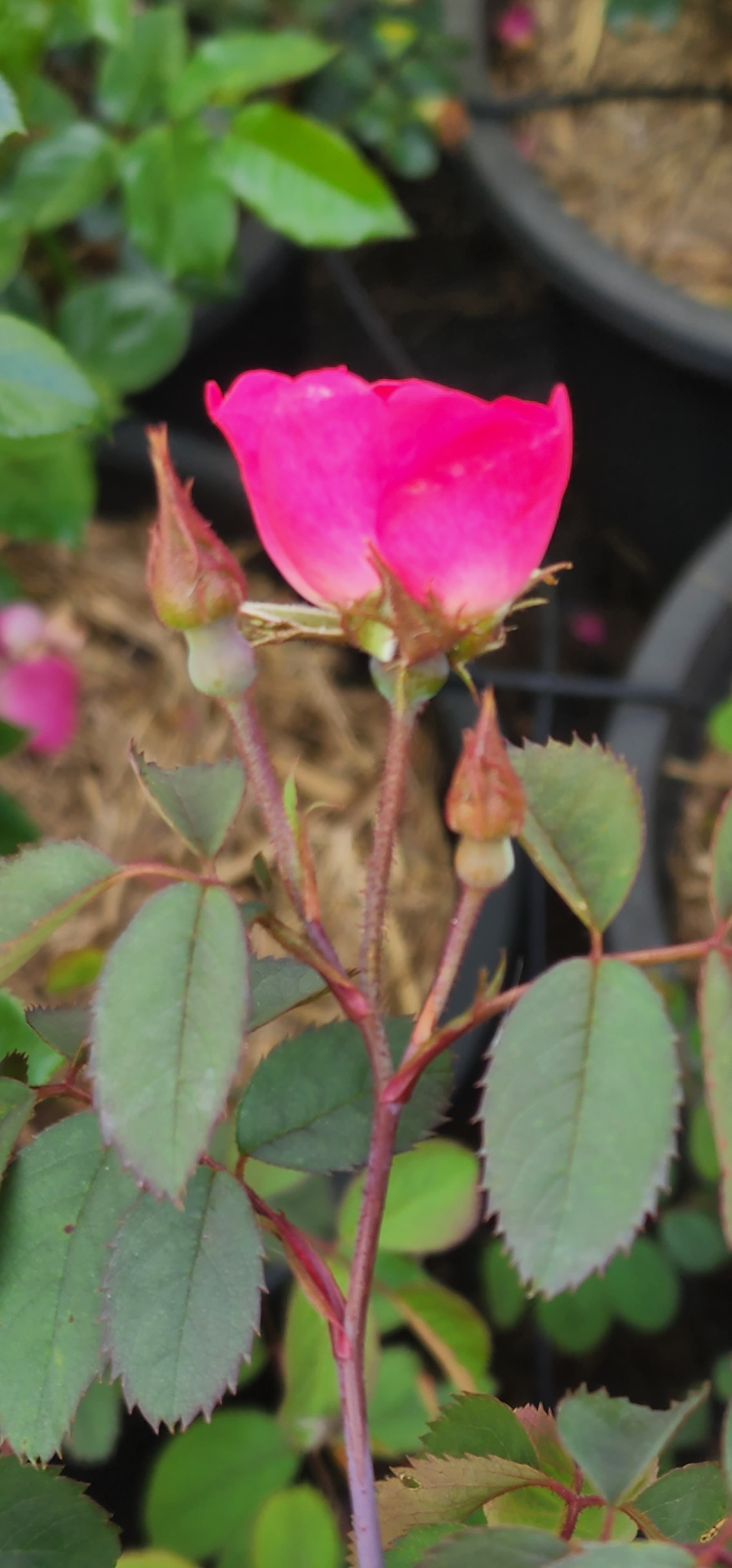
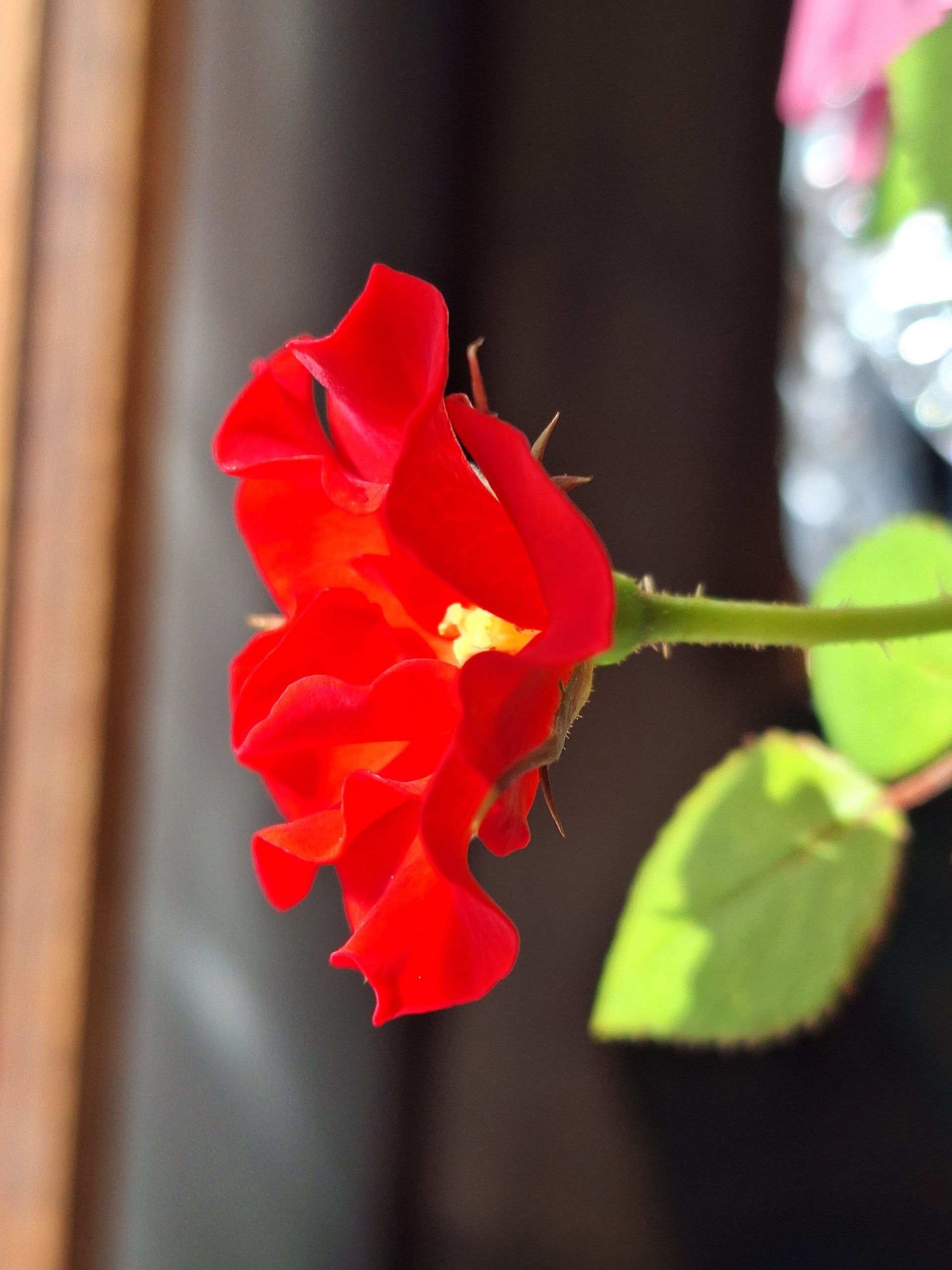
My very first, own crossing, bloom. Of the 143 seeds from 15 harvested hips across 9 different roses, the result was only 4 germinations. The mother of this one, the only one to flower - 23 weeks after germination, was the imposter Take it Easy (the not Gertrude Jekyll @ Gertrude Jekyll or Hyde ). Father (I hope, earwigs, ants and other insects ravage many blooms ahead of my engagement…) is species rose, R. glauca.
With the species rose connection in mind, does having six petals already, instead of five, lean towards better potential for developing into something more fluffy?
It has a tea fragrance (not my cup of tea), bright red, is ultra thorny already, no glaucous foliage/red stems, ie nothing R. glauca to show for itself. Just imposter (and imposter parents) symptoms. So not on my way to a grey foliaged, thornless, orange, perfumed, climber…
However, it is something other than pink and has a healthy knot of pistils so, although disappointed by my overall hybridising results, there is some satisfaction in that (and three others, without imposter genes, are yet to bloom. But time is running out for this season )
Never obtained glauca to use myself, so I am speaking from ignorance, but 5 months after germination seems surprising to me for an F1 of that species, though I don’t know how the Caninae meiosis factors into that.
Someone who has worked with Caninae will hopefully chime in. The disproportionate distribution of chromosomes as I understand it tends to affect whether one gets the influence of glaucous foliage or not, depending on daddy vs mommy usage. Perhaps juvenile bloom as well?
Caninae section pollen parents only donate one set of chromosomes to the mother’s four, at least in the case of pentaploids like r. glauca. I once ran across either a post or journal article which explained exactly which traits are transmitted by the father and mother’s chromosomes, but I forgot to bookmark it and haven’t been able to find it again.
You should be very pleased with that rose! It might not be exactly what you hoped for but it’s a great first step. Working with species roses is definitely a lesson in patience.
Third day of the bloom and the petals are still very firm with tea (and variable) fragrance so that is rather satisfying.
Thank you Heather, I will pot up and sit on my hands.
Thank you Phillip, the technical aspects are what they are - it’s fluff the pollen around, fend off pests, wait & see in this garden, although the ‘success’ rate tells me more could be done… The F1/time observation is very interesting but last year’s entire hip crop has been tardy at every stage in comparison with my trial of OP hips the previous season - only 4 germinations, only one bloom and it is Autumn now.
Thank you KD, yes, I was aware (after sourcing and purchasing…) that caninae are poor candidates for success - but I am glad to have anything at all and this one does have its charms.
I think it depends on the member of the canina family for germination time. Rosa Rubiginosa has germinated in the fridge after 5 months stratification (in one go). Now I have read in pembertons book that this is typical. However he notes that Rosa canina itself will take up to 2 years. I also have read extensively that Glauca will also take 2 years. I will be collecting Glauca seeds this year and will be able to comment more on them in the coming years
That would very interesting James! So are you gathering Glauca selfs or crossings with Glauca? It makes a difference in establishing my crossing, with more certainty.
My specimen of Rosa glauca has seeds that germinate quickly, with plenty of seedlings coming up from dropped hips every year. Perhaps more would come in year two, but I’ve never found it necessary.
I was going to try some crosses as it as the mother. This is mostly because all though it will be once flowering. It has a much higher chance of keeping the purple stems/foliage with 83% of genetic material being kept. I think I have accepted that you might, after many generations get a mild repeat on a dark green leafed plant but are very very unlikely to get a repeating purple flowered plant.
This fills me with a sense of happiness, I wonder why this has been written so many times. Passed down false Information or just your unique Climate conditions?
Since my specific crosses with R. glauca as seed parent did not germinate so far, but only the embryo culture helped, I started an experiment to see whether Glauca OP seeds germinate at all in my environment. In fact, this year, but only in the second year, germination started a few days ago. Now I am waiting to see whether my two-year-old seeds from the crosses will also germinate. I’m sure the literature is not incorrect, but there are many individual and complex factors involved.
I have a seedling from Helga Brauer (so crested moss x gallica) with r.glauca as the pollen parent. The seedling has a lot of the glauca foliage colour, reds/pinks/purple new and then the blueish mature (as seen below) (the green below it at the bottom of the image is from alain blanchard) so at least in some cases should be able to pass on either direction
have seedlings from the above (as seed parent back crossed to HB and other HB seedlings) which have also picked up the foliage colour to various extents.
In general working with glauca directly has been kind of a lot of failures for me, but could be climate. seed germination very very low (but I’m in a warm, rarely gets to freezing temps, climate) and is pollen being accepted by things seems more like an accident than something I can repeat (so just generally happy with the seedling I have as it’s a lot more agreeable with my conditions for me)
What a thrill! Thank you Plazbo for showing your plant, it is very handsome - proof that there is hope for glauca traits in a first generation cross. What did the blooms do? Did it flower the first year?
took around 3 years to flower, just single pink blooms, nothing interesting, (minimal or no) cresting wasn’t strong either (hence the back crossing and half sibling crosses with it)
probably ~2 years before the seedlings from it it start to bloom
Unfortunately, none of the few R. glauca seeds from my two years old crosses poped up. So I tried embryo culture again. The pericarp thickness made an extraction rather difficult for me. However, it quickly became clear why they hadn’t germinated: the embryos were infected or nonviable. New game, new luck. Maybe it’ll go better next time.
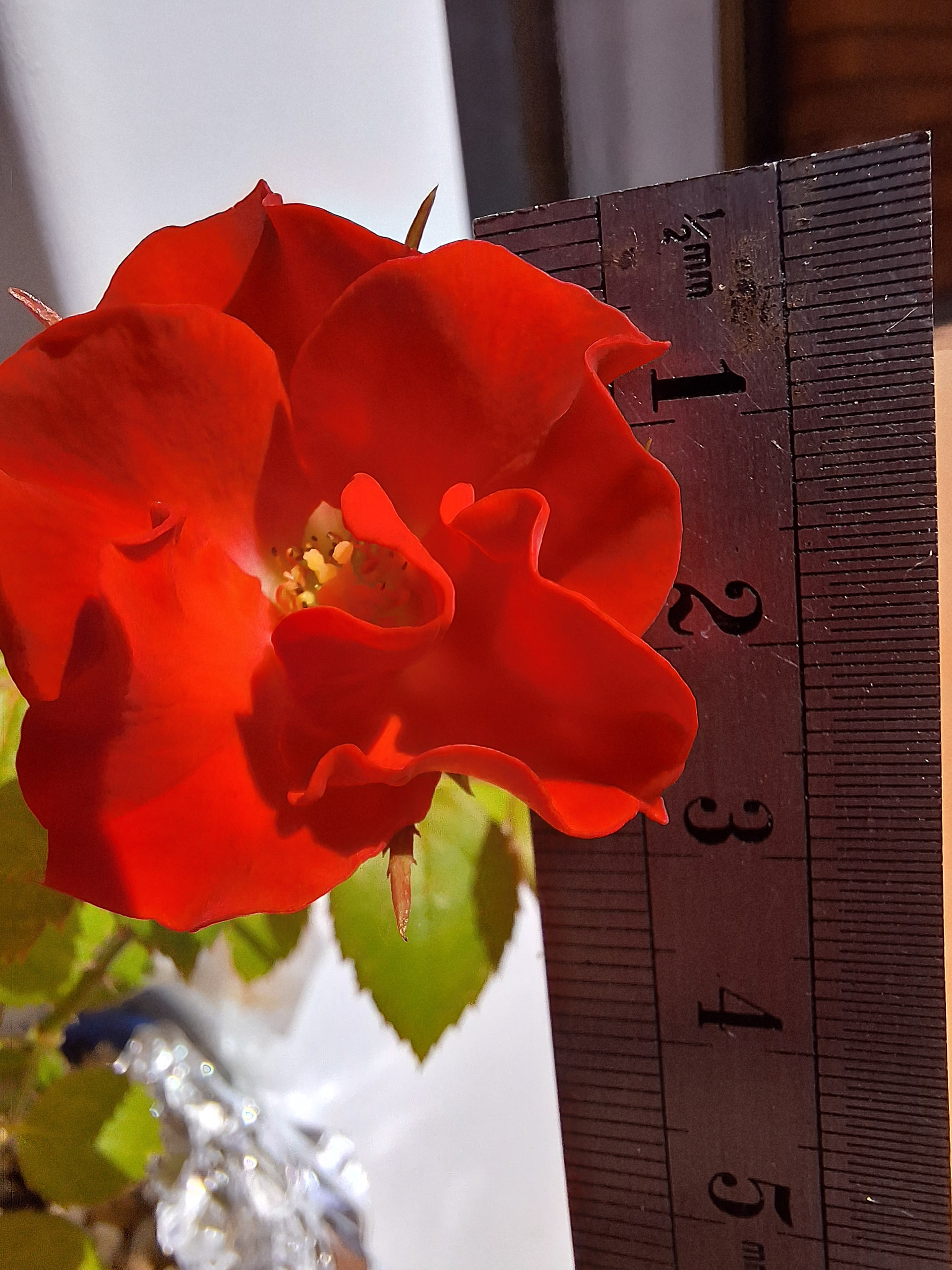
 )
)