Another new hybridizer question for all the veterans out there. I’m heading into my first harvest and while I’ve read up a lot on when to harvest the hips I’d be interested to hear yours. Particularly I want to make sure I don’t harvest too early. However I don’t really know how long all my roses, except for one, really take before I know they have mature achenes.
Here is my understanding of the criteria: #1 Full color (which ever color that is) and a little bit soft #2 at least 120 days unless at #1 #3 about to fall off or be ruined due to: stem about to rot, predicted frost, deer buffet etc…
I ask as except for my one species rose, R. blanda, everything else is still very green and past 90 days closing in on 120. I’m in z7a with an average first frost around 11/11. No deer pressure, maybe a little squirrel pressure. NYC squirrels are Jr. racoons.
My current plan is to just let everything keep going until hips hit #1 or #3, probably a freeze. Plenty of my R. blanda are nice and red but still very firm so I’m watching those closely. I have harvested a few so far.
I’d be interested to hear anyone else’s process. Thanks in advance.
Kim, do you have a “magic number” of days before harvest, and does it vary with the parentage? With certain mothers, I will have many that are still green and firm even up to 150 or more days. I normally harvest those when first frost threatens, but I really wonder if all those days help or hurt.
I usually TRY to allow 115 to 120 days but a few seem to like to fall of a bit earlier. For those, i give a gentle bend at the point of abcision where the peduncle naturally separates from the stem. If it easily releases I figure it’s likely ready. If not, it remains longer.
Like Kim said, color can vary a lot. I finally started putting the date of pollination on the tag so I could count days. His numbers are very good. Some will be ready sooner, especially the more cold hardy roses that I work with. But many will still be green, or just beginning to lighten color a bit, but germinate fine. If in doubt a little longer is probably better than a little shorter, provided your junior racoons don’t take a liking to them.
Others have more experience than I should chime in but…
I imagine it’s not moving a rose to an area with a shorter summer. More likely it’s the roses bred for cold climate that are adapted to the shorter summers.
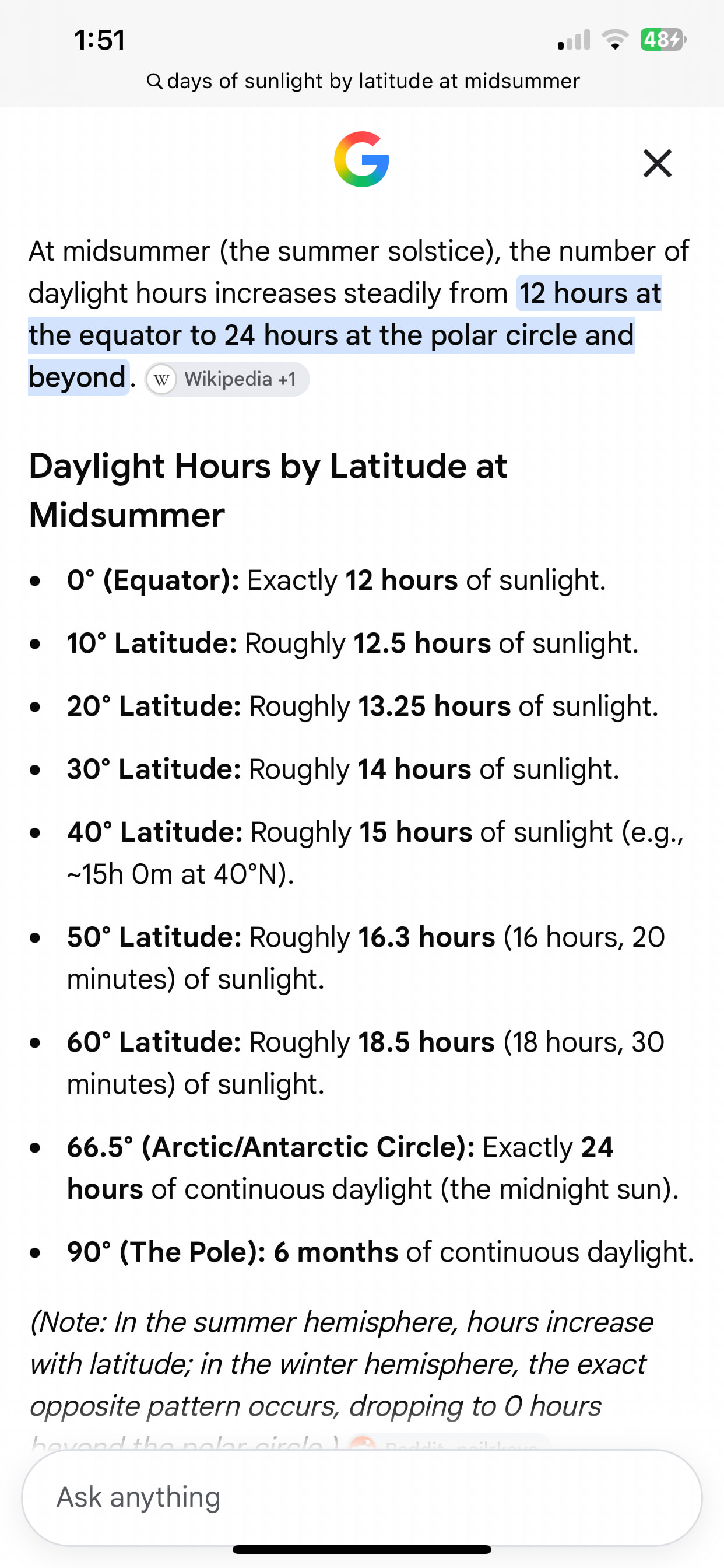
Having started my life in the North, I am compelled to remind you all that those “short-summer days” are actually much LONGER that further south, right? The sun doesn’t set in high-Arctic summers! Where I grew up, the sun shone for 16-18hrs at midsummer, and annual baskets will cascade right to the ground with that kind of growing season.
Excellent point and one I should have remembered having spent time in the artic myself. I wonder if there is a calculator to compare hours of sunlight by latitude. It would be interesting to know if the longer days add up to an equal amount of sunlight in a 2 month season over a 3-4 month season.
For reference: I grew up at the 55th parallel and now live at the 49th. Quite a difference, but their tomatoes match or beat ours at the end of a MUCH shorter season!
In tomato gardening, it’s VERY obvious that late-season tomatoes hurry up and ripen themselves faster. They seem to prioritize ripening over growing larger, so some varieties that typically grow big (before turning red) start to turn red at a much smaller size.
From my limited observations, it’s the colder nighttime temperatures that trigger this early-ripening response. It’s warm sunny days + cold nights.
However, if it’s cool cloudy days and cold nights, those final tomatoes of the season never turn red. They just stay green. Having both cold days and cold nights slows down ripening or stops it completely.
If roses work like tomatoes, then similar environmental stressors would be what would theoretically cause the rose’s fruit to ripen earlier. This would mean that the achenes have ripened early inside the hip even if the outer hip still looks immature.