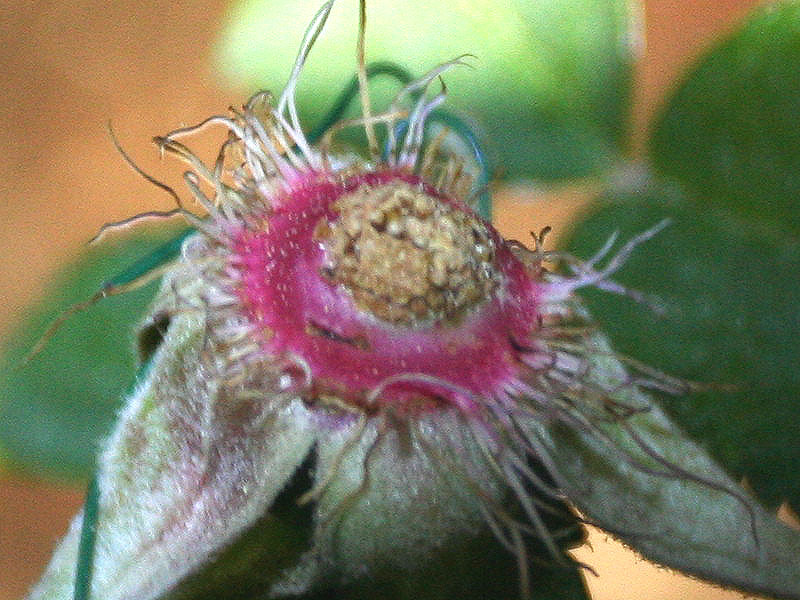
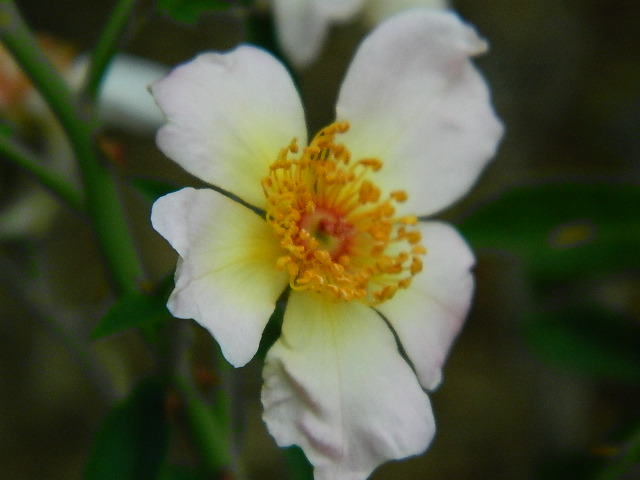
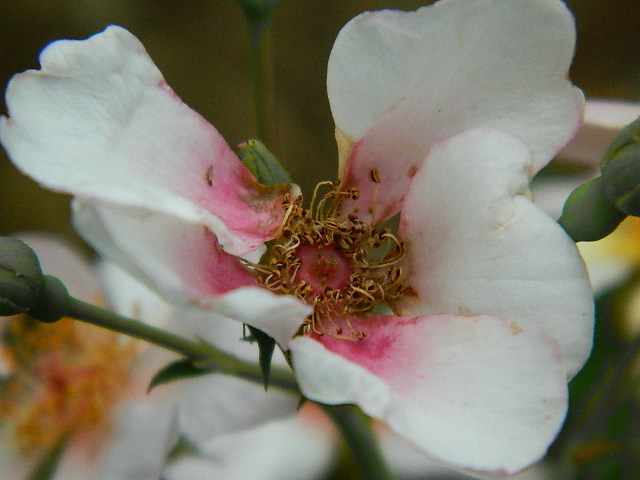
Yes, at first I thought that it might be visible evidence of successful pollination but it seems to be more a case of certain pollinated hips react with this red ‘corona’ as you indicated after pollination, but not a majority. Carefree Beauty and Moondance are others that react similarly, among others. I just pollinated quite a few today and will check to see how many have followed suit.
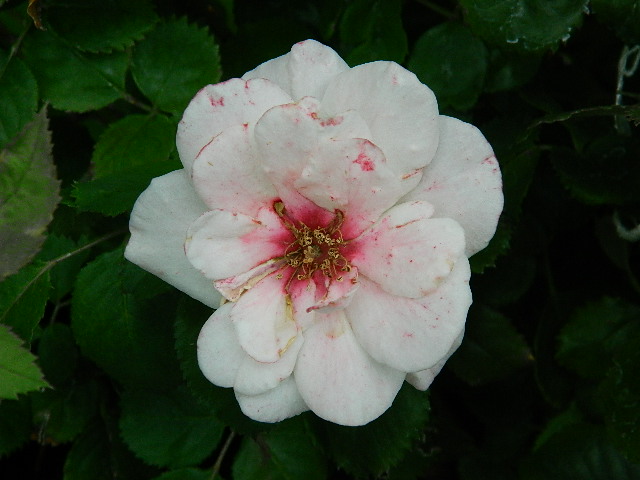
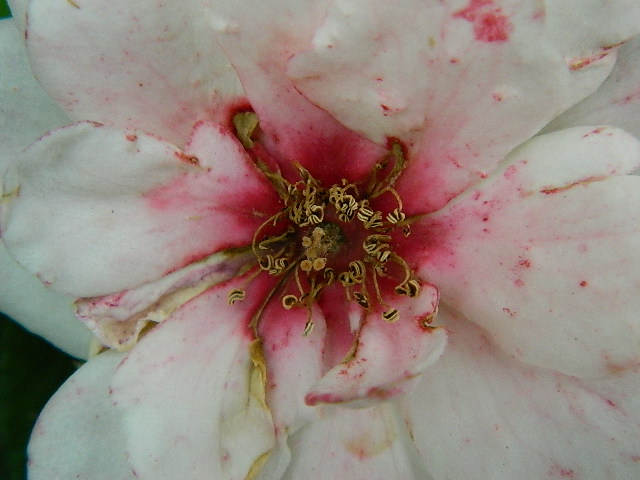
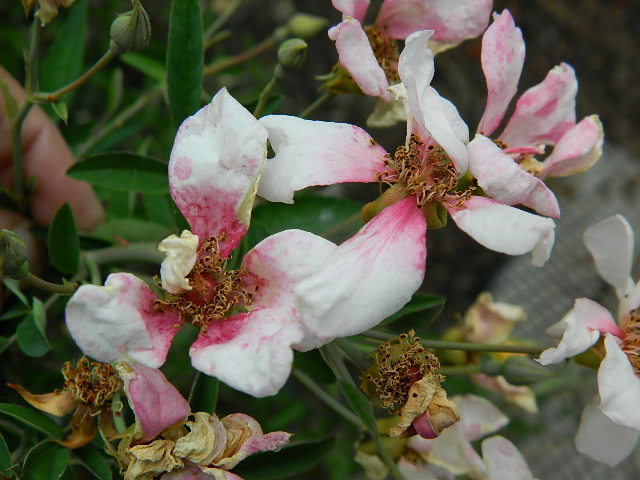
You mean others like Cocktail and others of the handpainted series? I’ve noticed this response from roses containing Moore Halo roses. The fresh flower has no red or pink to the center of the flower, but aged flowers develop rather intense red tones. This particular one inherited the trait from Jim’s First Impression. I also see the aging red center in my Rayon Butterfed. 'Rayon ButterFED' Rose
Now that 24 hrs or so have elapsed, I checked most of the hips that have been pollinated in the past 10 days, and although I did have an idea that this might signify a successful pollination I have another (again purely observational-did not keep a tally) idea of what this might be a signal of. I do not have the greatest representation of rose types, species, OGR’s, moderns and classics but the red ‘corona’ (good choice of words) seemed mostly consistent with roses that were/are self fertile, esp. when they produced very fertile pollen. This was not so much representative of types of roses as it was of individuals. I have several groups of 3-4 sister roses of differing ages (!-3 yrs) and the red corona differed among them according to whether that particular rose produced fertile, esp. a lot of pollen. It did not matter whether they were self pollinated or emasculated and then pollinated with foreign pollen but the less to no male fertility, rose hips showed no red/pink coloration. There are some roses that do not have any part of the corona exposed but if the stigma/style is removed this should be evident. I might check that out now that I think of it.
I thought to photograph the red eye on Rayon Butterfed. As they age, the red becomes very pronounced. There are hips already turning color of its pollen on one of the Hulthemia seedlings Jim shared with me.