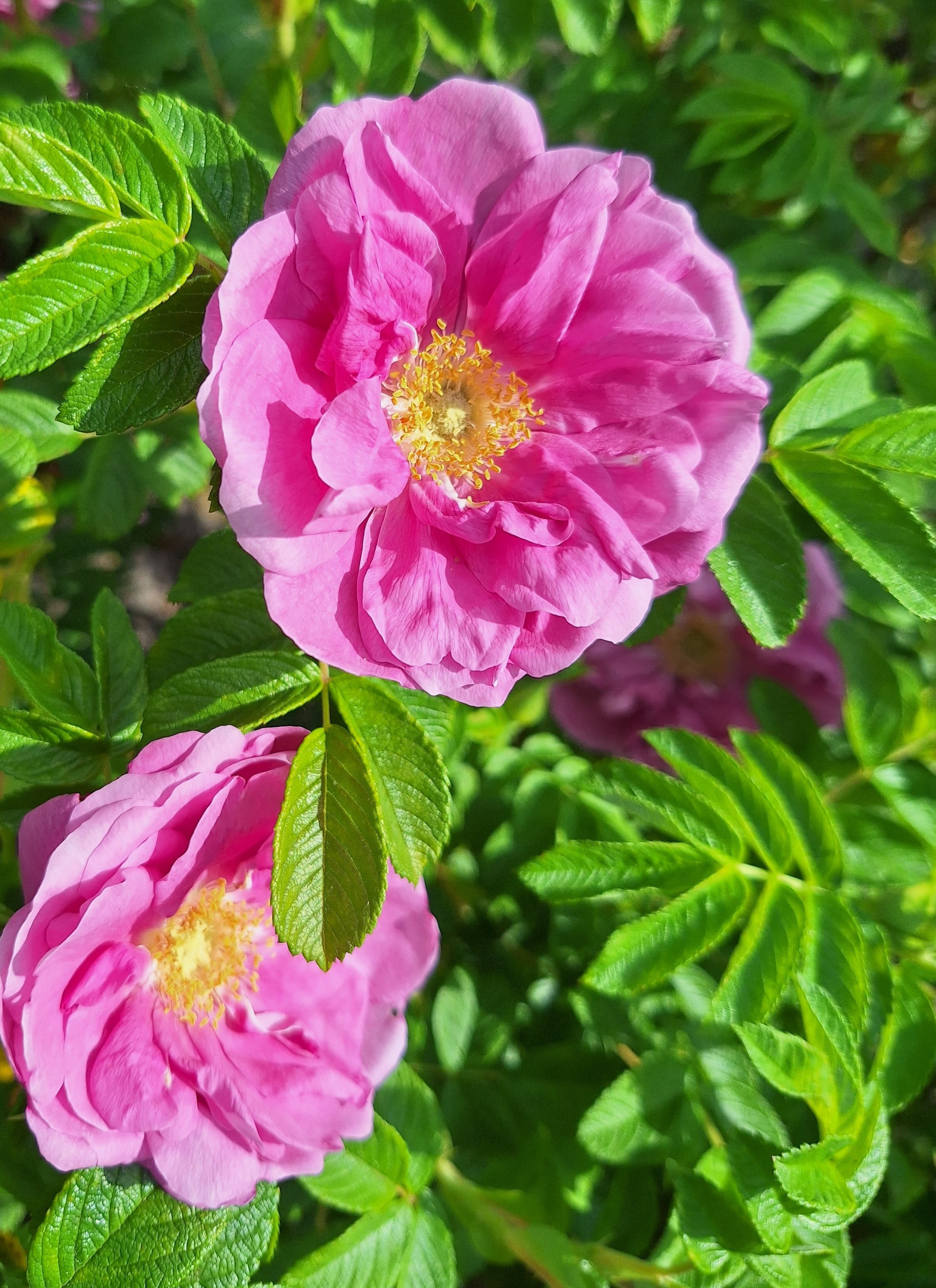
Would you have a picture to share of Franciska by any chance??
I’m curious to see the bloom form and color of this officinalis x Snow Pavement fertile seedling.
Would you have a picture to share of Franciska by any chance??
I’m curious to see the bloom form and color of this officinalis x Snow Pavement fertile seedling.
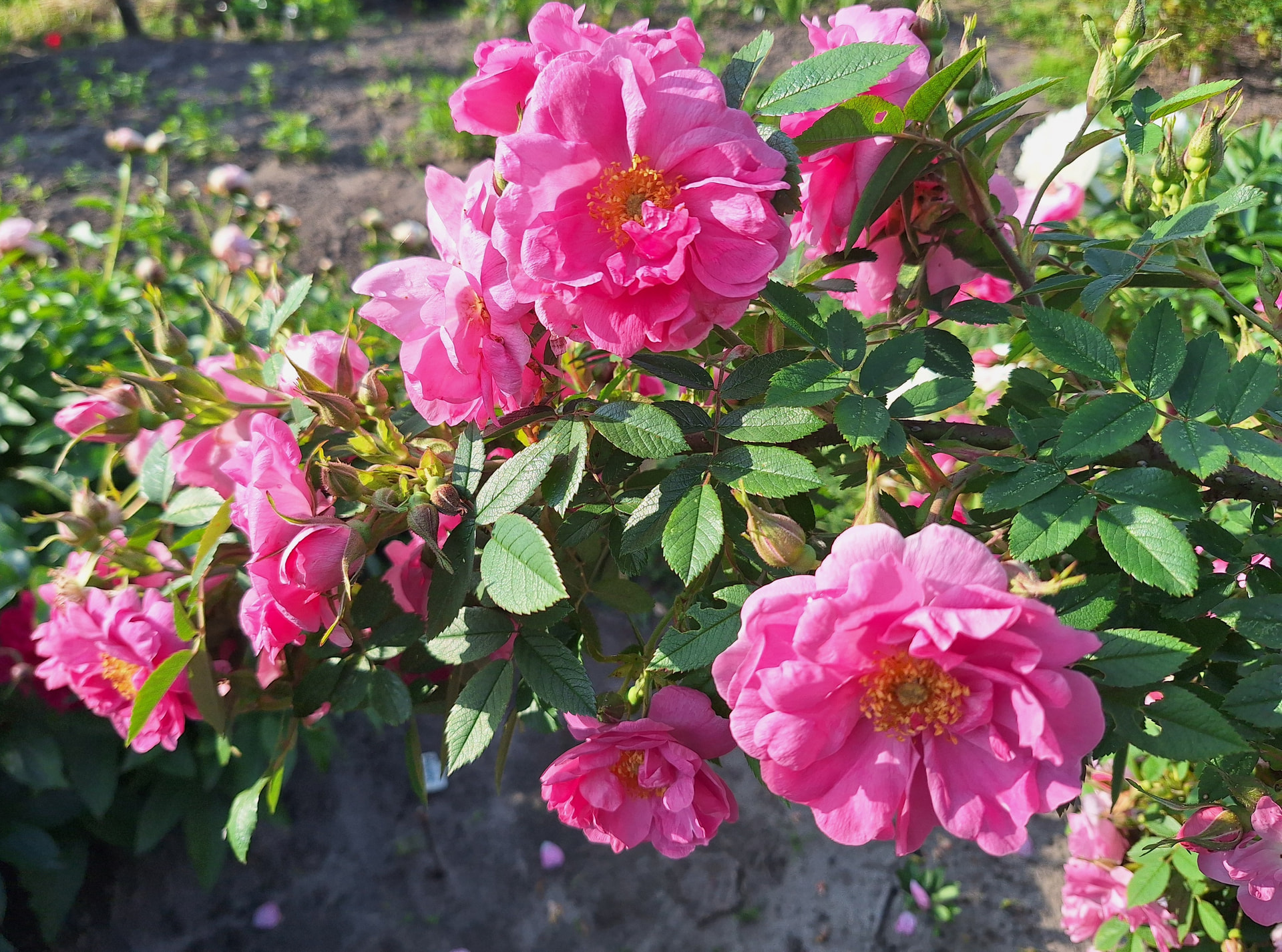
I share with pleasure. Sometimes its flowers are a darker shade. It depends on whether the summer is cooler, rainier or hotter.
Franciska appears to be a winner for breeding hardiness and fragrance into roses, producing some incredible offspring depending on what you cross it with. Some of the plants you’ve posted would be excellent contenders for cold areas of Canada, even if they’re once-bloomers. Thanks for sharing!
Thank you. Yes, it gives beautiful offspring, because it is plastic. I put one of its children, which blooms all summer until frost. It blooms very abundantly. It grows a lot, but you need to monitor it more. Here is the second flowering. This is “Franciška” x ( “John Davis”, Ristinummi"). This shows its potential to repeat flowering. It gives pollen, but does not bear fruit.
I don’t grow John Davis but told that its pollen produces beautiful double offspring. The seedling you just posted reminds me of a better rich pink version of John Davis. Beautiful foliage!
Is your “Ristinummi” a seedling of John Davis?
Yes, foliage is really very important. Rose “Ristinummi” is a Finnish rose, hybrid Spinossisima. HelpMeFind writes that it may be a cross of R.Rugosa x Spinossisima. The thorns are especially resistant. They are very beautiful and undeservedly little grown. I would like to hope that they will gradually return to gardens and flower beds.
Those are really lovely! Another idea which has worked for me. Look for triploids which are healthy and hardy where you are and cross it with the species you want to work with. If there are any miniatures which fit those criteria where you are, use them, also. There are no guarantees that will work for climates other than yours (what will?) but it’s a viable method. Ralph Moore did it with this. 'Golden Angelcalnana' Rose I did it with this. 'L56min2' Rose Self seedlings of L56Min2 show definite species traits. Whether they are suitable for further work is up for exploration but mining the genes you wish to work with can be easily accomplished using fertile triploids.
Your L56min2 is really cool, Kim. My impression is that desert plants often bloom opportunistically based on rainfall rather than seasonally. Is this seedling itself at all remontant?
It was a continuous flowering plant. Unfortunately, I lost it, but it flowered as continuously as its mini parent. It’s selfs often flower as continuously while showing more of the species appearance in the foliage.
I am guessing no surviving seedlings either? (That was a pretty cool cross! Love to think it might also have improved drought tolerance.)
I have two or three surviving selfs from it. One suckers like a species, the others haven’t. Odd, as Minutifolia tip roots instead of suckering. There is another L56Min3 which repeats, but not continuously, and suckers. It’s also a much taller plant than L56Min2 and its selfs were/are. 'L56Min3' Rose I have harvested self set seed from #3, though it’s anyone’s guess if they will ever be planted.
Forgive me if I have asked in the past, but would there be advantages in your opinion to R. minutifolia over R. stellata mirifica in a breeding program? I have wanted to obtain R.s.m. for a decade or so. It seems more widespread and hence potentially more broadly adapted to my climate.
I chose Minutifolia due to my fascination with it. I have repeated everything I’ve tried with Minutifolia with Mirifica and it hasn’t been as cooperative.
Thanks. Interestingly Wildflower.org lists the Grand Canyon subspecies of stellata (ssp. abyssa) as having a shorter bloom time than other ssp of desert rose (ssp. mirifica).
I’ve grown Stellata mirifica and “plain” R. Stellata. I’ve never seen Stellata abyssa. Stellata was weaker, smaller, not as “robust” nor as easily grown as Mirifica. I lost R. Stellata many years ago, which wasn’t as much of a lamented loss because Mirifica is significantly easier to maintain. It used to sucker madly in Newhall. It isn’t as happy to sucker here in the Central Coast. It also flowers for a much longer period where summer is HOT and it receives regular water. It only flowers here when we have real “heat” or when grown close enough to a wall of fence to benefit from reflected, radiated “heat” Much like the peaches and plums on the tree nearer the fence are sweater than those farther out in the yard are.
Welp… in the unlikely event you ever have more suckers than you can handle…
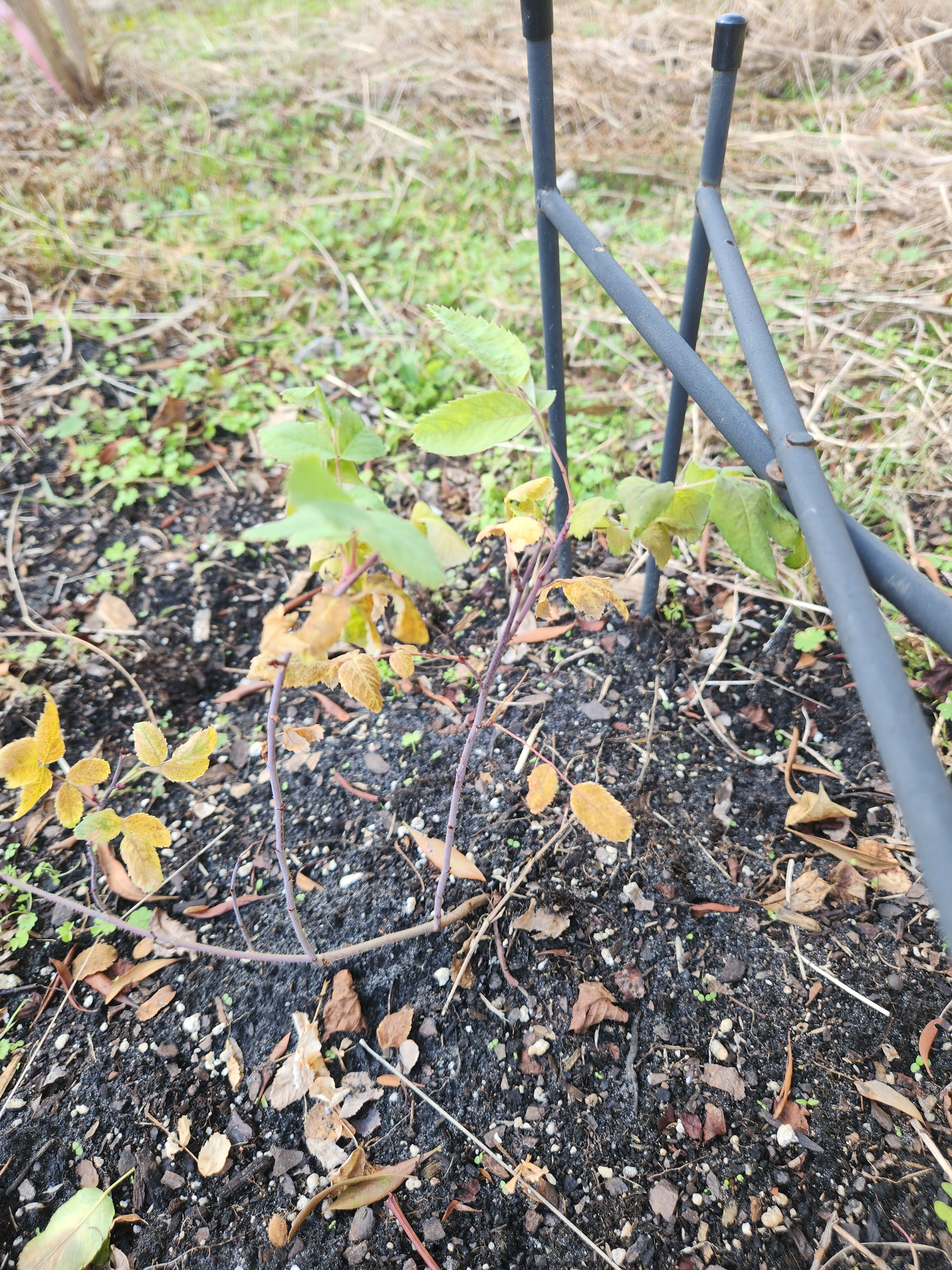
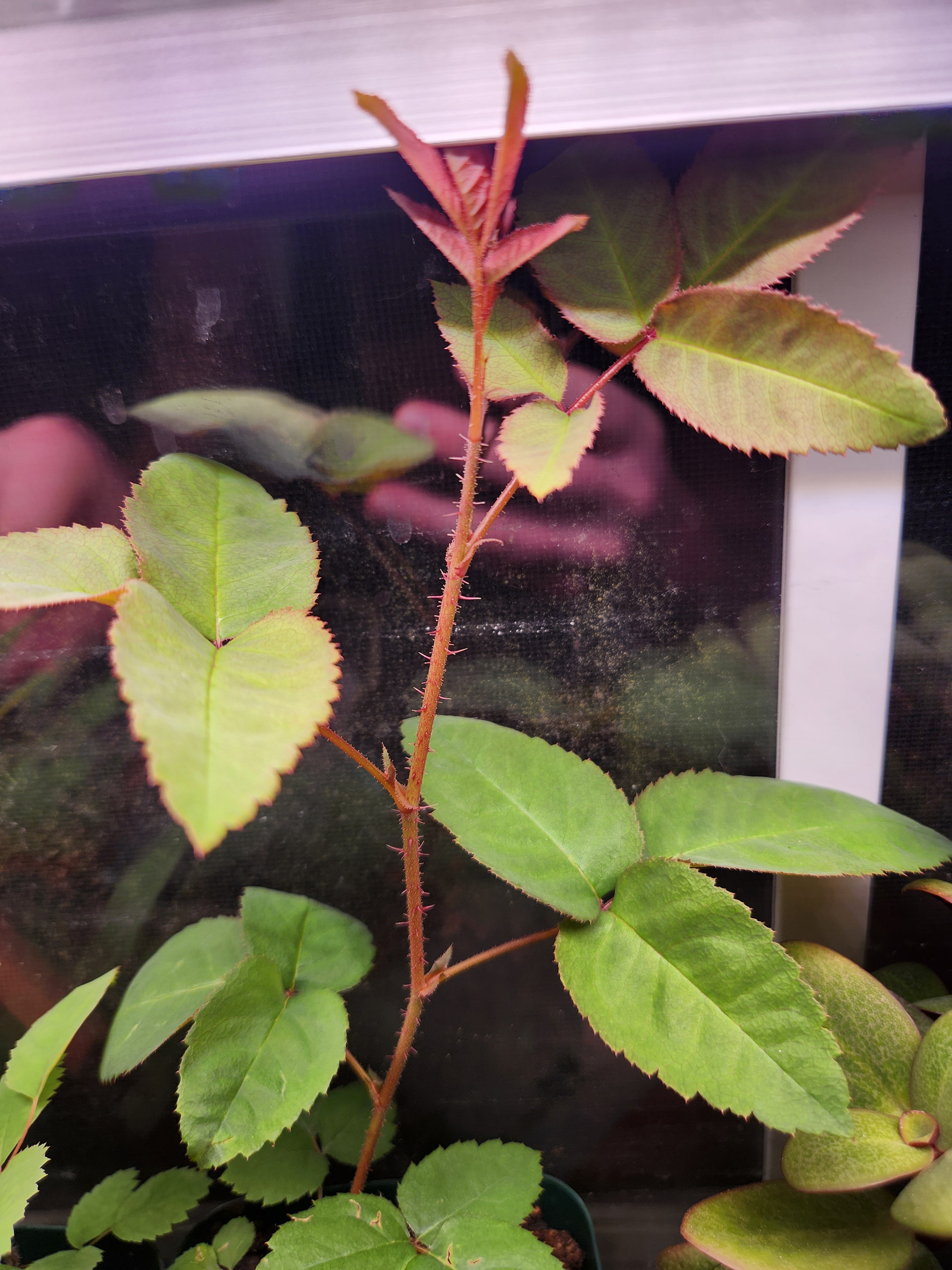
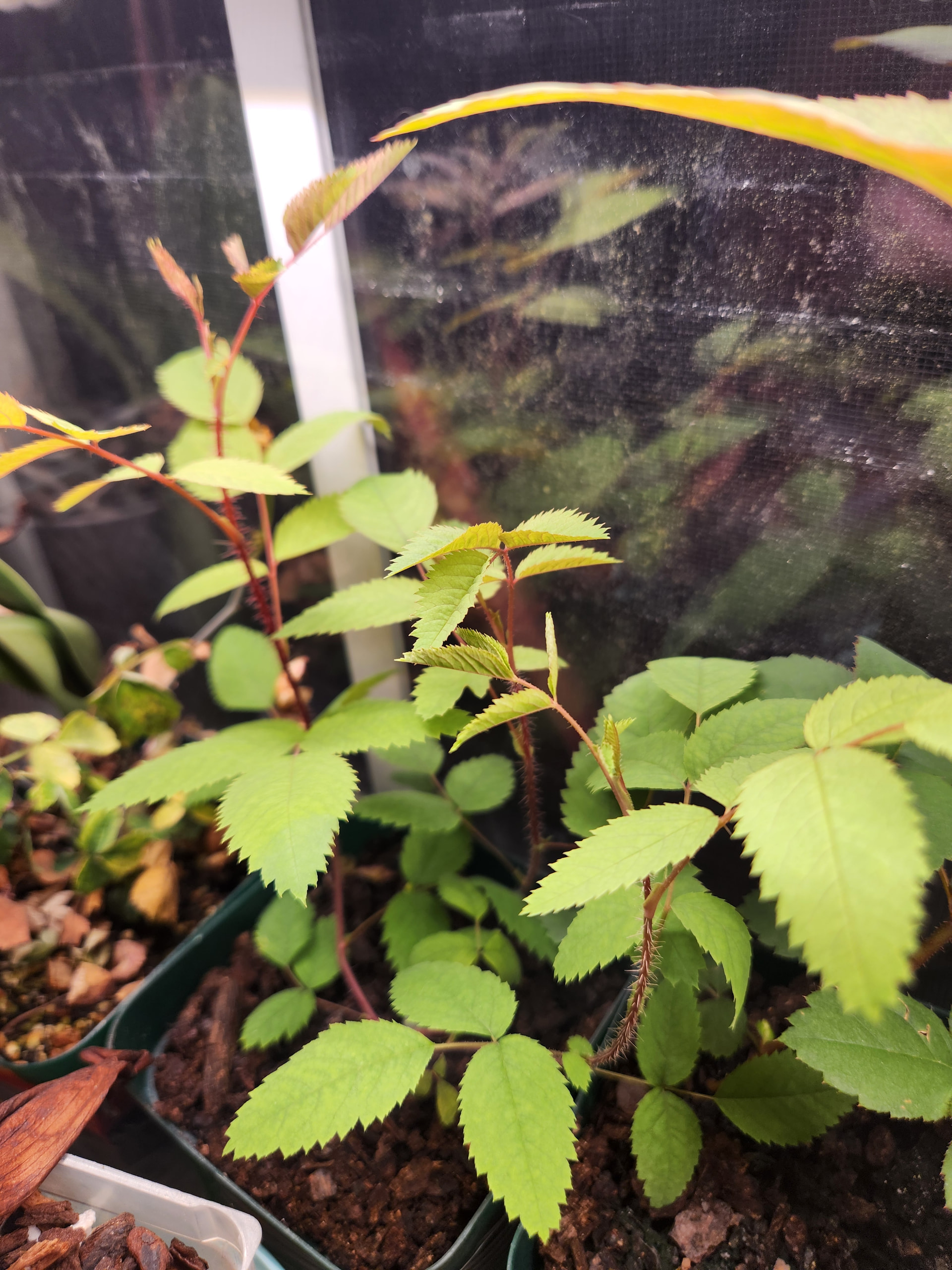
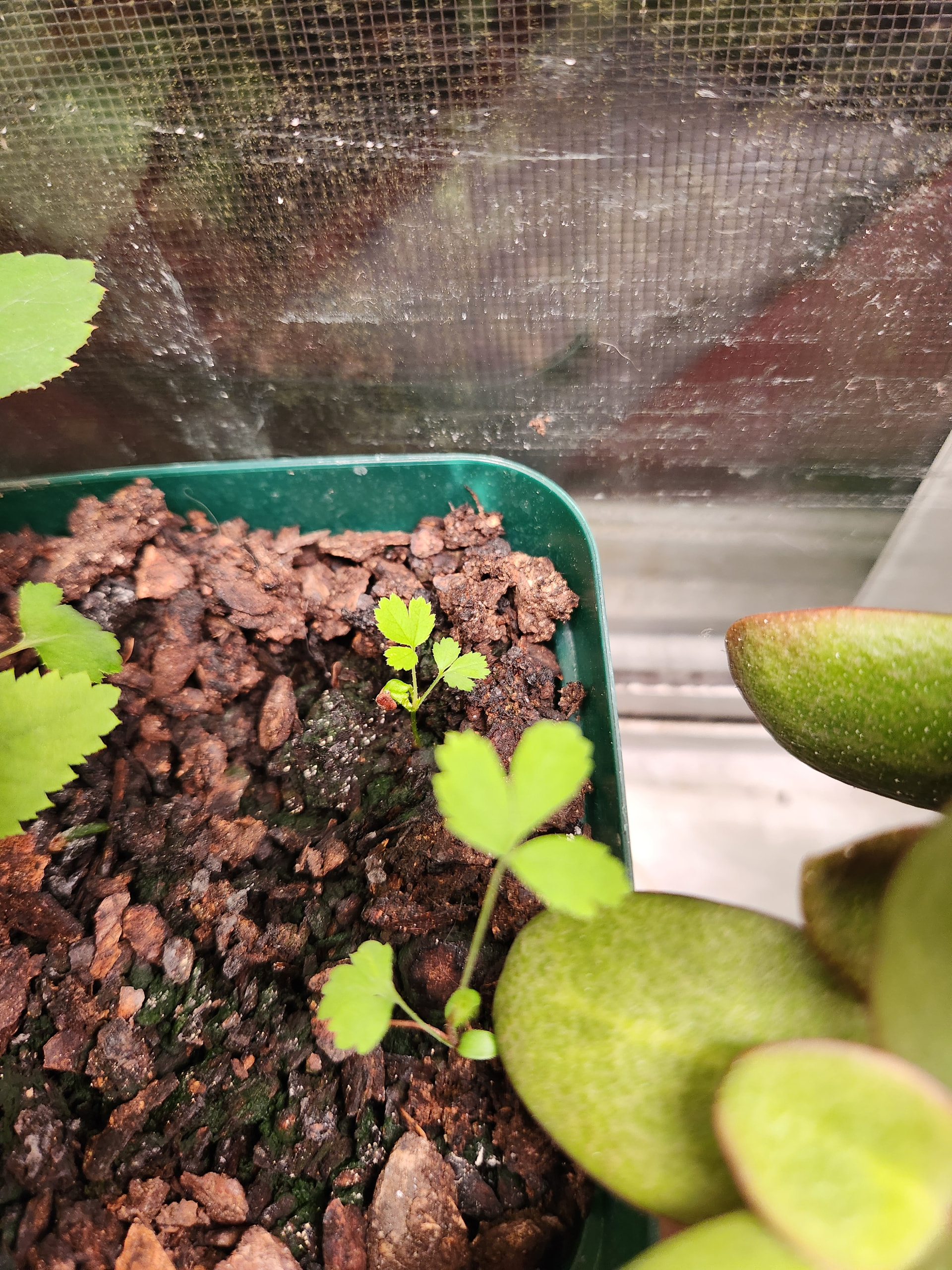
I am working with R. Woodsii right now. I almost feel like my approach is borderline recreating the wheel. My goal is to use woodsii and teas/chinas to try and exclude european rose genetics in my breeding (though i think its impossible to really do that). I chose to work with teas and chinas that are either triploid or diploid with unknown ancestry. The picture above is amazone x R. Woodsii. One of two seedlings that germinated. The other seedling i forgot about in the fridge and it molded over and died. I am loving the unusual purple stems and relative thornlessness. Winter in south carolina has kept it from pushing out new growth after transplanting it outside. I am interested to see how the leaves change over time and how the flowers will look (maybe some amount of yellow). Hopefully it’ll have decent health. Eventually I am wanting to cross my best hybrids together to see if i can get some interesting woodsii based remontant seedlings. I also have 5 spice x R. Woodsii seedlings in the windowsill. I also figure hybrid perpetual varieties already have strange genetics that might break the woodsii better, so i also have a baron girod x R. Woodsii seedling growing right now (it is very vigorous). I will share pictures of these too.
As a side note, amazone hasn’t been the most disease resistant for me, but I do love the color and form of the flowers (no real fragrance though).
I have wondered that woodsii isn’t more widely used. It’s range is so extensive. One might think, despite minor esthetic obstacles, it could have great merit. (Can it be presumed to have evolved some resistance to indigenous RRD?)
In the past I was able to collect seeds from R.woodsii ssp. ultramontana in CO, and from another ssp. fendlerii (a.k.a. “Rosa arizonica") in Arizona. Neither survived to maturity under my “Texas Death Star.” (Was that a Kim-ism? That sounds like the sort of poetic image I might have picked up from Kim…) The fenderii parent from which I collected the heps had good height and appealing “soft” slightly greyish foliage whereas the ultramontana was a diminutive, gnarled thing growing in a pretty harsh wind-swept area near a glacial lake. I can’t assert the extent to which the conditions vs the genetics accounted for the difference in the two ssp.. but the range in habitats left an impression on me, and I was hopeful I might get to play in their pollen to see what might come of such.
Good luck, and fingers crossed for you.