Breeding for hip production has been a side project of mine. You might want to look at ‘Sweet Hips’ and ‘Summer Wine’.
Here are photos taken by Mark Wessel of a display of rose hips at the Chantilly flower show in France in 2018.
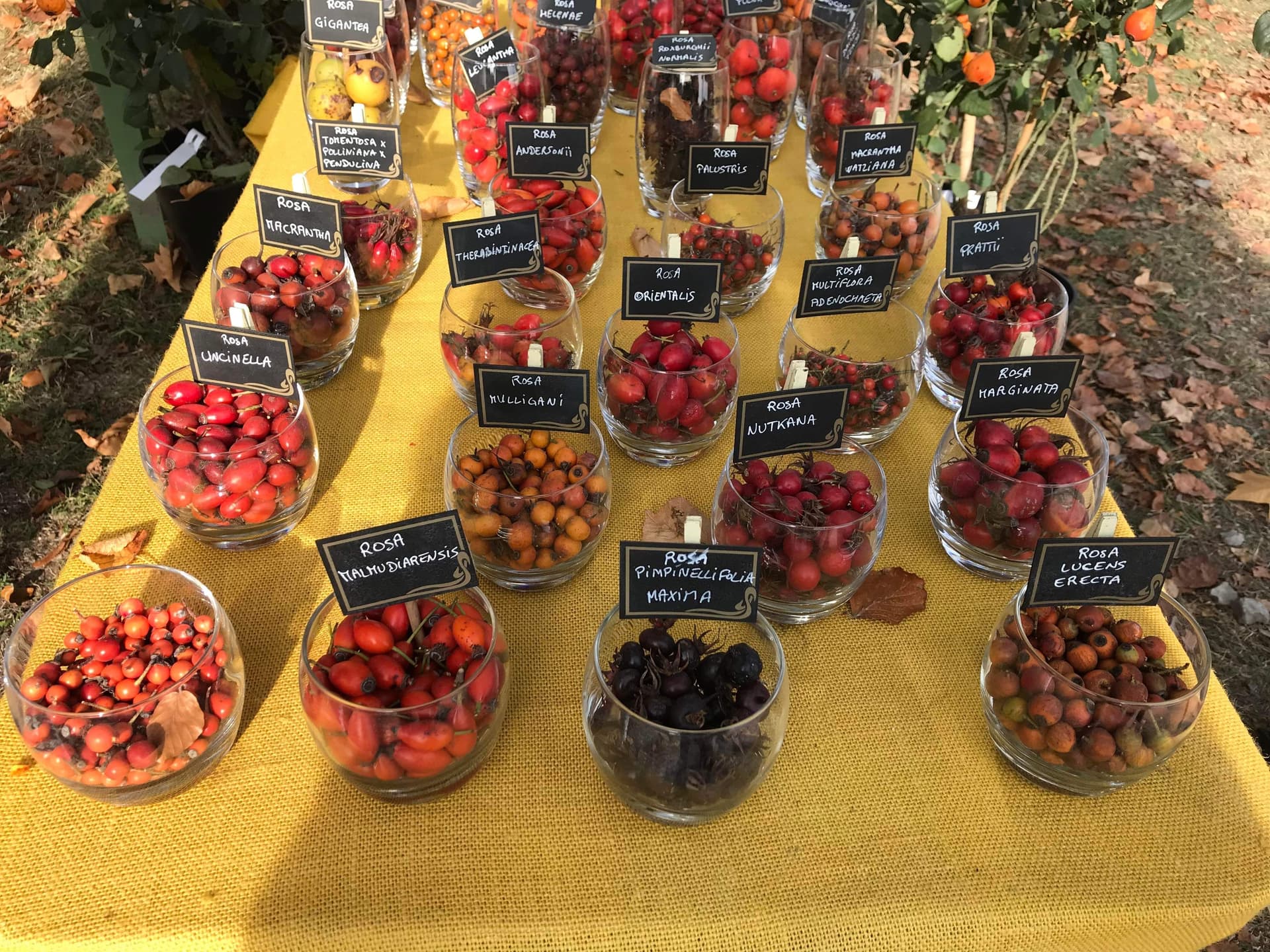
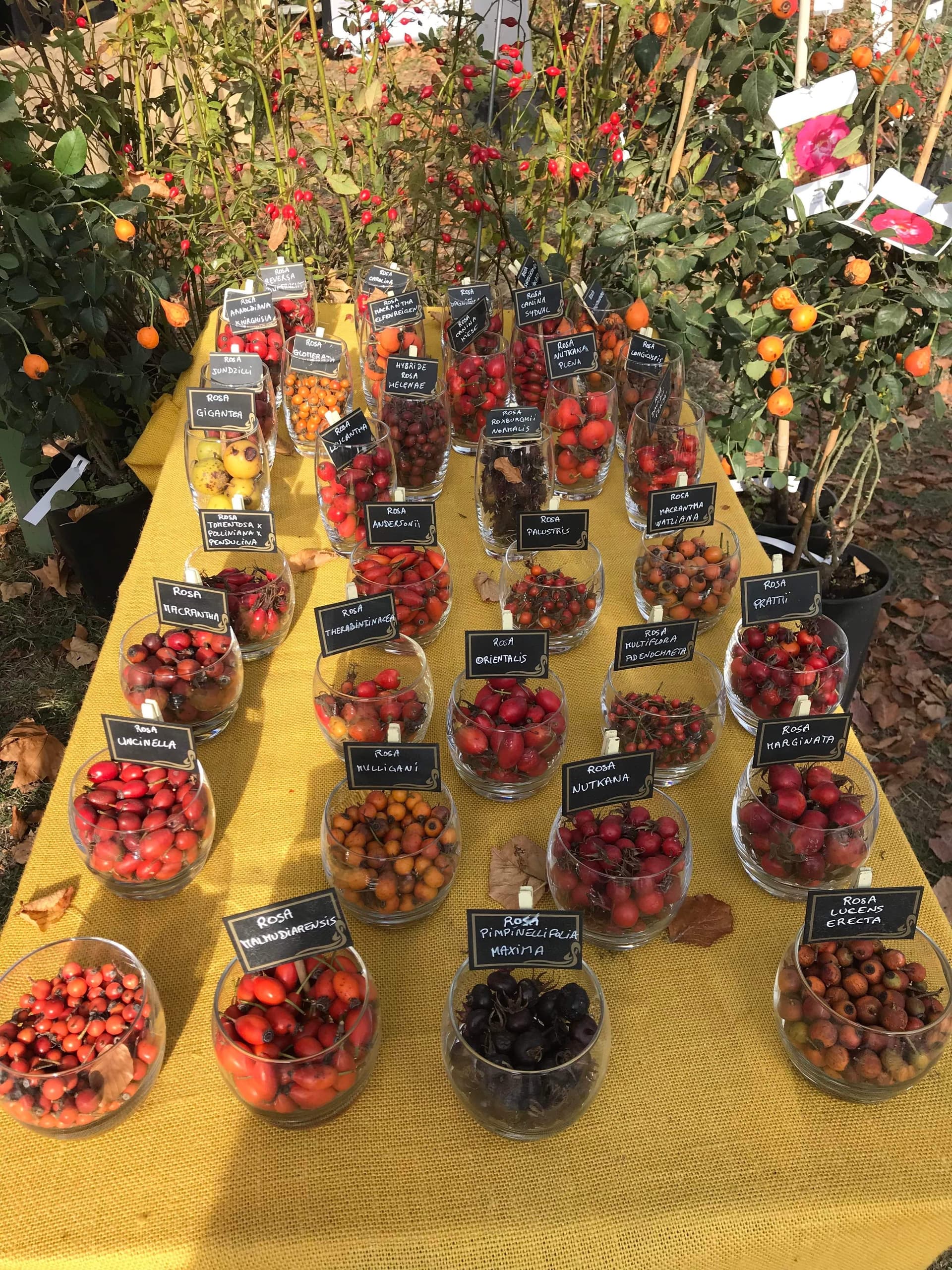
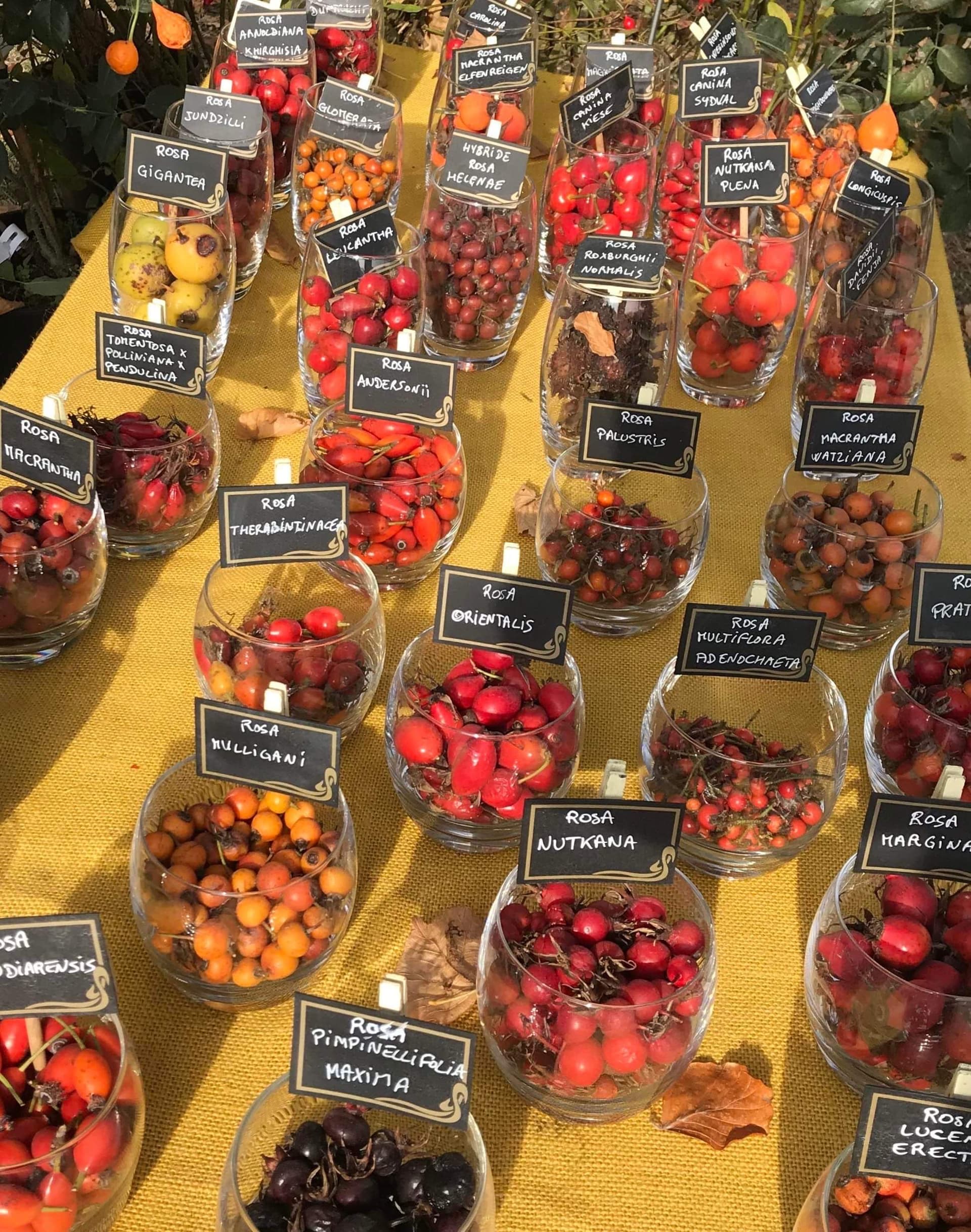
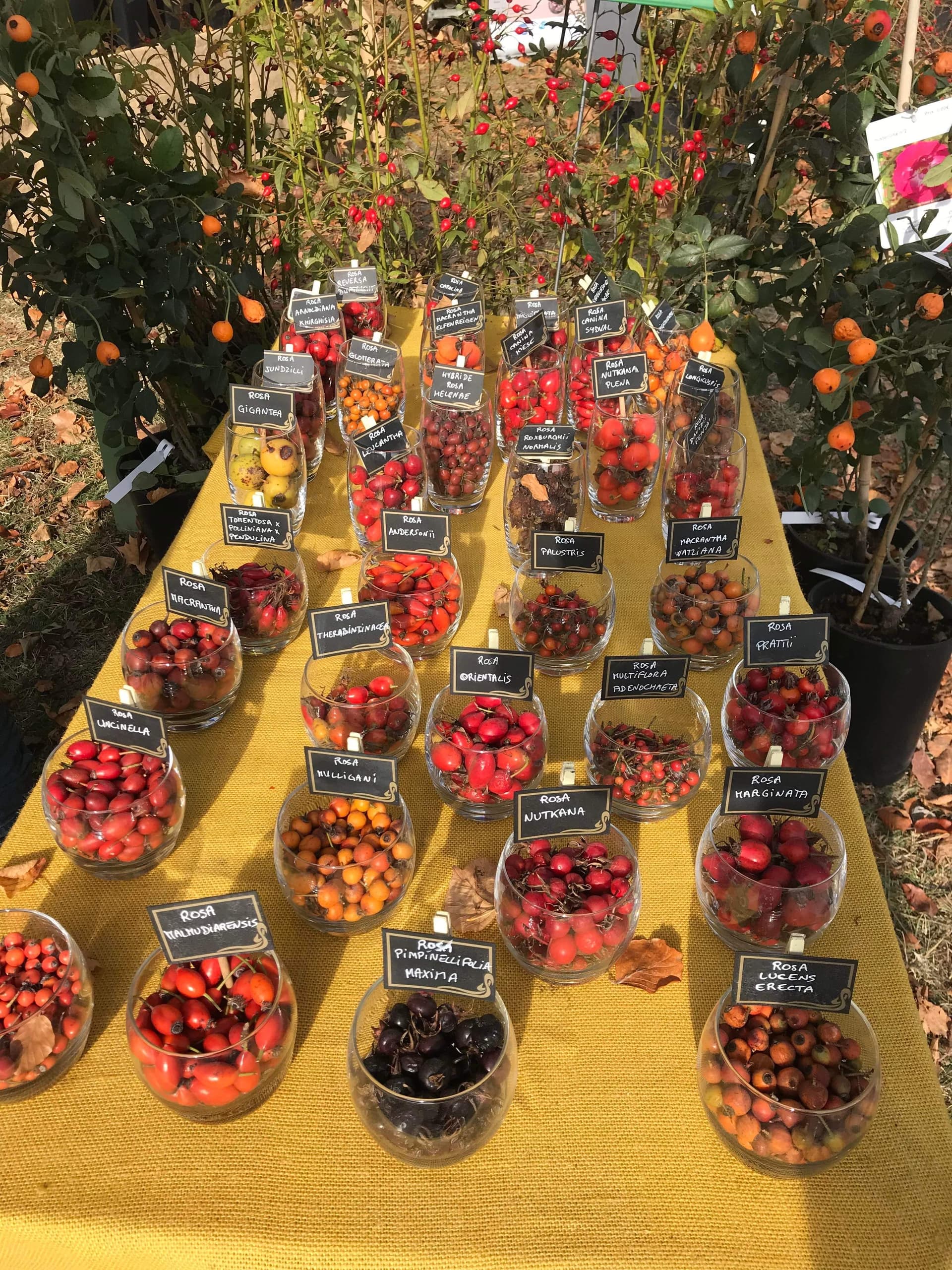
Chantilly Display, front to back, left to right:
Row 1
- Unknown
- Rosa malmudiarensis
- Rosa pimpinellifolia maxima
- Rosa lucens Erecta
Row 2
- Rosa uncinella
- Rosa mulligani
- Rosa nutkana
- Rosa marginata
Row 3
- Rosa macrantha
- Rosa therabintinacea (should be Rosa terebeinthinacea?)
- Rosa orientalis
- Rosa multiflora adenochaeta
- Rosa prattii
Row 4
- Rosa tomentosa x ((Rosa x polliniana)x R. pendulina)
- Rosa andersonii
- Rosa palustris
- Rosa macrantah watziana
Row 5
- Rosa gigantea
- Rosa leucantha
- Rosa roxburghii normalis
- Rosa davidii ‘Fenja’ (Rosa davidii x Rosa spinosissima)
Row 6
- Rosa jundzilli
- Rosa glomerata
- Hybrid Rosa helenae
- Rosa nutkana plena
- Rosa longicuspis
Row 7
- Rosa arnoldiana ‘Khirghisia’
- Rosa macrantha ‘Elfenreigen’
- Rosa canina ‘Kiese’
- Rosa canina ‘Sydval’
- Rosa x highdownensis
Row 8
- Rosa reversa ‘Duftfrucht’
- Rosa Carolina
- Rosa magnifica
- Rosa sweginzowii ‘Macrocarpa’
- The potted rose in the background with the large, orange hips is ‘Düsterlohe No. 2’.
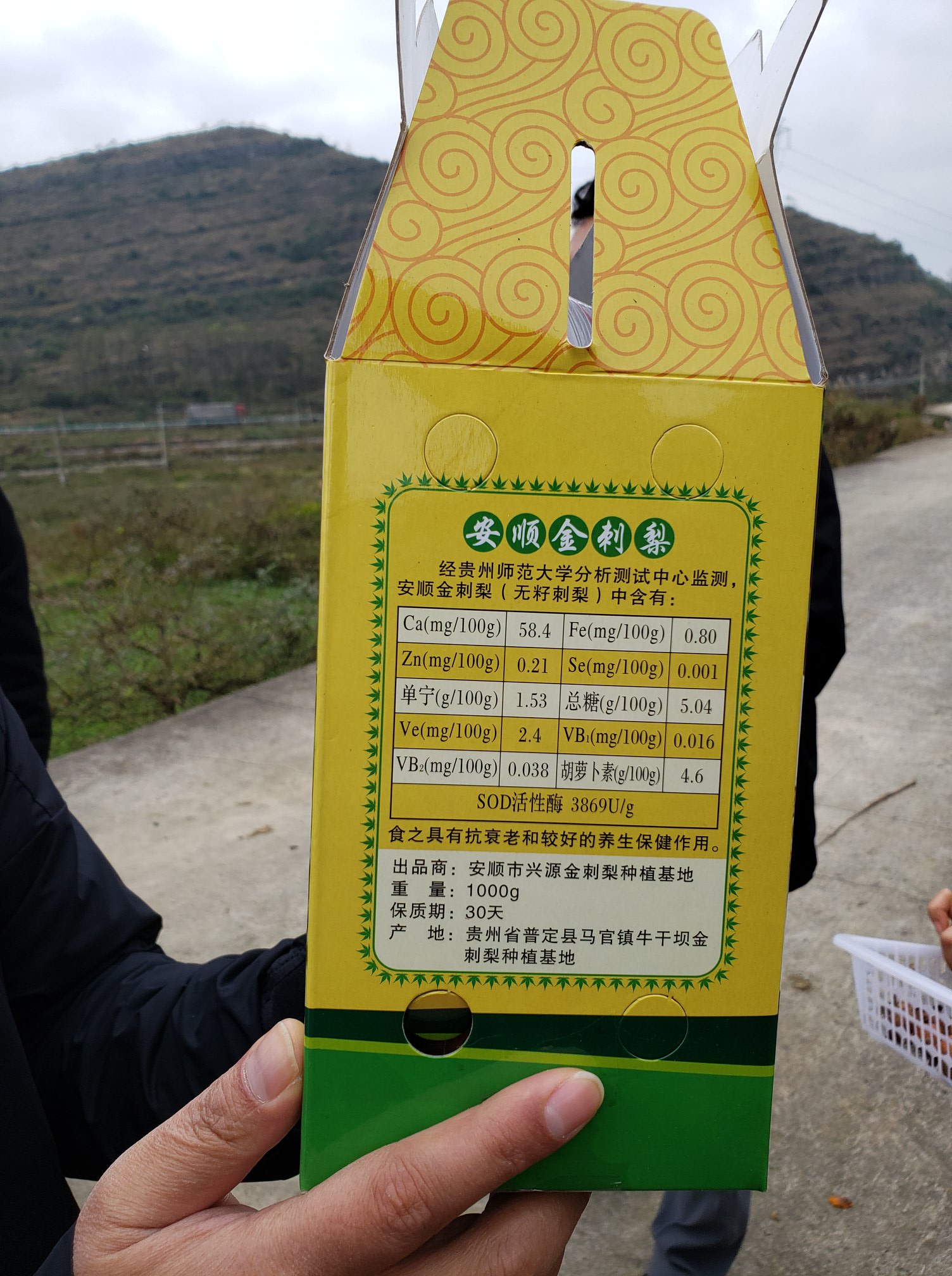
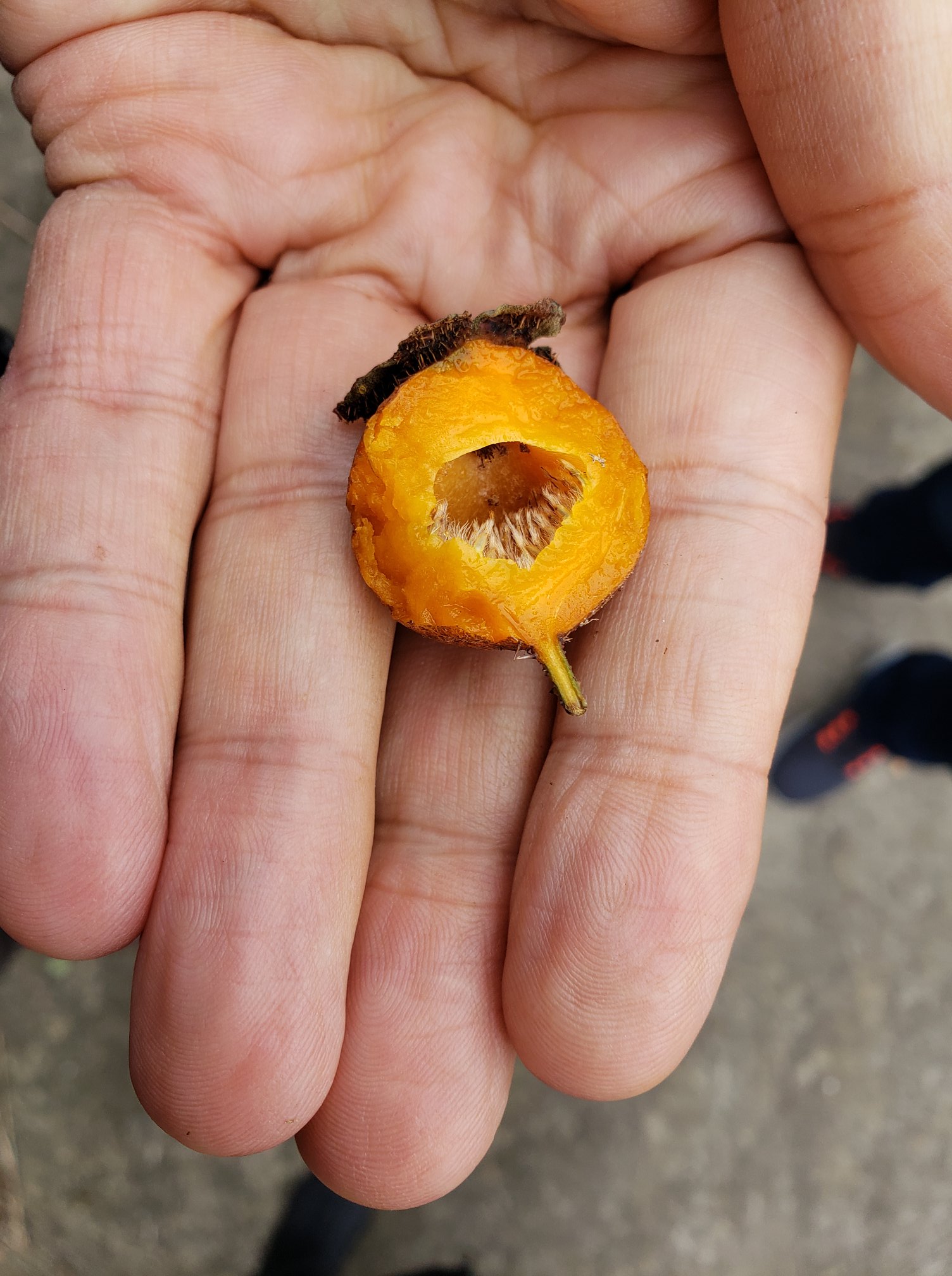
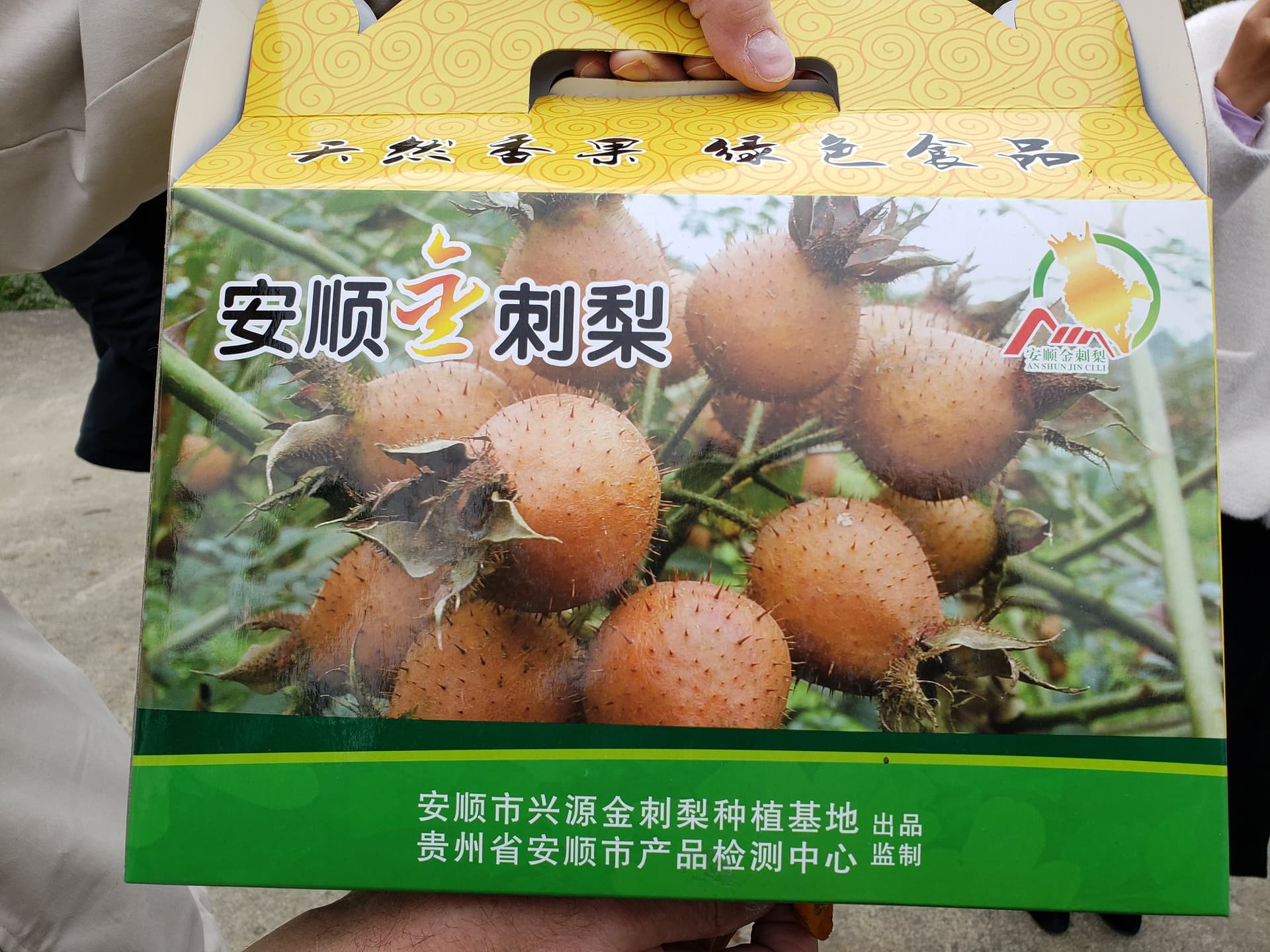
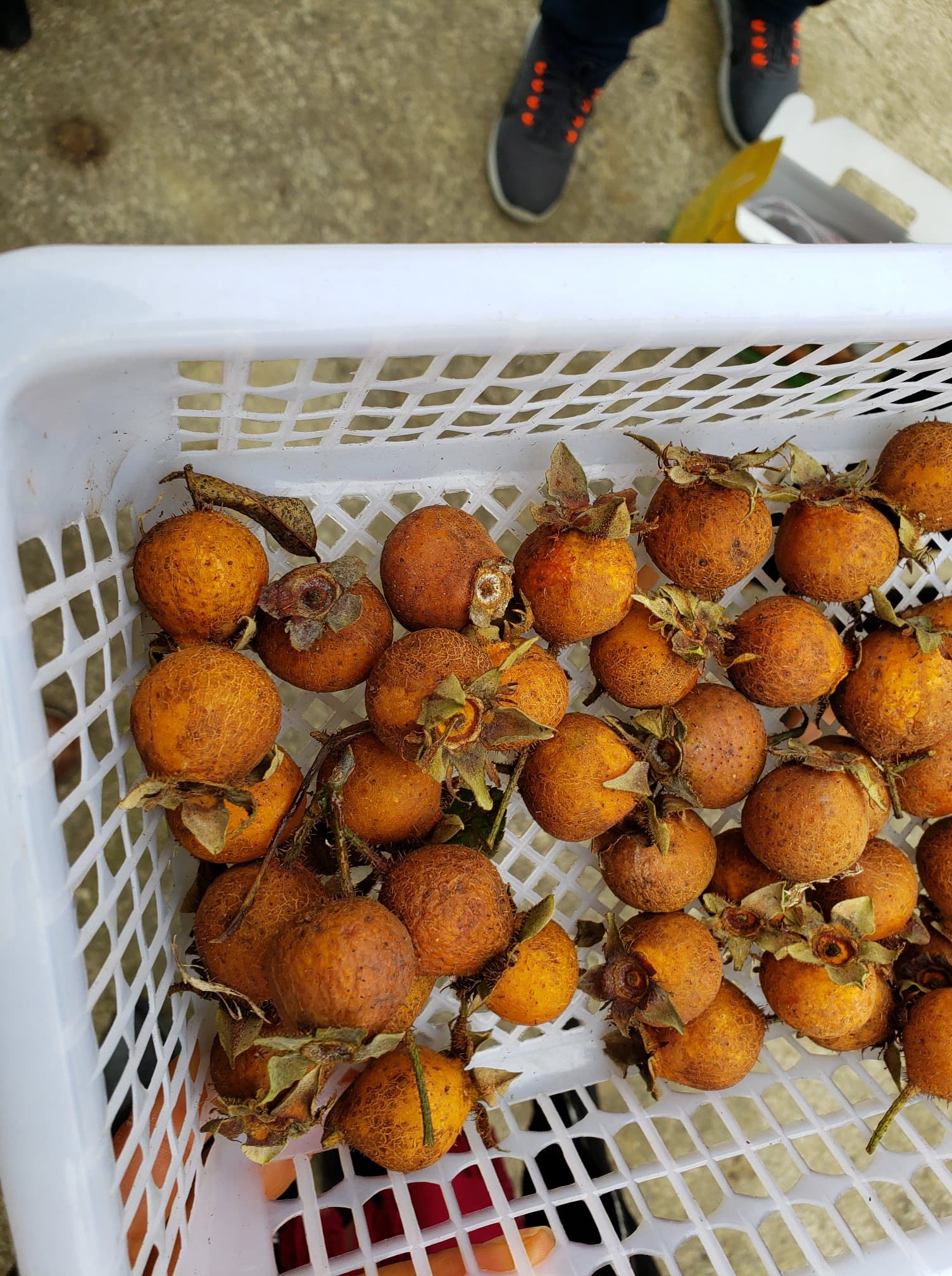
In Japan, they eat the yellow-colored hips of Rosa roxburghii and recently they’ve introduced to market hips from a discovered hybrid that they’ve named Rosa sterilis . It’s thought to be a hybrid between R . roxburghii and R . longicuspis and the special thing about it is that it produces empty hips, much easier for processing. The photos attached were taken by the Texas A&M Rose Breeding and Genetics Program.
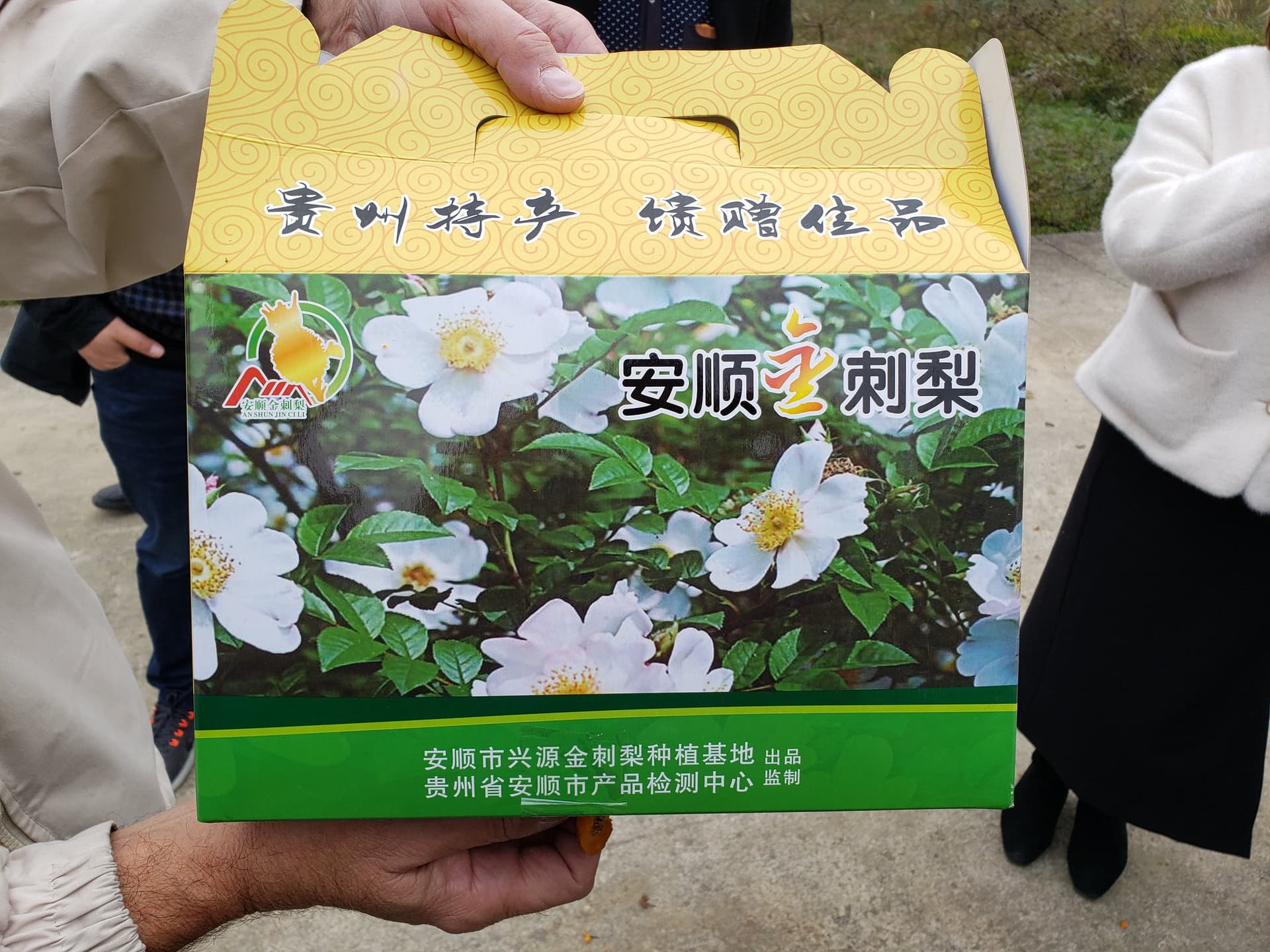
Hope this helps!
-Jonathan