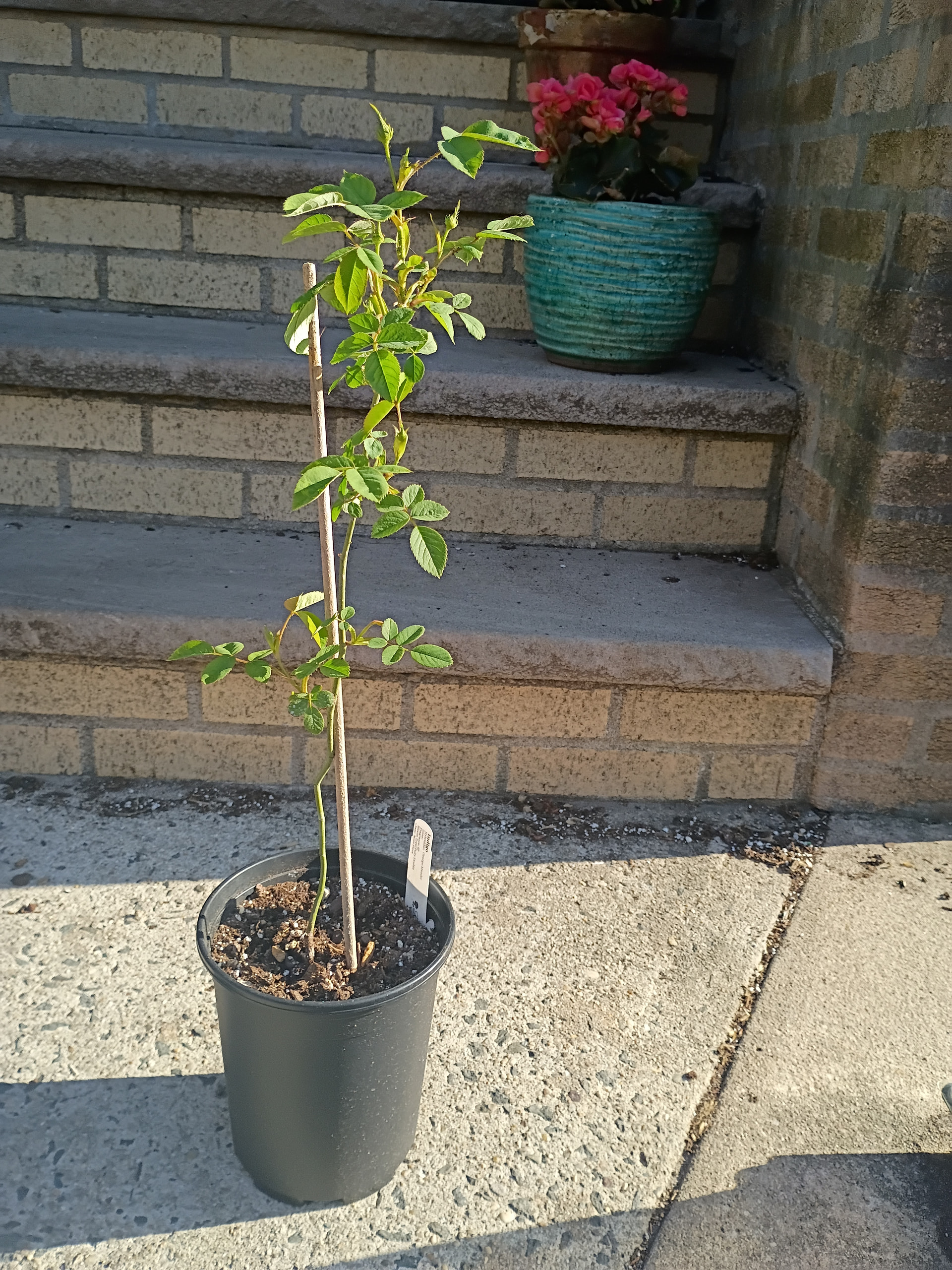
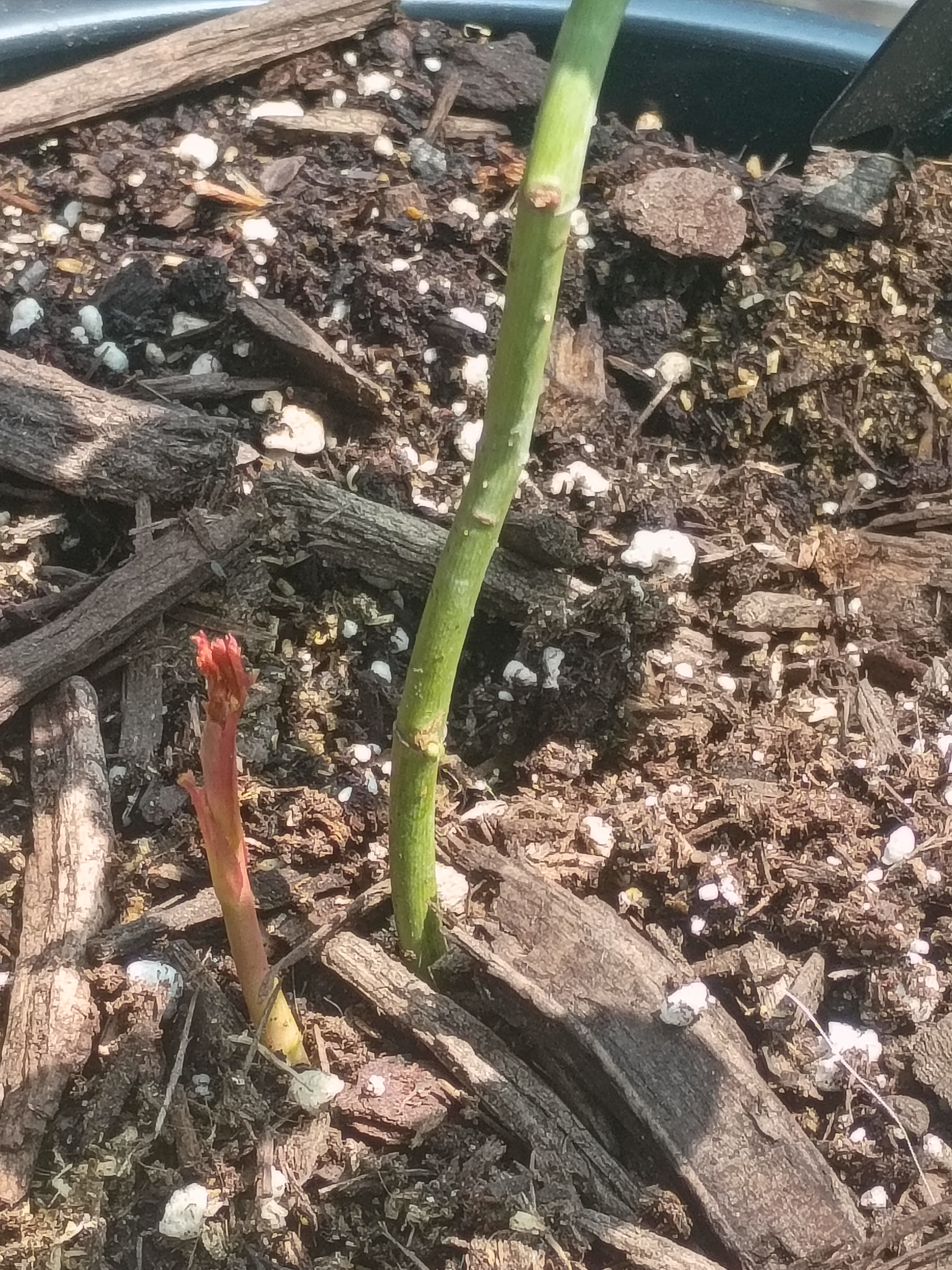
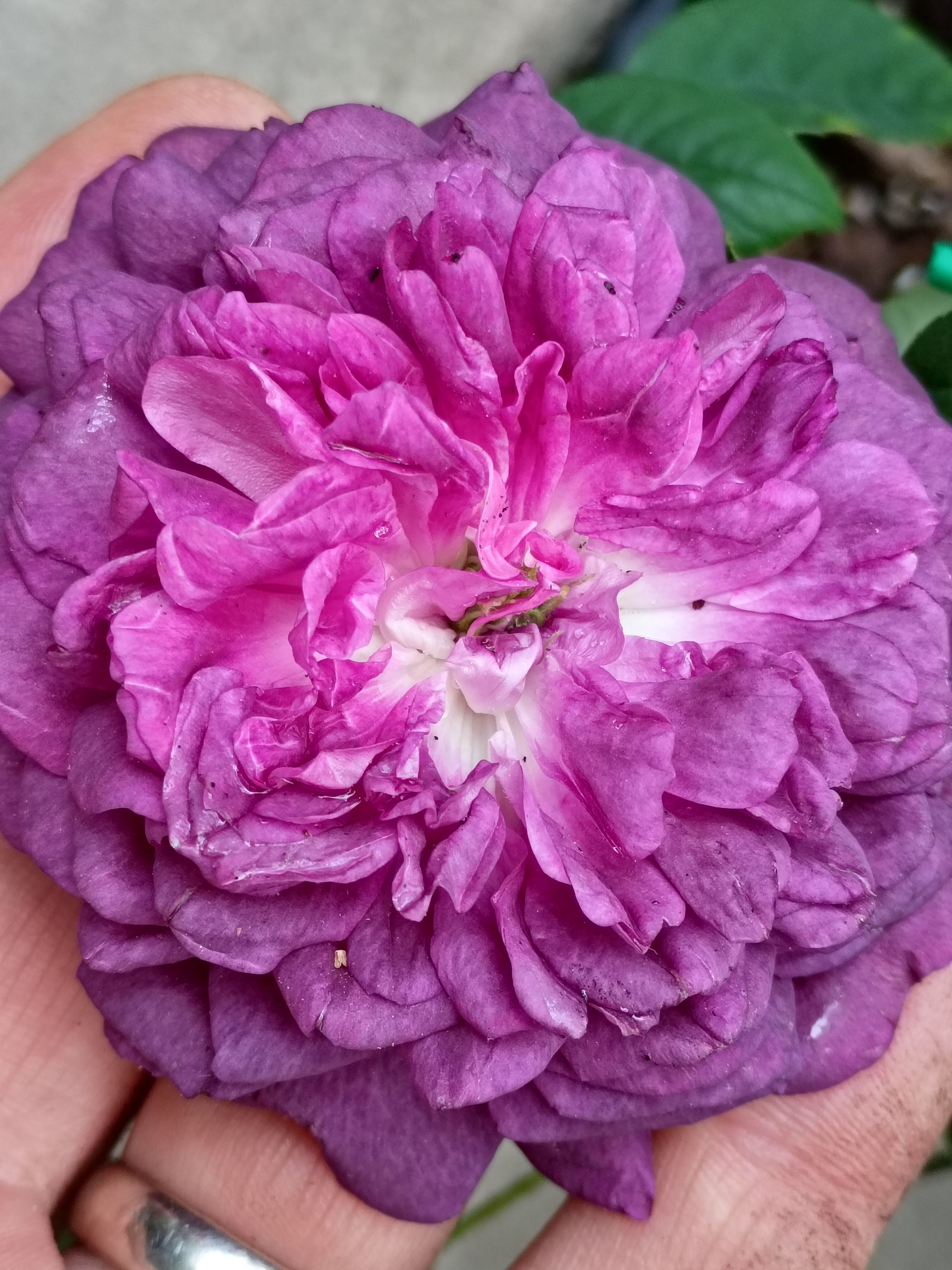
Hi all, any advice or experience for a new rose grower would be appreciated. I have this Indigo that I got recently from Rouge Valley Roses. For reference it is in a 1 gallon pot (up potted from a band) and is about 19” / 48cm tall. I would guess it’s around 20 to 24 months old but my experience is limited. It only has the one cane and is starting to bud at the top and at the end of one lateral stem.
My question is, given how young it is should I be doing anything to encourage new basal shoots and if so what has worked for you? Any thoughts are appreciated.
The procedures I have read about are:
- disbudding the new flower buds but I am not sure if this plant is past the age when that would be helpful
- prune off about a 1/3 but leave at least 4 leaf nodes
- clip the cane down so part is horizontal to break the direction of the growth hormones but I‘ve only seen examples using multi cane roses
You can either prune it short to encourage new basal growth, or you can train it off the vertical as you would a climber to encourage new lateral growth which will then flower. The plant needs a larger foliage mass to feed further plant development. Training it like a climber to encourage more lateral growth along that long, primarily bare stem should encourage faster, fuller growth than cutting it all off to force new basal growth. A larger foliage mass supporting greater, faster plant maturity and development will result in it wanting to push new basals. You can’t hurt it by encouraging lateral growth. Once you begin obtaining the basals you want, you can always prune off the long growth with the laterals or, even better, retain it and use it to obtain more flowers.
3 Likes
That makes a lot of sense. Do you think I should disbud the very top bud as well? Thanks for the advice.
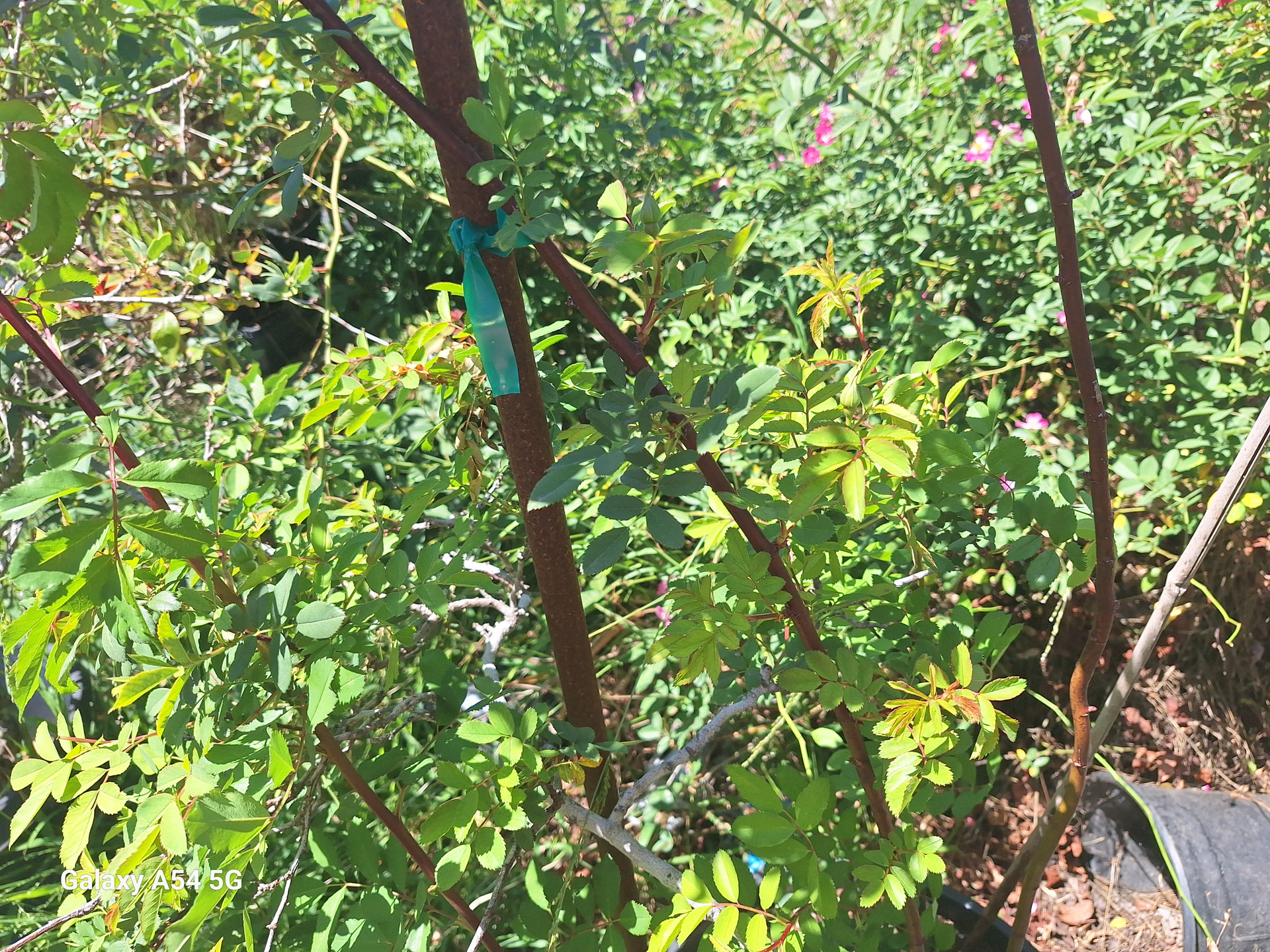
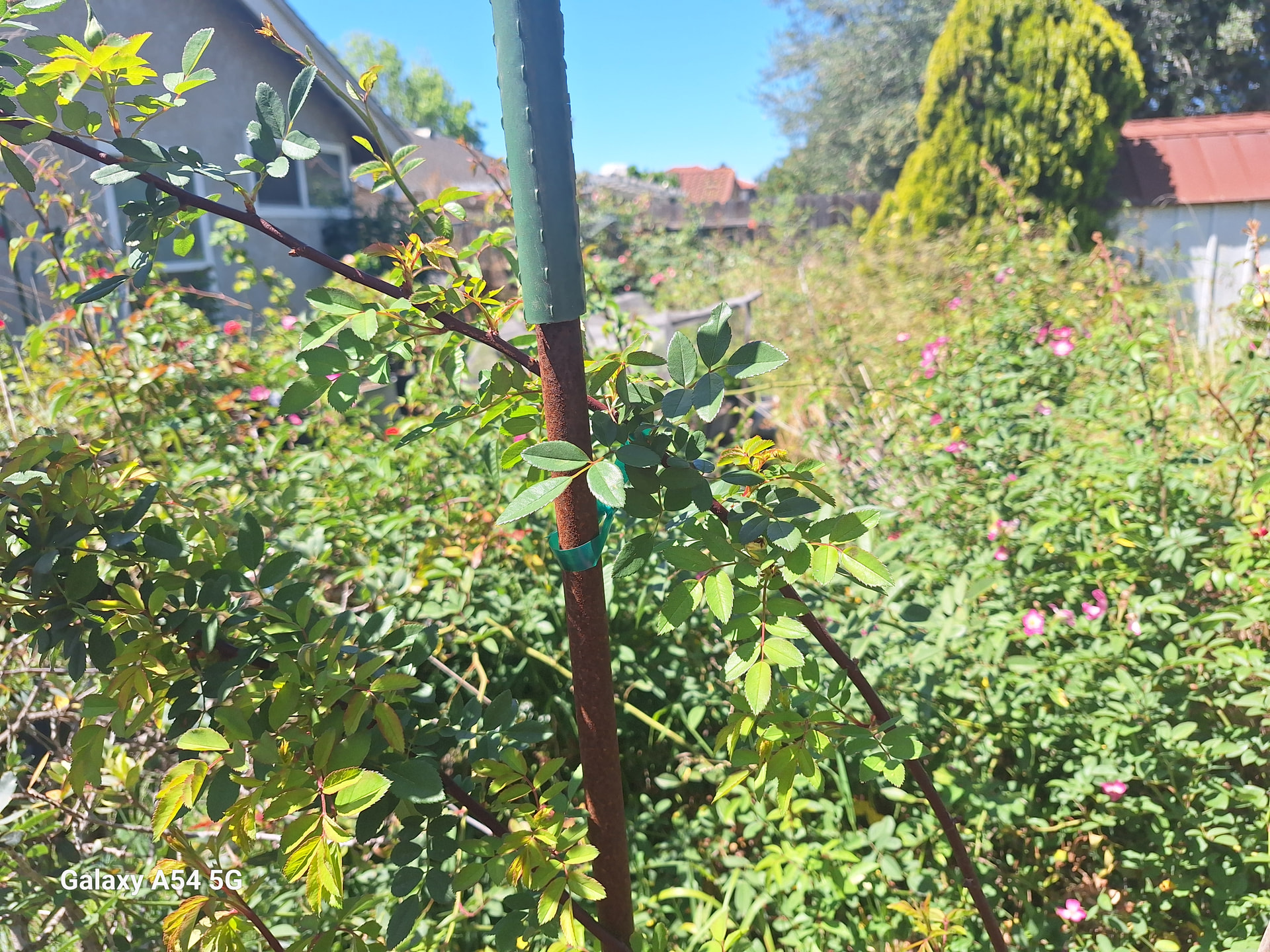
You’re welcome! Disbudding the top will cause the plant to branch there. Sap flows upward due to the adhesion factor of water. Water is “sticky” and it raises itself above its level by sticking to the walls of tapered capillaries. That only takes it so far. Guttation is where the plant “sweats” water from the foliage, increasing the draw and “sap pressure”, pushing new growth. Wherever that sap pressure meets a stop is where growth is forced. If that is near ground level, new growth is pushed there. If the sap pressure meets resistance along the cane as when training a climber or pegging an HP or other type, lateral growths are produced. If it’s at the top of the plant, branching will occur there. Of course you can do any combination of these and see what the plant wants to do most. That’s likely to be where the sap pressure meets the greatest resistance. My impression is, that would be where that main can begins to bend off the vertical. Of course, I COULD be mistaken, but that’s what seems most logical to me. If it were mine, I would try either gently twisting that main stem around a stake to gently inhibit that quick flow upward to try encourage branching along that main stem. Or, push a stake or stakes into the soil near the plant and bend that stem over as close to horizontal without kinking or breaking it and securing it in place.
i hope these photos help illustrate what I’m attempting to describe. This is a thornless, double Hugonis hybrid I raised some years ago. It wants to generate these bolt upright, smooth, red-brown canes with flowers and foliage at their tops. I bent them over slightly to see if they would respond as I suspected, and they have. There are lateral growths, like those a climber generates when trained to cover a wall, fence or trellis, with flower buds. I should have simply known that would be the response, because virtually all roses respond the same to the same triggers.
3 Likes
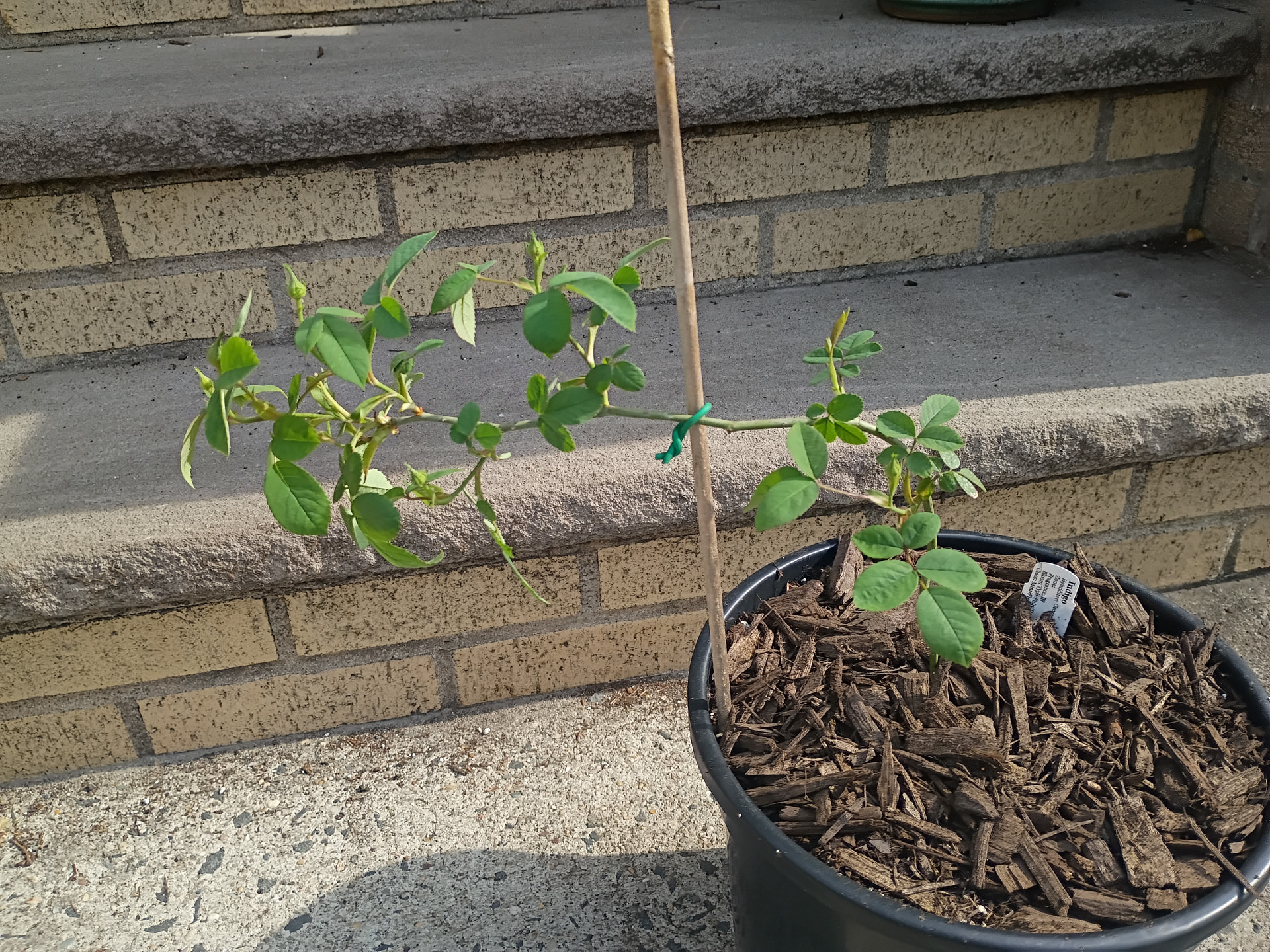
That all made sense and I appreciate the thoughtful response. I decided to go with this advice and see how it goes. It bent pretty naturally at a spot where the cane gets stiffer without much effort. It even puts one branch verticle as a ready to go lateral. I’ll leave the top bud on too for now.
I’ll report back as it grows.
1 Like
Feeding with alfalfa is known to encourage basal breaks. (No idea why, honestly, but appears to work in my garden.)
You can make a tea from alfalfa fertilizer. (I purchase alfalfa pellets as horse feed when it goes on sale once in a blue moon. It lasts for several years if the vermin don’t get it.)
3 Likes
I’ll give that a try too, I have some alfalfa meal just sitting around.
It’ hard to see in the photo but I’m happy to report that in less than a day all the buds have turned and are mostly pointing up. That’s an adaptable plant.
4 Likes
Happy to report that the plant is sending up a basal shoot.
5 Likes
Nice. I’m not familiar with Indigo, but note that some Rose species and near species do really resent pruning. I have never grown Damask roses, but believe they might be among those one should avoid pruning heavily. (If this were a typical hybrid tea, when it builds up enough growth, your late winter/early spring pruning would alter the architecture and provide you with a much bushier plant.)
1 Like
Congratulations! That increased root mass has to have an outlet for the extra water it collects.
1 Like
This one is a Portland and has already produced some nice flowers. Not much in the way of anthers or stigma in there but hopefully they’ll get more as the plant matures. Or not.
Don’t let your indigo get too tall too quick. I lost many hips 2 years back because it can have quite aggressive upright growth that suddenly gets a lot of flowers… this plus wind equals sad sad times. That said it’s a great mother plant creating very unique looking seedlings compared to my other mother plants
1 Like
Thanks James. Yes, that has been my concern. It is already putting out a number of flowers that are honestly too big to be supported by the young canes. Hopefully I can continue to encourage more basal shoots.
After that painful season finished I pruned it back by a third in autumn. Then a tiny bit more at the end of winter. Since then kept doing the same thing, it’s gradually gained size while looking like a Portland.
1 Like