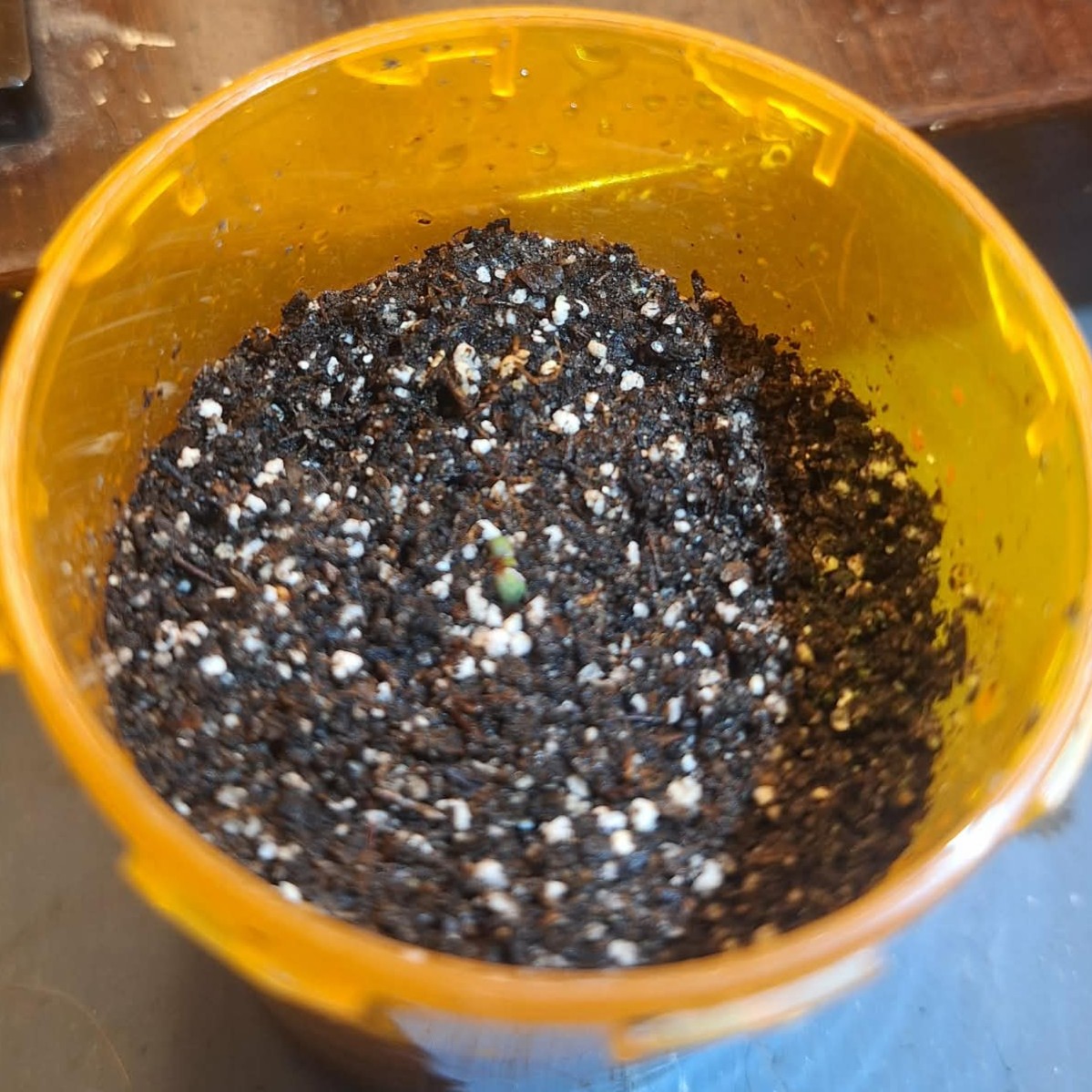
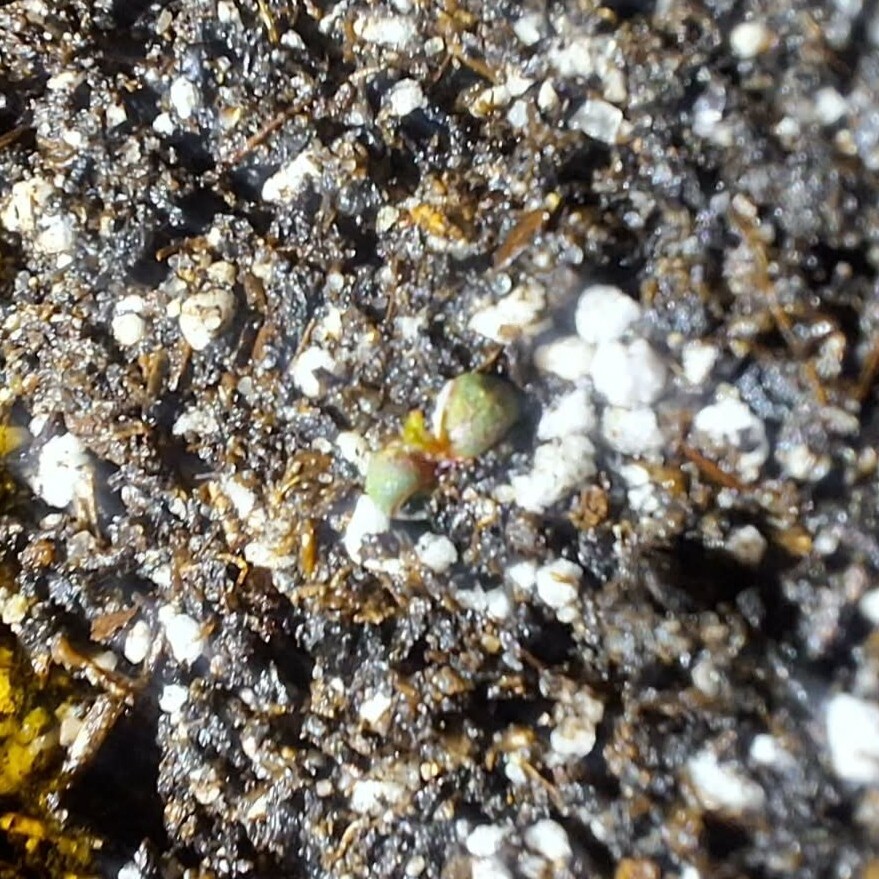
I’ve been extracting some embryos from my species crosses in the hopes that they’ll grow out enough to bloom next spring instead of 2028. It seems implausible, but being able to skip an entire year of waiting would be a significant boon for the breeding program.
I had to triple check my notes on this r. rugosa x r. foliolosa cross. I know that rugosa seeds mature super quickly, but this timeline has exceeded all of my expectations.
- Pollinated 6/22
- Harvested 8/1 due to chalcid wasp larvae
- Extracted 8/6
- Planted 8/9
It only took three days for the white embryo to turn dark green, develop root hairs, and start to push out true leaflets. I decided that contamination and nutrient deprivation were a bigger threat than premature transplanting. I definitely could have waited longer, but I have like 40 other embryos from this cross and at this point it seems silly not to embrace the inertia.
8 Likes
what are they .I am new to hobby breeding but you have rather confused me with this green bean in pot .What are you doing and how can it save a whole year love to know
It’s a tiny rose seedling. Instead of cold stratifying the seeds for 3-4 months and then planting them in soil, I directly removed the immature embryo from the seed’s achene and pericarp. This method of embryo extraction is detailed in this guide written by Don Holeman of the RHA.
When I say “skip a year” it’s really just wishful thinking. Embryo extraction eliminates the need for cold stratification, and it can also be used to “rescue” seeds that might never germinate due to being harvested too early.
Because this is a cross between two species which don’t have the gene for juvenile rebloom, traditional wisdom would suggest that they won’t bloom in their first year. Instead, they’d spend their entire first year (2027) growing out, then going dormant in the winter and ideally blooming the spring after that in 2028. My hope is that by skipping the months of ripening and stratification the seedlings will grow out enough over the next few months to enter a brief winter dormancy and then bloom this spring in 2027. It’s unlikely, but worth a shot.
Thank you for clearing that matter up.I see your point now and yes anything that saves time in production mist be worth a shot .Im in rural Latvia on 5 acres all English gardens and hobby rise breeding for zone 4 .Here its 32c below in Feb each year and 30c summers after rains in April .So greenhouse floors all no thermal masses and helps with solar fans . 500 seedlings of 5 crosses i can keep all winter inside rank set in floor arched over and covered with frost blanket Works a treat but expensive to build