Rosa Helenae Hybrida Off Spring Success in NAmerican Cold Zones?es?

I like all of those crossing ideas, with RDS and A&B seeming like good bets for getting some seedlings that could hit close to a real target in one step… hope you were able to grab some anthers from the open blooms, too. While its flowers aren’t the most perfectly formed, its seedlings’ blooms can be much better. Its more graceful growth should be just what some of the stiffer hardy climbers need. Reading your previous post, I had a flashback of trying DFLS back in MN; it didn’t survive very long, but I’m not sure that it was its fault (deer, insects, probably less sunlight than it wanted, etc.) It certainly never looked anything like that during its short life!

1 Like

Hi Stefan,

There are other hardies l could have tried, but none are as quickly recurrent/new off shots to bloom, after the solstice like RDxS.

And fedtschenkoniana was successful with one hardy cross with a tender gallica. Same with JC but not true hardy in my garden as my Merveille crosses showed.They growing well after flattened by cold like parents (JC a herbaceous rosaxrosa perennial)

Do not have enough experience with A&B to say it is recurrent for me.

But second year blooms were “very very large” on the full sun, short plant (that is good in my oil province where we think big n tall) and were early enough not to aggravate.

Size might be the minnow size that photos as a muskie that comes from scale reference (old trick for pictures of your catch of the day - hold it way out in front of you and away, but don’t show ur fingers).

The slightly shaded one behind Grannie’s blew out new “tallish cane to get more sun” … so all in all l like its quick sun self tuning ability.

All this chatter about A&B is because l counted one more Lykkefund cluster this morning (5). So easement is free and clear to train some bees to focus on A&B nectar and bring along pollen hitchhikers to Lykkefund (pat 2014) ….

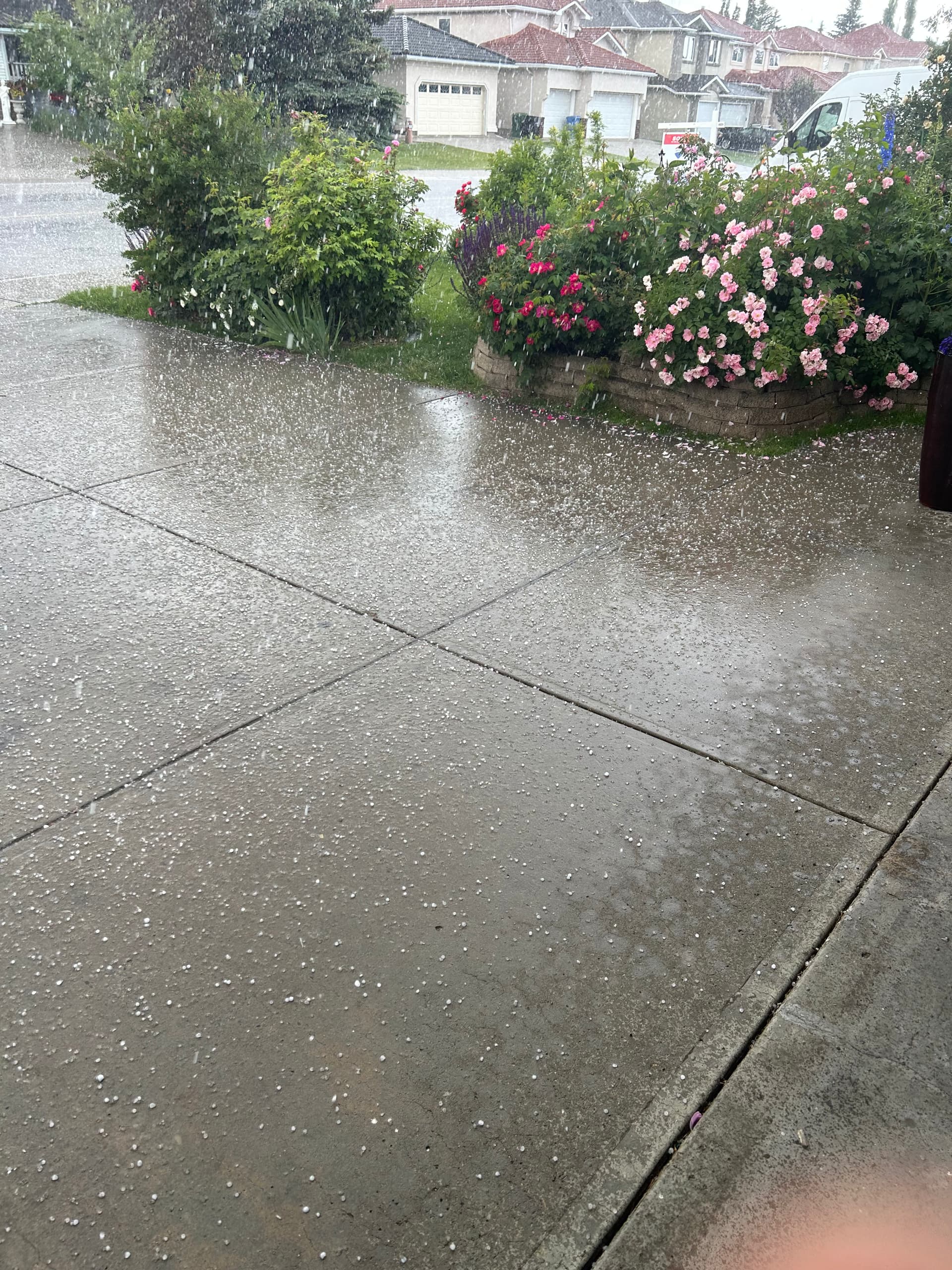
… and after l submitted reply “Thor” struck a small sharp warning bellow … bee training on hold ….
1 Like

At least it’s small hail! Still, probably enough to bring you some PTSD.

For what it’s worth, A&B has (so far) only been once-blooming here, too. However, it can produce seedlings with reliable repeat at a low frequency (1 in 6) when crossed with a repeat bloomer, according to David Zlesak. That will probably work out to 1 in 12 with a once-bloomer that is recessive for everblooming, like ‘Lykkefund’, although that is begging to be tested. I was lucky to get a hole in one once with an A&B cross with a repeat blooming modern seed parent, although tons of seedlings from a cross with Westerland as seed parent all refused to flower in their first year and most were insufficiently disease resistant to coddle. Of course, Westerland didn’t exactly fit the everblooming mold here, either. I suspect that diploid ‘Lykkefund’ will make a better match despite being only recessive for the everblooming trait. Odds should be better with RDS.

Blooming done.

Crossings completed, for all bloom clusters (florets) down to each bloom in a cluster and a breeze compared trying Polstjarnan … blooms “big enough to work with” in second blooming since planted. Only “difficulty” was stigma/style? was tiny.

Tossed Lykeefund pollen on some Polstjarnan blooms (plants don’t have many seasons left).

So statistically should get an answer whether to bother next year with another slate of pollen candidates … and with a nod to my favourite bane area of study/ experiment … if they germinate ! … :rofl:

Final xpollen parents experiments, Caroyal, A&B, L83, Fedtschenkonian and Red Dawn x Suzanne.

Thanks Stefan for input encouragement and support on venture.

Oh and three more Thor episodes … but Valkyrie told him to take a hike. No damage. Bad summer for hail accompanied storms and wet and temperate so far.

Instead of winging it, with an aging memory decided to go back my “written” records. Talk about being optimist.

R.helenae hybrida - received / planted 2021
R. lykkefund - received / planted 2020
Merveille - received / planted 2020 first crosses 2022 - 1st germinations of crosses 1Q 2023 (2023 last year of blooms)

And photo update on Merveille x Fedtschenkonian.

I find it interesting for a couple reasons. Slowest growing seedling of the batch of Merveille x fedtschenkonian seedlings. But not unhealthy like those seedlings that have thin wiry “canes\shoots”. Stout but not fast grower. Do not remember if had longer robust roots.

Also remember it as one of a couple x feds with no PM in first winter in grow room. Glad l wasn’t in mood to cull any seedlings as l define it as taking off.

Slightly low balled height of longest cane, its slanted length just over 3 feet since geminating in 2023 - clean as whistle … but no buds so far so may only make a great shrubbery. :grinning_face_with_smiling_eyes:

Average height 2 feet. Only observation bothering me is leaves favour 9 “leaflets”. My fedtschenkonian is not biased to that configuration number mainly mix of 7-9-11. Leaves “looks” seem also to depart strongly from pollen parent. Maybe it’s Merveille influence? - no guesses here.

Merveille x J Cabot regrowing crossings buried by neighbouring leaf growth.

3 Likes

I’m really happy to hear that you got a bunch of great/promising pollinations in on ‘Lykkefund’, and now I can only wish you the best of luck getting them to maturity and beyond, which should be pretty easy with ‘Lykkefund’ (as long as you can avoid cane girdlers and Thor’s wrath). You’re certainly doing better than I am, with my total of zero crosses for the season. The hot/wet weather and my schedule have conspired against me, even though I did (and maybe still do) have a few planned.

My only recent communication from the god of thunder came when my young ‘Thor’ decided to show off his seemingly appropriate lightning bolt tattoos for the first time. Given its rarity, I suppose that means it’s likely that all U.S. stock is RMV positive. It’s unfortunate, but good to know.

It will be exciting when that ‘Merveille’ x R. fedtschenkoana finally does bloom! I wonder if its moss background will resurface in some interesting way in a cross with that species. Does the young growth have any particular scent when you brush it?

Stefan

1 Like

Hi Stefan

I can’t detect any fragrance from seedling by running my hands repeatedly through foliage.

Definitely for now, the only traits shared with pollen parent is winter hardy and leaflet count. Not saying true hardy like pollen parent (bullet proof for winter). But l am saying l agree more than likely did accept Fedtschenkonian pollen.

Pollen parent, using my retranslation phrasing of the HMF description of growth by Kim, it is starting go “hairy King Kong - ape shatz nuts” this growing season. Taken 4feet of horizontal bed room and a new this season very vicious looking thick cane, with lots of off shoots, is taller than me. Eat an RDxS.

The gray green color is not present in my seedlings leaves. Nor is the incredibly down turned prickles.

My seedling more dignified, and posh looking … for now.

Photo are seedling cane prickles and form. Any white is PM on Juno.


King King to be photos


4 Likes

Could Polstjarnan produce reblooming seedlings?

A search here of topics including ‘Polstjarnan’ suggest not.

Highly unlikely based on growing them for 20 years - not seen a re-bloom. Though no re-bloom, I have noted their ability to give singles and nearly double blooms.

The addition of the Lykke pollen was a try to also get crosses the other way as an option. Lykke’s are now larger and easier to work with. Was also hoping for larger Polstjarnan blooms if crosses take.

Appears crosses done this year have produced hips for both cross ways which is an improvement from previous attempts.

End point is a hoped for zone 4A hardy (my climate) garden worthy rambler building block with larger flowers. Repeat, and color palette, is for the next germination - I need true hardy climber / rambler structure alternative first.

PS

The crosses with Lykke fund x RDxS and with x L83 hold better potential for repeat, but were actually done for imparting hardiness to lykkefund cross. High hopes l hit a home run with bases loaded aka hardiness, climber structure, strong red and repeat with large blooms

1 Like

Lykkefund x A&B hips all gone as in picked clean off - others still all present and accounted for.

Remaining hips have not begun color transition to reddish orange. But bigger than previous try #1

Avian attack? Disappointing as cross was the third hardy pollen parent and very floriferous rose. Netting or baggy time coming up

2 Likes

Wow, that’s terrible news–I wonder what sort of bird or other animal would have done that? Had they colored up already? Animals here (other than the occasional deer) usually leave hips alone until they’re ripe. I would definitely recommend bagging after that. The cheap organza kind available in various sizes should work well.

Hi Stefan,

You touch on a detail l omitted least l succumb to accusations of Norse mythological paranoia (Loki). Happened after l returned alive from a very cool (as in interesting to a retired geologist) very near the Arctic circle island holiday experience - must been a stowaway on board.

The hips weren’t even coloured - not even a hint. Would have thought not appetizing for wild life.

Twice as weird because hip stems long. All clipped at main take off from floret root joint to hips. Nothing noted on ground.

I have a hard time believing a rodent would cling swinging on cluster stem to systematically chew each off half way up cane and come back for more little green apples (gut ache). Nearer hanging fruit.

Doubt it was the clever midnight ramblers as they are long gone. But a deranged educated bi-ped lurks deep in my mind as a candidate. A deer would have had to stretch a long way to the wall where rose is. Fenced in, and constrained mice deterrent all over the patch.

Time l switch to protective Caribbean Voodoo chants each night and gauze.

:rofl:

Of course had to be the newest (2014?) hardy pollen parent l had crossed with - half way up cane … yeah its got to be an demented educated bi-ped :slightly_smiling_face:.

Photo

Leifr Eiriksson - sculpture presented to Iceland by US ~ 1930, a 1000 year anniversary gift for discovering Canada :innocent:. Slight factual engraving error on statue pedestal.

In front of a totally internally designed, magnificent ,architecturally monumental “ Lutheran church”.

“Althing” 930AD is name and creation year for Iceland’s parliament - world’s oldest parliament.

2 Likes

Yikes, you mean that it was probably a human who cut off your unripe hips? And only those? I would consider setting up a camera or something… anyone who would do such a thing would likely do it again with little hesitation.

If it’s any consolation (I’m sure it isn’t), I just had to remove a substantial cane on a potted Above and Beyond today because it was badly infected with Rose Rosette Disease. I haven’t seen it on that variety before and had hoped that the R. virginiana and R. laxa in it might confer some protection. I just have to hope that it doesn’t translocate too rapidly to save the plant with a timely pruning.

That is a pretty nice statue, and I can’t say that I’m familiar with too many gifts from the U.S. to other countries, which is also a nice thing to see (even if it was almost a century ago).

1 Like

Very likely a skinwalker :rofl::rofl:

1 Like

The scene of crime and cross hip maturing progress to Sept 14 2025 (hip color transition ? none). Worried ? Maybe, not sure. Green hips in garden on some hardies (alika). Lykkefund generally more hardy Helenae hybrida.

R lykkefund cluster cross survivors are: x fedtschenkonian, x red dawn, x L83, and x Caroyale after the entity visit who absconded with all the AxB hips.

Slashed (vented) baggie protection added post facto. Never again post facto for precious crosses hips that took a full 2 seasons to get in 3rd year winter cane survival to bloom after first try pollinations with young just planted lykkefund.

Upside another tall cane this year, plus couple of 3 footers. Also longish Helenae hybrid canes also. Keeping prostrate on ground for winter as more tender than lykeefund.

Crime scene ? Second yellow tag above first from bottom (no bag).

Those look great, and it seems like you got plenty of successful “takes” from each of those crosses! I hope the slashed plastic holds just the right amount of warmth and discourages further marauding. There’s tons of potential in those to deliver some really fascinating, useful seedlings.

I agree in that l was pleased with quantity of the take to hips, 50% more than l expected and only saw one desiccated brown hip under plant (assumed from lykkefund).

Hip count and size absolutely nothing like the first time pollinated as a very young in the garden plant.

I have read anecdotal comments that multiflora is a very prolific “shelfer” and “crosser” and readily germinates - here is to hoping these crosses with hardies in my zone also share the traits.

I used manually vented baggies as couldn’t locate a previously purchase section of cheese cloth when pressure on to get it done.

Pollination contamination was not worried about at start of crossing, though will do next time on hip grape cluster prized crosses. More gain for less pain.

Hip saving, as in pest deterrent need, came with the select nature of the post facto event occurrence as a psychological pressure. Also known as in the “dumb” earned after the fact label visions due to nearly three years of waiting for winter cane survival … was not pleasant thought from previous experiences :slight_smile: … QED.

… btw young A&Bs still tossing out larger than lykkefund pale singles :frowning: .

1 Like

I’ve had very good germination with ‘Lykkefund’, so I think you should be able to get decent results there. I’m still not sure about the “below zero” strategy–while it’s possible that the pollen parent could have some influence on success there, my gut tells me that the physiology is still driven more by the seed parent and its genetic origins. For me, regular (refrigerated) stratification after drying the achenes has worked very well.

You’ll definitely see bigger flowers on Above and Beyond than on ‘Lykkefund’! The good news is that you can get big increases in flower size over the parent in crosses like the ones you made. One nice seedling I have from it crossed with a hybrid tea is essentially Floribunda-like. You would never think that it came from a smallish-flowered rambler.

Hi, good to hear you got germinations. This should make for an interesting post January experiment.

Just one slight correction in the semantics, l use the undefined qualitative descriptor “just”before the rest of “below zero C”, like ice’s theoretical freeze point of “just below 0C.” And sometimes add “life” before “just”. For the whole phrase, “there is life just below zero”.

My economical bar scale fridge / freezer thermal controls and insulation, plus carny grade thermometer, easily vacillate between -4 to +2 C range at any point in time - drives me nuts. I error to the solid ice thermometer setting when stratifying. Seems to prevent a fungal mess and chemical addition.

** Addendum: one important detail left out since thread focus has been on merits / perils of “just below zero” - thats not the T where l wait for germinations - after a nominal 4 months the trays are brought out to basement ambient T of 14-18C and given 2 to 3 weeks to show germination - if not, back in for a couple to few weeks - sometimes after second JBZC treatment l find germinated seedlings in trays like last year ( green showing) when removed from fridge - believe they had already germinated before second treatment - not very high but definitely proto leaves - need to more thoroughly examine trays at end of first ambient treatment - the premies survived but on the whole were not happy growers for as long as l observed then … damage done by putting back in cold?**

My concern mainly stems from the fact that everything I’ve learned about stratification as a process revolves around it being a prolonged period of moist cold by definition–and once water is frozen, it doesn’t really have the same properties as liquid water and isn’t technically moist anymore. Any time that the water has been turned to ice might then not count as actual stratification. In particular, I wouldn’t think that ice could help in the process of breaking down or leaching chemicals that prevent germination. I’ve also had stratifying seeds freeze when the refrigerator acted up and have not had very good results when that happened.

I purposefully incorporate biologically active ingredients (composted manure) into my stratification medium, and that seems to prevent most harmful organisms from hurting seeds. I sometimes get seeds germinating even after two or more seasons left continuously in the refrigerator, so they seem to be fairly safe in that environment.

1 Like